Research & Development World

  • R&D World Home
  • Topics
    • Aerospace
    • Automotive
    • Biotech
    • Careers
    • Chemistry
    • Environment
    • Energy
    • Life Science
    • Material Science
    • R&D Management
    • Physics
  • Technology
    • 3D Printing
    • A.I./Robotics
    • Software
    • Battery Technology
    • Controlled Environments
      • Cleanrooms
      • Graphene
      • Lasers
      • Regulations/Standards
      • Sensors
    • Imaging
    • Nanotechnology
    • Scientific Computing
      • Big Data
      • HPC/Supercomputing
      • Informatics
      • Security
    • Semiconductors
  • R&D Market Pulse
  • R&D 100
    • 2025 R&D 100 Award Winners
    • 2025 Professional Award Winners
    • 2025 Special Recognition Winners
    • R&D 100 Awards Event
    • R&D 100 Submissions
    • Winner Archive
  • Resources
    • Research Reports
    • Digital Issues
    • Educational Assets
    • R&D Index
    • Subscribe
    • Video
    • Webinars
    • Content submission guidelines for R&D World
  • Global Funding Forecast
  • Top Labs
  • Advertise
  • SUBSCRIBE

Naked Mole-Rats Survive With Low Oxygen by Metabolizing Fructose, Just Like Plants

By University of Illinois at Chicago | April 21, 2017

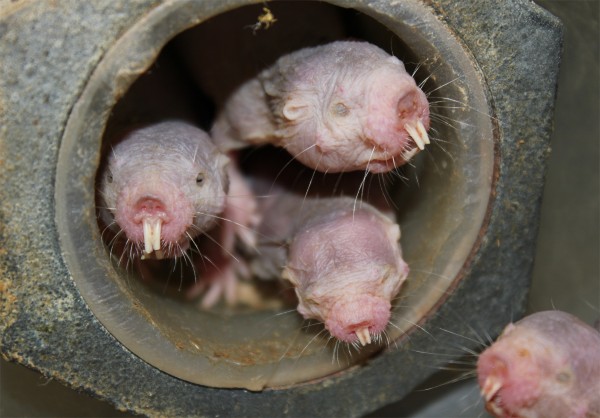
Deprived of oxygen, naked mole-rats can survive by metabolizing fructose just as plants do, researchers report this week in the journal Science.

Understanding how the animals do this could lead to treatments for patients suffering crises of oxygen deprivation, as in heart attacks and strokes.

“This is just the latest remarkable discovery about the naked mole-rat — a cold-blooded mammal that lives decades longer than other rodents, rarely gets cancer, and doesn’t feel many types of pain,” says Thomas Park, professor of biological sciences at the University of Illinois at Chicago, who led an international team of researchers from UIC, the Max Delbrück Institute in Berlin and the University of Pretoria in South Africa on the study.

In humans, laboratory mice, and all other known mammals, when brain cells are starved of oxygen they run out of energy and begin to die.

But naked mole-rats have a backup: their brain cells start burning fructose, which produces energy anaerobically through a metabolic pathway that is only used by plants – or so scientists thought.

In the new study, the researchers exposed naked mole-rats to low oxygen conditions in the laboratory and found that they released large amounts of fructose into the bloodstream. The fructose, the scientists found, was transported into brain cells by molecular fructose pumps that in all other mammals are found only on cells of the intestine.

“The naked mole-rat has simply rearranged some basic building-blocks of metabolism to make it super-tolerant to low oxygen conditions,” said Park, who has studied the strange species for 18 years.

At oxygen levels low enough to kill a human within minutes, naked mole-rats can survive for at least five hours, Park said. They go into a state of suspended animation, reducing their movement and dramatically slowing their pulse and breathing rate to conserve energy. And they begin using fructose until oxygen is available again.

The naked mole-rat is the only known mammal to use suspended animation to survive oxygen deprivation.

The scientists also showed that naked mole-rats are protected from another deadly aspect of low oxygen – a buildup of fluid in the lungs called pulmonary edema that afflicts mountain climbers at high altitude.

The scientists think that the naked mole-rats’ unusual metabolism is an adaptation for living in their oxygen-poor burrows. Unlike other subterranean mammals, naked mole-rats live in hyper-crowded conditions, packed in with hundreds of colony mates. With so many animals living together in unventilated tunnels, oxygen supplies are quickly depleted. 
Related Articles Read More >

LLNL’s multi-ignition wildfire models could help predict and prevent, catastrophic fire events
Scientists release sodium hydroxide into the ocean to combat acidification
R&D 100 Winner Spotlight: DuPont’s high-salinity wastewater membrane
R&D 100 winner: How one startup is eliminating the century-old ‘dirty step’ in rare earth alloy manufacturing
rd newsletter
EXPAND YOUR KNOWLEDGE AND STAY CONNECTED
Get the latest info on technologies, trends, and strategies in Research & Development.
RD 25 Power Index

R&D World Digital Issues

Fall 2025 issue

Browse the most current issue of R&D World and back issues in an easy to use high quality format. Clip, share and download with the leading R&D magazine today.

R&D 100 Awards
Research & Development World
  • Subscribe to R&D World Magazine
  • Sign up for R&D World’s newsletter
  • Contact Us
  • About Us
  • Drug Discovery & Development
  • Pharmaceutical Processing
  • Global Funding Forecast

Copyright © 2026 WTWH Media LLC. All Rights Reserved. The material on this site may not be reproduced, distributed, transmitted, cached or otherwise used, except with the prior written permission of WTWH Media
Privacy Policy | Advertising | About Us

Search R&D World

  • R&D World Home
  • Topics
    • Aerospace
    • Automotive
    • Biotech
    • Careers
    • Chemistry
    • Environment
    • Energy
    • Life Science
    • Material Science
    • R&D Management
    • Physics
  • Technology
    • 3D Printing
    • A.I./Robotics
    • Software
    • Battery Technology
    • Controlled Environments
      • Cleanrooms
      • Graphene
      • Lasers
      • Regulations/Standards
      • Sensors
    • Imaging
    • Nanotechnology
    • Scientific Computing
      • Big Data
      • HPC/Supercomputing
      • Informatics
      • Security
    • Semiconductors
  • R&D Market Pulse
  • R&D 100
    • 2025 R&D 100 Award Winners
    • 2025 Professional Award Winners
    • 2025 Special Recognition Winners
    • R&D 100 Awards Event
    • R&D 100 Submissions
    • Winner Archive
  • Resources
    • Research Reports
    • Digital Issues
    • Educational Assets
    • R&D Index
    • Subscribe
    • Video
    • Webinars
    • Content submission guidelines for R&D World
  • Global Funding Forecast
  • Top Labs
  • Advertise
  • SUBSCRIBE