Research & Development World

  • R&D World Home
  • Topics
    • Aerospace
    • Automotive
    • Biotech
    • Careers
    • Chemistry
    • Environment
    • Energy
    • Life Science
    • Material Science
    • R&D Management
    • Physics
  • Technology
    • 3D Printing
    • A.I./Robotics
    • Software
    • Battery Technology
    • Controlled Environments
      • Cleanrooms
      • Graphene
      • Lasers
      • Regulations/Standards
      • Sensors
    • Imaging
    • Nanotechnology
    • Scientific Computing
      • Big Data
      • HPC/Supercomputing
      • Informatics
      • Security
    • Semiconductors
  • R&D Market Pulse
  • R&D 100
    • 2025 R&D 100 Award Winners
    • 2025 Professional Award Winners
    • 2025 Special Recognition Winners
    • R&D 100 Awards Event
    • R&D 100 Submissions
    • Winner Archive
  • Resources
    • Research Reports
    • Digital Issues
    • Educational Assets
    • Subscribe
    • Video
    • Webinars
    • Content submission guidelines for R&D World
  • Global Funding Forecast
  • Top Labs
  • Advertise
  • SUBSCRIBE

Natural-Based Antibiofilm and Antimicrobial Peptides From Microorganisms

By Bentham Science Publishers | January 2, 2019

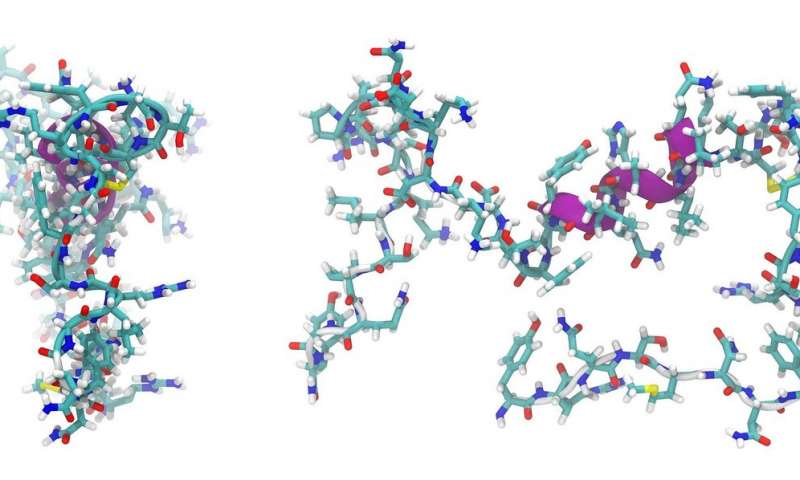
Credit: CC0 Public Domain

New developments in antimicrobial peptides (AMPs) with antibiofilm properties are rapidly materializing. ABP works by inhibiting antibiotic resistant bacteria in the biofilm through nucleotide signaling molecules.

Antimicrobial peptides and antibiofilm peptide (ABP) are new antibiotic molecules derived from microorganisms for the treatment of infections. The authors have discussed significance, limitations and trials of these antimicrobial peptides from bacteria, fungi, protozoa and yeast.

These antimicrobial peptides are small, cationic and amphipathic polypeptide sequences with a wide range for Gram-positive and Gram-negative bacteria, viruses and fungi with 6-100 amino acids in length. These sources are reviewed in detail showing characterization of these antimicrobial peptides and their respective classes.

The APD3 database showed 333 bacteriocin and peptide antibiotics from bacteria, 4 fromarchaea, 8 from protists, 13 from fungi are reported. Bacterial AMP are characterized according to their amino acid numbers and are so small in size with 1-5 kDa mass as compared to Class II AMPs are longer with amino acid number is about 25-50.

Class II bacteriocins are composed of homogeneous amino acids and classified into different groups based on their secondary structure. Class II Lactococcin produced by Lactococcus lactis is Lactococcin B. This AMP is involved in changes of membrane potential.

The reported fungal AMP compounds are more than bacterial AMP and found to be a good source of antimicrobial compounds discovery against infections due to similarity in features and responses to infections.

The in silico cDNA scanning method is widely used for determining the sequencing of Defensin like peptides and more than 100 AMP’s are revealed with the help of genome screening approaches.

Fungal AMP’s Peptaibols isolated as secondary metabolites from possesses anti-microbial and anti-fungal activities. They have short amino acid chains.
Related Articles Read More >

Artemis II experiment uses organ chips to prepare for long-duration missions
New brain-computer interface allows monkeys to navigate 3D virtual reality
Researchers develop immune-capable cervix-on-a-chip to advance STI research
This contact lens measures eye pressure and automatically dispenses medicine
rd newsletter
EXPAND YOUR KNOWLEDGE AND STAY CONNECTED
Get the latest info on technologies, trends, and strategies in Research & Development.

R&D World Digital Issues

Fall 2025 issue

Browse the most current issue of R&D World and back issues in an easy to use high quality format. Clip, share and download with the leading R&D magazine today.

R&D 100 Awards
Research & Development World
  • Subscribe to R&D World Magazine
  • Sign up for R&D World’s newsletter
  • Contact Us
  • About Us
  • Drug Discovery & Development
  • Pharmaceutical Processing
  • Global Funding Forecast

Copyright © 2026 WTWH Media LLC. All Rights Reserved. The material on this site may not be reproduced, distributed, transmitted, cached or otherwise used, except with the prior written permission of WTWH Media
Privacy Policy | Advertising | About Us

Search R&D World

  • R&D World Home
  • Topics
    • Aerospace
    • Automotive
    • Biotech
    • Careers
    • Chemistry
    • Environment
    • Energy
    • Life Science
    • Material Science
    • R&D Management
    • Physics
  • Technology
    • 3D Printing
    • A.I./Robotics
    • Software
    • Battery Technology
    • Controlled Environments
      • Cleanrooms
      • Graphene
      • Lasers
      • Regulations/Standards
      • Sensors
    • Imaging
    • Nanotechnology
    • Scientific Computing
      • Big Data
      • HPC/Supercomputing
      • Informatics
      • Security
    • Semiconductors
  • R&D Market Pulse
  • R&D 100
    • 2025 R&D 100 Award Winners
    • 2025 Professional Award Winners
    • 2025 Special Recognition Winners
    • R&D 100 Awards Event
    • R&D 100 Submissions
    • Winner Archive
  • Resources
    • Research Reports
    • Digital Issues
    • Educational Assets
    • Subscribe
    • Video
    • Webinars
    • Content submission guidelines for R&D World
  • Global Funding Forecast
  • Top Labs
  • Advertise
  • SUBSCRIBE