Research & Development World

  • R&D World Home
  • Topics
    • Aerospace
    • Automotive
    • Biotech
    • Careers
    • Chemistry
    • Environment
    • Energy
    • Life Science
    • Material Science
    • R&D Management
    • Physics
  • Technology
    • 3D Printing
    • A.I./Robotics
    • Software
    • Battery Technology
    • Controlled Environments
      • Cleanrooms
      • Graphene
      • Lasers
      • Regulations/Standards
      • Sensors
    • Imaging
    • Nanotechnology
    • Scientific Computing
      • Big Data
      • HPC/Supercomputing
      • Informatics
      • Security
    • Semiconductors
  • R&D Market Pulse
  • R&D 100
    • 2025 R&D 100 Award Winners
    • 2025 Professional Award Winners
    • 2025 Special Recognition Winners
    • R&D 100 Awards Event
    • R&D 100 Submissions
    • Winner Archive
  • Resources
    • Research Reports
    • Digital Issues
    • Educational Assets
    • Subscribe
    • Video
    • Webinars
    • PharmSci360
    • Content submission guidelines for R&D World
  • Global Funding Forecast
  • Top Labs
  • Advertise
  • SUBSCRIBE

New Computer Model Designs a Drug Delivery Strategy to Fight Cancer

By Stanford University | September 26, 2018

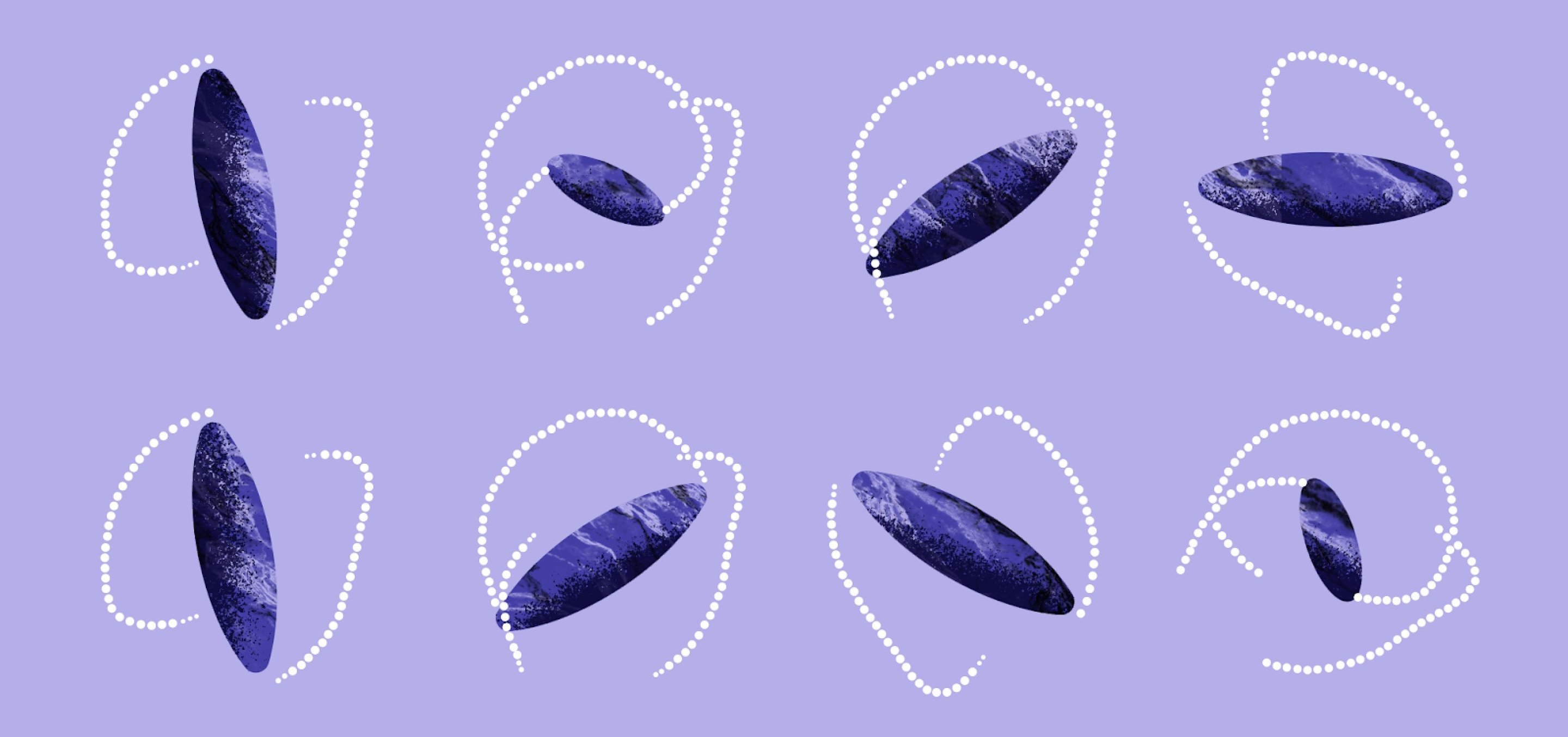
Researchers confirmed that long, thin, so-called one-dimensional particles typically traverse the pores of tumors best. (Credit: Kevin Craft)

Stanford researchers have created a computer simulation, validated by experimental results, to help design drug-delivery nanoparticles that carry cancer-fighting medicines directly to tumors, while minimizing the potential side-effects on healthy cells.

Bryan Smith, director of the Translational Nanomedicine laboratory in the Radiology and Molecular Imaging Program at Stanford, and Eric Shaqfeh, professor of chemical engineering and of mechanical engineering, describe their work in the Sept. 18 issue of Biophysical Journal.

The study builds on previous research, which showed that drugs embedded in nanoparticles are generally better able to evade biological barriers than free-roaming drug molecules. Yet even nanoparticles have thus far shown limited success in reaching their targets. The critical roadblock has been getting the drug from the bloodstream into the tumor. So, in their study, the researchers sought to identify the optimal shape for nanoparticles to act as a molecular carrier to get small-molecule drugs out of the blood vessels and into the interstitial fluids that bathe the tumor where the drugs can enter cancerous cells. Once inside, the nanoparticles dissolve, allowing the drug molecules to kill the tumor cells.

The nanoparticle delivery strategy exploits one of cancer’s great weaknesses: the haphazard way in which tumors grow.

By combining Shaqfeh’s insights into fluid dynamics with Smith’s knowledge of nanoparticle flow and vascular biology, through simulations and experiments the researchers showed how nanoparticles of different shapes flow through blood vessels, tumble through these pores in the tumor blood vessels and reach malignant cells.

The researchers said that because cancers can be very different, the shapes and sizes of nanoparticle delivery systems may have to be tailored to the specific tumor. Unlike previous models, which oversimplified nanoparticle shapes, the researchers say their model is expected to help drug designers accurately predict the optimal particle shape and size in order to most effectively treat the tumor.

The Stanford team also validated their theoretical assumptions with real-world experiments. Combining simulations with experiments helped them reveal that long, thin, so-called one-dimensional particles typically traverse the pores best. The researchers also learned that the previously overlooked process of diffusion, through which particles move from areas of higher to lesser concentration, can play an unexpectedly large role in governing whether nanoparticles slip through pores.

In future research, Smith and Shaqfeh hope to explore how the polymers that make the nanoparticles more biocompatible control their delivery properties. They also plan to broaden their models to include electrical forces that might cause pores to attract or repel nanoparticles.

Related Articles Read More >

How a Duke-led HPC method brought cell-scale cancer simulation to a single cloud node 
Who has access to Claude Mythos-tier models (and beyond) will redefine cybersecurity, including in R&D
Abstract of modern high tech internet data center room with rows of racks with network and server hardware. 3d rendering
A startup says it found hidden memory behavior in NVIDIA GPUs and is building a security layer around it
Ex-Google founders bet quantum-compressed chemistry can crack covalent drug design
rd newsletter
EXPAND YOUR KNOWLEDGE AND STAY CONNECTED
Get the latest info on technologies, trends, and strategies in Research & Development.

R&D World Digital Issues

Fall 2025 issue

Browse the most current issue of R&D World and back issues in an easy to use high quality format. Clip, share and download with the leading R&D magazine today.

R&D 100 Awards
Research & Development World
  • Subscribe to R&D World Magazine
  • Sign up for R&D World’s newsletter
  • Contact Us
  • About Us
  • Drug Discovery & Development
  • Pharmaceutical Processing
  • Global Funding Forecast

Copyright © 2026 Arrowfly LLC. All Rights Reserved. The material on this site may not be reproduced, distributed, transmitted, cached or otherwise used, except with the prior written permission of Arrowfly
Privacy Policy | Advertising | About Us

Search R&D World

  • R&D World Home
  • Topics
    • Aerospace
    • Automotive
    • Biotech
    • Careers
    • Chemistry
    • Environment
    • Energy
    • Life Science
    • Material Science
    • R&D Management
    • Physics
  • Technology
    • 3D Printing
    • A.I./Robotics
    • Software
    • Battery Technology
    • Controlled Environments
      • Cleanrooms
      • Graphene
      • Lasers
      • Regulations/Standards
      • Sensors
    • Imaging
    • Nanotechnology
    • Scientific Computing
      • Big Data
      • HPC/Supercomputing
      • Informatics
      • Security
    • Semiconductors
  • R&D Market Pulse
  • R&D 100
    • 2025 R&D 100 Award Winners
    • 2025 Professional Award Winners
    • 2025 Special Recognition Winners
    • R&D 100 Awards Event
    • R&D 100 Submissions
    • Winner Archive
  • Resources
    • Research Reports
    • Digital Issues
    • Educational Assets
    • Subscribe
    • Video
    • Webinars
    • PharmSci360
    • Content submission guidelines for R&D World
  • Global Funding Forecast
  • Top Labs
  • Advertise
  • SUBSCRIBE