Research & Development World

  • R&D World Home
  • Topics
    • Aerospace
    • Automotive
    • Biotech
    • Careers
    • Chemistry
    • Environment
    • Energy
    • Life Science
    • Material Science
    • R&D Management
    • Physics
  • Technology
    • 3D Printing
    • A.I./Robotics
    • Software
    • Battery Technology
    • Controlled Environments
      • Cleanrooms
      • Graphene
      • Lasers
      • Regulations/Standards
      • Sensors
    • Imaging
    • Nanotechnology
    • Scientific Computing
      • Big Data
      • HPC/Supercomputing
      • Informatics
      • Security
    • Semiconductors
  • R&D Market Pulse
  • R&D 100
    • 2026 R&D 100 Award Winners
    • 2026 Professional Award Winners
    • 2026 Special Recognition Winners
    • R&D 100 Awards Event
    • R&D 100 Submissions
    • Winner Archive
  • Resources
    • Research Reports
    • Digital Issues
    • Educational Assets
    • Subscribe
    • Video
    • Webinars
    • PharmSci360
    • Content submission guidelines for R&D World
  • Global Funding Forecast
  • Top Labs
  • Advertise
  • SUBSCRIBE

Scientists find missing link between players in the epigenetic code

By R&D Editors | October 1, 2012

/sites/rdmag.com/files/legacyimages/RD/News/2012/10/epigentictagsx500.jpg

click to enlarge

Mouse embryonic stem cells (blue, green) lose DNA methylation (red) in the absence of UHRF1. Image: Strahl Lab, UNC School of Medicine

Over the last two decades, scientists have come to understand that the
genetic code held within DNA represents only part of the blueprint of life. The
rest comes from specific patterns of chemical tags that overlay the DNA
structure, determining how tightly the DNA is packaged and how accessible
certain genes are to be switched on or off.

As researchers have uncovered more and more of these
“epigenetic” tags, they have begun to wonder how they are all
connected. Now, research from the University of North Carolina School of
Medicine has established the first link between the two most fundamental
epigenetic tags—histone modification and DNA methylation—in humans.

The study, which was published in Nature Structural &
Molecular Biology
, implicates a protein called UHRF1 in the maintenance of
these epigenetic tags. Because the protein has been found to be defective in
cancer, the finding could help scientists understand not only how microscopic
chemical changes can ultimately affect the epigenetic landscape but also give
clues to the underlying causes of disease and cancer.

“There’s always been the suspicion that regions marked
by DNA methylation might be connected to other epigenetic tags like histone
modifications, and that has even been shown to be true in model organisms like
fungus and plants,” says senior study author Brian Strahl, PhD, associate
professor of biochemistry and biophysics in the UNC School of Medicine and a
member of UNC Lineberger Comprehensive Cancer Center. “But no one has been
able to make that leap in human cells. It’s been controversial in terms of
whether or not there’s really a connection. We have shown there is.”

Strahl, along with his postdoctoral fellow Scott Rothbart,
honed in on this discovery by using a highly sophisticated technique developed
in his lab known as next generation peptide arrays. First the Strahl lab
generated specific types of histone modifications and dotted them on tiny glass
slides called “arrays.” They then used these “arrays” to
see how histone modifications affected the docking of different proteins. One
protein—UHRF1—stood out because it bound a specific histone modification
(lysine 9 methylation on histone H3) in cases where others could not.

Strahl and his colleagues focused the rest of their
experiments on understanding the role of UHRF1 binding to this histone
modification. They found that while other proteins that dock on this epigenetic
tag are ejected during a specific phase of the cell cycle, mitosis, UHRF1
sticks around. Importantly, the protein’s association with histones throughout
the cell cycle appears to be critical to maintaining another epigenetic tag
called DNA methylation. The result was surprising because researchers had
previously believed that the maintenance of DNA methylation occurred
exclusively during a single step of the cell cycle called DNA replication.

“This role of UHRF1 outside of DNA replication is
certainly unexpected, but I think it is just another way of making sure we
don’t lose information about our epigenetic landscape,” says Strahl.
Source: University of North Carolina School of Medicine

Related Articles Read More >

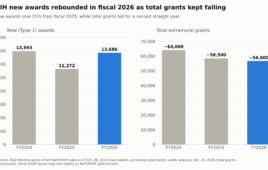
NIH awarded more new grants in fiscal 2026, even as total awards fell
Illustration of a folded protein with three amino acid substitutions labeled: leucine to glycine, cysteine to aspartate and serine to phenylalanine.
Twist adds cell-free antibody screening for AI-designed candidates
Anthropic acquires a one-person biotech that used Claude to coordinate 11 labs
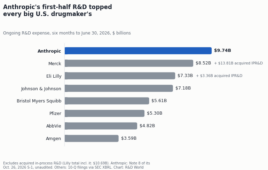
Bar chart of first-half 2026 R&D: Anthropic $9.74 billion, above the ongoing R&D of Merck, Eli Lilly, Johnson & Johnson, Bristol Myers Squibb, Pfizer, AbbVie and Amgen
Anthropic’s R&D budget now rivals Eli Lilly’s
rd newsletter
EXPAND YOUR KNOWLEDGE AND STAY CONNECTED
Get the latest info on technologies, trends, and strategies in Research & Development.

R&D World Digital Issues

Fall 2026 issue

Browse the most current issue of R&D World and back issues in an easy to use high quality format. Clip, share and download with the leading R&D magazine today.

R&D 100 Awards
Research & Development World
  • Subscribe to R&D World Magazine
  • Sign up for R&D World’s newsletter
  • Contact Us
  • About Us
  • Drug Discovery & Development
  • Pharmaceutical Processing
  • Global Funding Forecast

Copyright © 2026 Arrowfly LLC. All Rights Reserved. The material on this site may not be reproduced, distributed, transmitted, cached or otherwise used, except with the prior written permission of Arrowfly
Privacy Policy | Advertising | About Us

Search R&D World

  • R&D World Home
  • Topics
    • Aerospace
    • Automotive
    • Biotech
    • Careers
    • Chemistry
    • Environment
    • Energy
    • Life Science
    • Material Science
    • R&D Management
    • Physics
  • Technology
    • 3D Printing
    • A.I./Robotics
    • Software
    • Battery Technology
    • Controlled Environments
      • Cleanrooms
      • Graphene
      • Lasers
      • Regulations/Standards
      • Sensors
    • Imaging
    • Nanotechnology
    • Scientific Computing
      • Big Data
      • HPC/Supercomputing
      • Informatics
      • Security
    • Semiconductors
  • R&D Market Pulse
  • R&D 100
    • 2026 R&D 100 Award Winners
    • 2026 Professional Award Winners
    • 2026 Special Recognition Winners
    • R&D 100 Awards Event
    • R&D 100 Submissions
    • Winner Archive
  • Resources
    • Research Reports
    • Digital Issues
    • Educational Assets
    • Subscribe
    • Video
    • Webinars
    • PharmSci360
    • Content submission guidelines for R&D World
  • Global Funding Forecast
  • Top Labs
  • Advertise
  • SUBSCRIBE