The National Science Foundation (NSF) and UK Research and Innovation (UKRI) said Oct. 8 they will collaborate on metascience, the use of scientific methods to study how research is funded and conducted. The agencies said they will explore cooperation, including on data analysis and coordinated experiments. The UKRI has already trialed new ways of reviewing grants; NSF has not said when its own tests will begin.
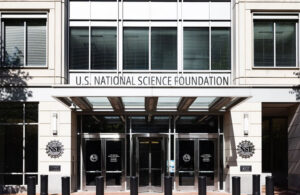
The NSF released a memo on Sept. 10 announcing its Office of Metascience, which will target increasing “scientific productivity and impact” per federal research dollar, tracking grant turnaround times and backing “high-potential ideas that may be too divisive for committee consensus.”
The push comes as public trust in science and science budgets are under strain. In the U.S., trust in scientists fell during the pandemic and has only partly recovered, according to Pew Research Center surveys. The decline is concentrated among Republicans: in an October 2025 survey, 65% said they had at least a fair amount of confidence in scientists to act in the public’s best interests, down from 85% in April 2020. Among Democrats, the share was 90% in October 2025, compared with 91% in April 2020.
The White House has cited that decline as a reason to reshape federal science. A May 2025 executive order says confidence in scientists “has fallen significantly,” that “the Federal Government has contributed to this loss of trust” and that “we must restore the American people’s faith in the scientific enterprise.”
The NSF’s $8.75 billion fiscal 2026 budget is down 3.4% from about $9.06 billion in fiscal 2024 and 2025, after Congress rejected a White House request of $3.9 billion. For fiscal 2027, the White House asked for $3.96 billion, a 55% cut. NSF is running on a stopgap bill through Dec. 11 while Congress negotiates.
In fiscal 2024, NSF evaluated 40,454 proposals and funded about 26% of them, using nearly 188,000 reviews from about 32,000 reviewers. About 95% of its budget went to research, education and facilities programs that year, mostly as grants. Program officers recommend which proposals to fund after outside experts, often sitting on panels, review them. Scientists have raised concerns that this method tends to fund “safe” proposals and leave unconventional, risky science behind.
In the UK, metascience work predates a tightening budget: UKRI’s 2025-26 budget held flat in cash terms, which amounts to a cut after inflation, and said it now “will undertake fewer activities, delivered with greater focus.” The Department for Science, Innovation and Technology (DSIT), the UK’s science ministry, and UKRI announced a Metascience Unit in November 2023, with £10 million in initial funding.
The UK Metascience Unit has run since 2024 on about £3 million to £4 million a year. It runs randomized trials and pilots. Its 2025 report found a distributed peer review pilot cut the time to a decision from 4.6 to 6.3 months to about 2.2 months, 53% to 65% faster than a typical UKRI call, and that evidence does not yet show funding lotteries (partial randomization) are highly effective. Its 2026-28 plans include distributed peer review and testing AI in grant assessment.
Both funders say they will put their grantmaking to experimental tests. NSF’s memo says the new office will “run rigorous experiments” across directorates, and the UK unit’s stated premise is that the scientific method should be applied to the processes of science itself. The results could change how funders judge applicants.
The joint statement names four areas: measuring research productivity and impact, improving research review and funding, assessing how new methods and tools are used in research, and enabling responsible analysis of metascience-relevant data. It also backs an international network of metascience units, government teams like the NSF office and the UK unit that test changes to how their countries fund research. It is a statement of intent; the agencies expect a formal agreement “in the coming months,” with no money or projects named as of Oct. 9.
The partnership follows a broader pledge. On Oct. 4 in Kyoto, Japan, the U.S. and 16 other countries, including the UK, endorsed the Kyoto Vision for a Golden Age of Science, a declaration led by White House Office of Science and Technology Policy Director Michael Kratsios. Alongside a push to apply advanced AI to research, it welcomes metascience, which it says “applies empirical methods to improve the conduct, organization, and funding of science itself,” and notes the value of establishing dedicated metascience capabilities in governments. The NSF-UKRI statement, issued four days later, says the agencies intend to build on the vision’s metascience principles.
Who gets the Golden Ticket?
The NSF memo bears the signature of Brian Stone, who is performing the duties of the NSF director, promises to test Golden Tickets, which let individual reviewers champion proposals that might not survive a panel’s consensus, and distributed review, which typically has applicants assess one another’s proposals. The memo does not say how many tickets reviewers would get or whether a ticket would guarantee funding. It also promises to publish failures as well as successes and “double the scientific productivity and impact generated by each federal research dollar by 2036.” NSF’s new metascience office has no head yet.
In a Sept. 17 preprint, Haining Wang of the Indiana University School of Medicine analyzed rejected submissions to ICLR, a major machine learning conference, from 2017 to 2024. With extra slots equal to 10% of each year’s accepted papers, rescuing the rejects with the highest average reviewer scores selected work later cited 7.75 percentile points higher than rescuing those backed strongly by a single reviewer, the Golden Ticket approach. Golden Ticket picks did about as well as a lottery. The study has not been peer reviewed, and it examines conference papers rather than grant proposals.
AIP FYI, the American Institute of Physics’ science policy news service, reported in September that some experts question whether the agency is serious about improving its grantmaking, citing political interference in grants and NSF’s move to dissolve the Social, Behavioral and Economic Sciences (SBE) directorate, which funds science-of-science research. Mary Feeney, an Arizona State University professor and former program director for NSF’s Science of Science program, told AIP that NSF’s new office must be “an office that’s independent and trusted,” not a vehicle for a “political agenda hidden behind the words ‘gold standard science.’”
NSF told R&D World that more news concerning the program is forthcoming soon.

Tell Us What You Think!
You must be logged in to post a comment.