BILS
Category: Analytical/Test
Developers: Industrial Technology Research Institute (ITRI)
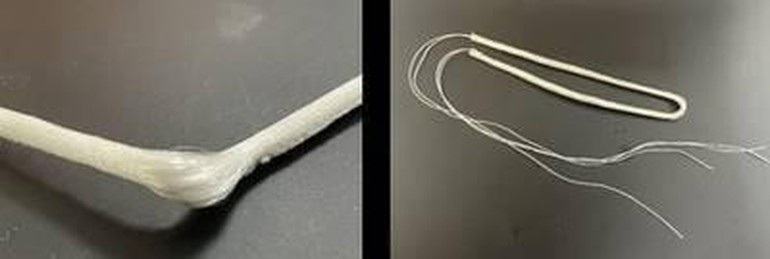
Product Description:BILS is a bioengineered artificial ligament that integrates composite biomedical materials with a porous bionic structure, enhancing tissue adherence and regeneration for biomechanical durability and biological integration. This product can accelerate postoperative healing and reduce inflammation caused by wear and tear of conventional artificial ligaments. Sports injuries, such as fractures and damage to tendons or ligaments, can occur not only during athletic activities but also in everyday situations like collisions, falls, or traffic accidents. Once such an injury occurs, tissue healing typically requires at least six months of recovery. This prolonged recovery period leads to several negative consequences, including atrophy, lost elasticity, failure to regain strength, loss of mobility and reduced athletic performance. BILS is an artificial ligament composed of polymer-bioceramic composite fibers woven in a porous bionic structure that promotes soft and hard tissue integration. This design supports cell adhesion, proliferation, and differentiation, thereby accelerating postoperative healing and promoting long-term tissue integration. BILS is primarily applied in anterior cruciate ligament (ACL) reconstruction and other orthopedic procedures for patients with torn or degenerated ligaments. In clinical ligament reconstruction surgery, a tunnel is drilled into the target bone, and the BILS artificial ligament is fixed inside the tunnel using an interference screw that secures it through compressive fixation. This type of procedure is commonly seen in ACL reconstruction, where tunnels are created in both the femur and tibia. The BILS artificial ligament is woven of polyethylene terephthalate (PET) fibers containing bioceramic nanoparticles, and coated with collagen. Its porous 3D textile design offers bionic structure, facilitating soft tissue encapsulation and bony ingrowth. The composite material has improved mechanical strength and biocompatibility, reducing inflammation and graft failure associated with conventional inert materials.
Developers: Industrial Technology Research Institute (ITRI)
Product Description:BILS is a bioengineered artificial ligament that integrates composite biomedical materials with a porous bionic structure, enhancing tissue adherence and regeneration for biomechanical durability and biological integration. This product can accelerate postoperative healing and reduce inflammation caused by wear and tear of conventional artificial ligaments. Sports injuries, such as fractures and damage to tendons or ligaments, can occur not only during athletic activities but also in everyday situations like collisions, falls, or traffic accidents. Once such an injury occurs, tissue healing typically requires at least six months of recovery. This prolonged recovery period leads to several negative consequences, including atrophy, lost elasticity, failure to regain strength, loss of mobility and reduced athletic performance. BILS is an artificial ligament composed of polymer-bioceramic composite fibers woven in a porous bionic structure that promotes soft and hard tissue integration. This design supports cell adhesion, proliferation, and differentiation, thereby accelerating postoperative healing and promoting long-term tissue integration. BILS is primarily applied in anterior cruciate ligament (ACL) reconstruction and other orthopedic procedures for patients with torn or degenerated ligaments. In clinical ligament reconstruction surgery, a tunnel is drilled into the target bone, and the BILS artificial ligament is fixed inside the tunnel using an interference screw that secures it through compressive fixation. This type of procedure is commonly seen in ACL reconstruction, where tunnels are created in both the femur and tibia. The BILS artificial ligament is woven of polyethylene terephthalate (PET) fibers containing bioceramic nanoparticles, and coated with collagen. Its porous 3D textile design offers bionic structure, facilitating soft tissue encapsulation and bony ingrowth. The composite material has improved mechanical strength and biocompatibility, reducing inflammation and graft failure associated with conventional inert materials.