Low Coefficient of Thermal Expansion (CTE) Molecules to Resolve Thermal Expansion Problems in Polymers
Category: Mechanical/Materials
Developers: Sandia National Laboratories; University of Texas at Austin; Tetramer Technologies, Inc.
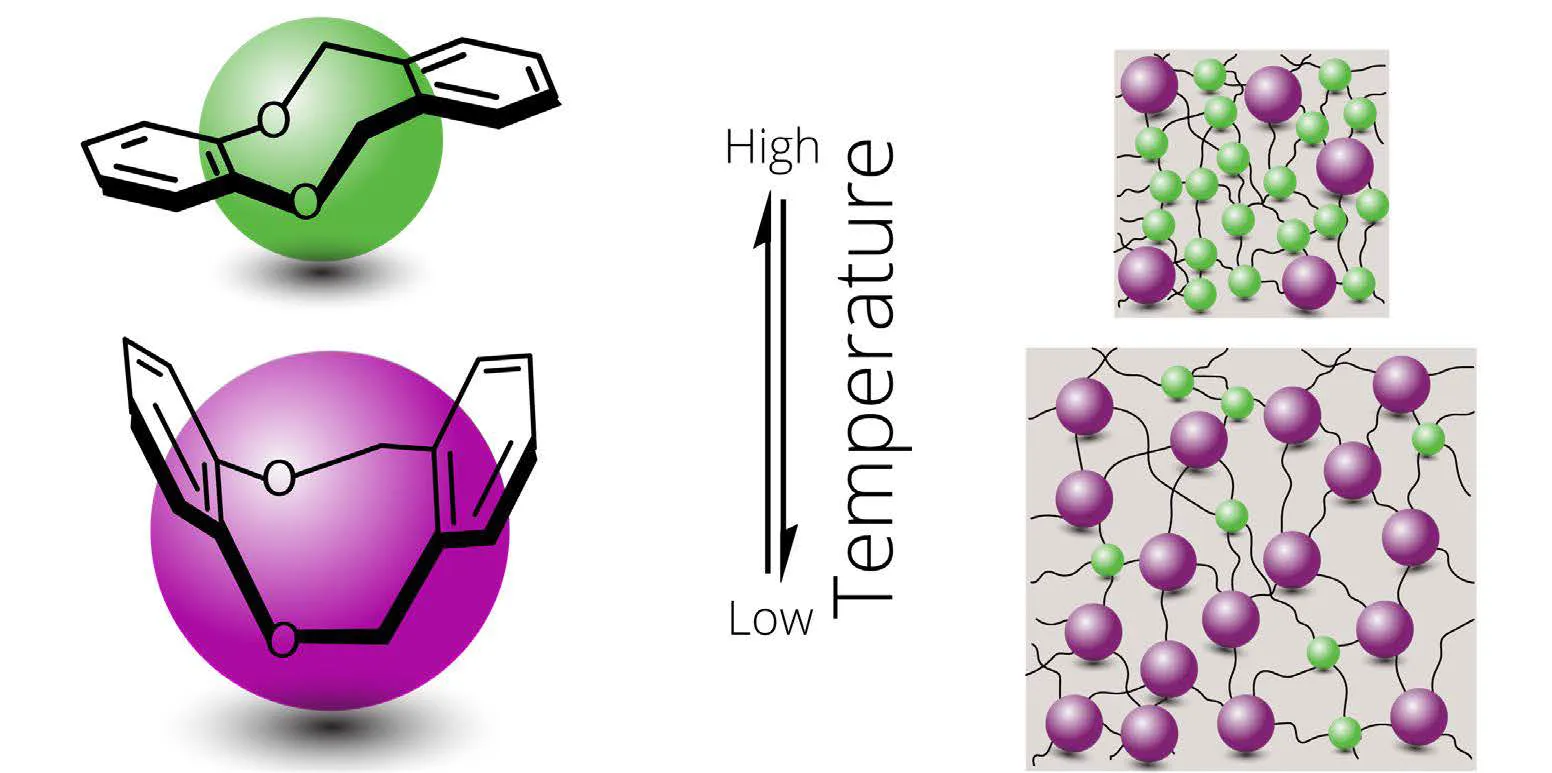
Product Description:Low coefficient of thermal expansion (CTE) molecules are a molecular system. When incorporated into polymers, they match the rate of thermal expansion and contraction of metals. This thermal matching addresses heating and cooling-induced mismatch issues. Low CTE molecules can be added to different kinds of polymers, allowing for design flexibility. This technology could combat CTE mismatch between polymers and metals/ceramics. CTE mismatch is a well-known issue in the industry. Significant time and effort to design around CTE mismatch is necessary because the design requires the use of fillers or compliant layers. While there are polymers with very low CTE or filled systems that have low CTE, these polymers are usually high cost, or only offer low CTE under certain conditions, such as anisotropically. By lowering the CTE on commodity, low-cost polymers, these molecules could become more competitive to niche or specialty polymers. In certain cases, the need for use of fluorinated polymers and their toxic, persistent precursors could even be completely eliminated.
Developers: Sandia National Laboratories; University of Texas at Austin; Tetramer Technologies, Inc.
Product Description:Low coefficient of thermal expansion (CTE) molecules are a molecular system. When incorporated into polymers, they match the rate of thermal expansion and contraction of metals. This thermal matching addresses heating and cooling-induced mismatch issues. Low CTE molecules can be added to different kinds of polymers, allowing for design flexibility. This technology could combat CTE mismatch between polymers and metals/ceramics. CTE mismatch is a well-known issue in the industry. Significant time and effort to design around CTE mismatch is necessary because the design requires the use of fillers or compliant layers. While there are polymers with very low CTE or filled systems that have low CTE, these polymers are usually high cost, or only offer low CTE under certain conditions, such as anisotropically. By lowering the CTE on commodity, low-cost polymers, these molecules could become more competitive to niche or specialty polymers. In certain cases, the need for use of fluorinated polymers and their toxic, persistent precursors could even be completely eliminated.