Research & Development World

  • R&D World Home
  • Topics
    • Aerospace
    • Automotive
    • Biotech
    • Careers
    • Chemistry
    • Environment
    • Energy
    • Life Science
    • Material Science
    • R&D Management
    • Physics
  • Technology
    • 3D Printing
    • A.I./Robotics
    • Software
    • Battery Technology
    • Controlled Environments
      • Cleanrooms
      • Graphene
      • Lasers
      • Regulations/Standards
      • Sensors
    • Imaging
    • Nanotechnology
    • Scientific Computing
      • Big Data
      • HPC/Supercomputing
      • Informatics
      • Security
    • Semiconductors
  • R&D Market Pulse
  • R&D 100
    • 2026 R&D 100 Award Winners
    • 2026 Professional Award Winners
    • 2026 Special Recognition Winners
    • R&D 100 Awards Event
    • R&D 100 Submissions
    • Winner Archive
  • Resources
    • Research Reports
    • Digital Issues
    • Educational Assets
    • Subscribe
    • Video
    • Webinars
    • PharmSci360
    • Content submission guidelines for R&D World
  • Global Funding Forecast
  • Top Labs
  • Advertisers
    • Advertise
    • PR Submissions
    • Eblast Submissions
  • SUBSCRIBE

Researchers Provide Molecular Portraits of New Cancer Drug Target

By University of Minnesota | December 20, 2016

Unprecedented images of cancer genome-mutating enzymes acting on DNA provide vital clues into how the enzymes work to promote tumor evolution and drive poor disease outcomes. These images, revealed by University of Minnesota researchers, provide the first ever high-resolution pictures of molecular complexes formed between DNA and the human APOBEC3A and APOBEC3B enzymes.

The research is published today online in Nature Structural and Molecular Biology.

The DNA mutating enzymes called APOBECs are a major source of mutation in breast, lung, cervical, head/neck and many other cancer types.

“These enzymes normally function to protect us from viral infections,” said Reuben Harris, Ph.D., investigator of the Howard Hughes Medical Institute and professor of Biochemistry, Molecular Biology, and Biophysics, member of the Masonic Cancer Center, and associate director of the Institute of Molecular Virology, University of Minnesota. “However, these enzymes can become misregulated in cancer cells and cause mutations in our own genomic DNA. These mutations fuel tumor evolution and promote poor clinical outcomes such as drug resistance and metastasis.”

With an imaging technique called x-ray crystallography, which uses a high energy x-ray beam to visualize the atomic details of molecules, researchers were able to see an unexpected mode of DNA binding activity. A unique U-shaped DNA conformation and defined pockets for the target cytosine and the adjacent thymine base explains the specific mutation signature left behind by the enzyme interacting with tumor DNA.

“Our crystal structures and corroborating biochemical experiments show how APOBEC3A and APOBEC3B engage DNA substrates,” said Hideki Aihara, Ph.D., associate professor in the department of Biochemistry, Molecular Biology and Biophysics and member of the Institute of Molecular Virology and the Masonic Cancer Center at the University of Minnesota. “These structures show an unexpected mode of DNA engagement with a sharply bent DNA strand and flipped-out nucleotides. Our findings were surprising, but actually make a lot of sense and explain many previous observations about this family of proteins.”

The DNA-binding mechanism suggests ways to block enzyme activity in cancer, which could slow the rate at which tumors evolve. Inhibiting APOBEC activity could make current anti-cancer therapies more effective.

Work continues to take and analyze additional portraits of these enzymes with different DNA substrates and to devise strategies for enzyme inhibition.

Funding for this work is provided by grants from the National Institutes of Health (R01-GM118000, R35-GM118047, R01-GM110129, R21-CA206309, DP2-OD007237, P41-GM103426), the National Science Foundation (CHE060073N), the Prospect Creek Foundation and the Masonic Cancer Center, University of Minnesota. Harris is the Margaret Harvey Schering Land Grant Chair for Cancer Research at the University of Minnesota, and an Investigator of the Howard Hughes Medical Institute.


Related Articles Read More >

Female doctor using medical AI assistant on laptop computer in clinic office. modern medicine
Google is teaching healthcare professionals to incorporate AI into the everyday practice of medicine
Carnyx targets 2027 IND filing for oral sleep candidate CNYX-005
OpenAI unveils BioBasicsBench, a benchmark to gauge how well AI agents read raw experimental data across 100 routine wet-lab tasks.
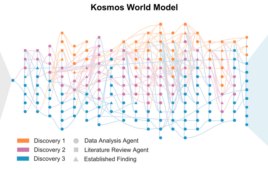
Kosmos world model diagram: three colored paths of connected nodes trace three discoveries built from data-analysis agent steps, literature-review agent steps and established findings.
Edison’s Kosmos AI scientist moves into Pfizer R&D; Edison details the math behind its $99 million-per-program estimate
rd newsletter
EXPAND YOUR KNOWLEDGE AND STAY CONNECTED
Get the latest info on technologies, trends, and strategies in Research & Development.

R&D World Digital Issues

Fall 2026 issue

Browse the most current issue of R&D World and back issues in an easy to use high quality format. Clip, share and download with the leading R&D magazine today.

R&D 100 Awards
Research & Development World
  • Subscribe to R&D World Magazine
  • Sign up for R&D World’s newsletter
  • Contact Us
  • About Us
  • Drug Discovery & Development
  • Pharmaceutical Processing
  • Global Funding Forecast

Copyright © 2026 Arrowfly LLC. All Rights Reserved. The material on this site may not be reproduced, distributed, transmitted, cached or otherwise used, except with the prior written permission of Arrowfly
Privacy Policy | Advertising | About Us

Search R&D World

  • R&D World Home
  • Topics
    • Aerospace
    • Automotive
    • Biotech
    • Careers
    • Chemistry
    • Environment
    • Energy
    • Life Science
    • Material Science
    • R&D Management
    • Physics
  • Technology
    • 3D Printing
    • A.I./Robotics
    • Software
    • Battery Technology
    • Controlled Environments
      • Cleanrooms
      • Graphene
      • Lasers
      • Regulations/Standards
      • Sensors
    • Imaging
    • Nanotechnology
    • Scientific Computing
      • Big Data
      • HPC/Supercomputing
      • Informatics
      • Security
    • Semiconductors
  • R&D Market Pulse
  • R&D 100
    • 2026 R&D 100 Award Winners
    • 2026 Professional Award Winners
    • 2026 Special Recognition Winners
    • R&D 100 Awards Event
    • R&D 100 Submissions
    • Winner Archive
  • Resources
    • Research Reports
    • Digital Issues
    • Educational Assets
    • Subscribe
    • Video
    • Webinars
    • PharmSci360
    • Content submission guidelines for R&D World
  • Global Funding Forecast
  • Top Labs
  • Advertisers
    • Advertise
    • PR Submissions
    • Eblast Submissions
  • SUBSCRIBE