Research & Development World

  • R&D World Home
  • Topics
    • Aerospace
    • Automotive
    • Biotech
    • Careers
    • Chemistry
    • Environment
    • Energy
    • Life Science
    • Material Science
    • R&D Management
    • Physics
  • Technology
    • 3D Printing
    • A.I./Robotics
    • Software
    • Battery Technology
    • Controlled Environments
      • Cleanrooms
      • Graphene
      • Lasers
      • Regulations/Standards
      • Sensors
    • Imaging
    • Nanotechnology
    • Scientific Computing
      • Big Data
      • HPC/Supercomputing
      • Informatics
      • Security
    • Semiconductors
  • R&D Market Pulse
  • R&D 100
    • 2025 R&D 100 Award Winners
    • 2025 Professional Award Winners
    • 2025 Special Recognition Winners
    • R&D 100 Awards Event
    • R&D 100 Submissions
    • Winner Archive
  • Resources
    • Research Reports
    • Digital Issues
    • Educational Assets
    • Subscribe
    • Video
    • Webinars
    • PharmSci360
    • Content submission guidelines for R&D World
  • Global Funding Forecast
  • Top Labs
  • Advertise
  • SUBSCRIBE

Scientists are Investigating Membranes Made from Aqua Material For Water Purification

By WILEY | January 19, 2017

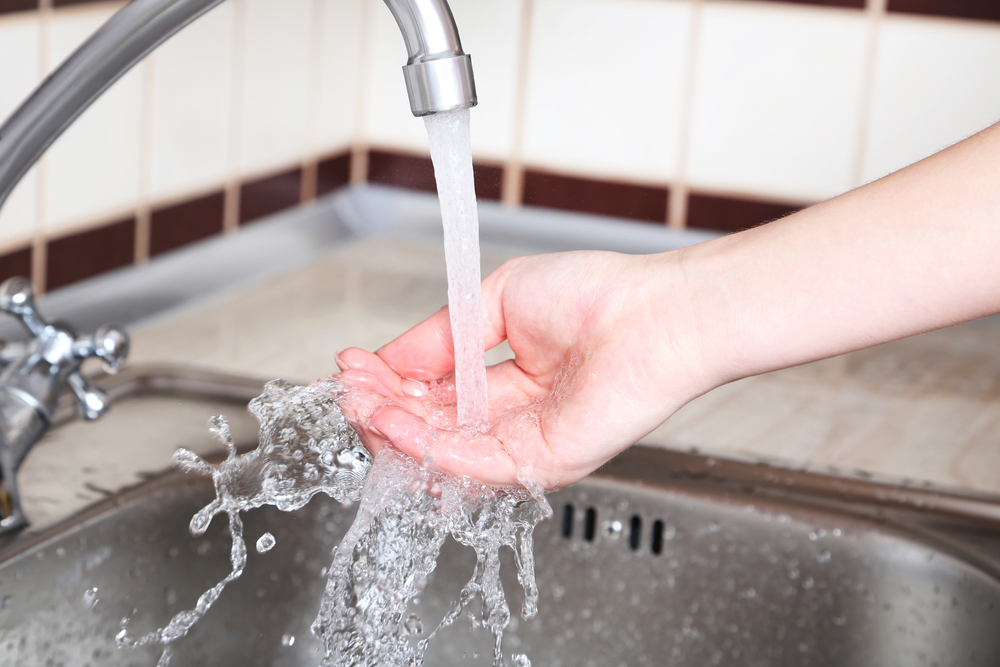
Water purification processes usually make use of robust membranes for filtering off contaminants while working at high pressures. Can materials employing water as major component be made strong enough to suit such a demanding application? Israeli scientists now report in the journal Angewandte Chemie that a supramolecular aqua material can be utilized as a sustainable membrane for water purification at high pressures.

Normally, a membrane obtains its toughness from the formation of a polymeric network made of covalent bonds. However, polymeric membranes are difficult to clean and recycle, while easy fabrication, cleaning, and recycling can greatly enhance the sustainability of the membranes. Supramolecular systems in principle fulfill many of the sustainability requirements, but they lack robustness. The Rybtchinski group from the Weizmann Institute of Science, Israel, and collaborators from BASF have combined two membrane components, working in synergy, to form a hybrid membrane that is robust and can be easily fabricated and disassembled, thus being highly advantageous for the challenges presented by industrial water purification.

Nafion, which is a sulfonate polyelectrolyte with Teflon-like fluorocarbon backbone, is known for its ion-exchange properties. A noncovalent PP2b network can be used to build water-based membranes with filtering properties but lacking the robustness required from “aqua materials” also known as “aqua plastics” (bioinspired self-assembled materials that employ water as major component, but can be as strong as conventional plastics). Rybtchinski and his colleagues combined both materials through deposition of colloidal Nafion on PP2b layer and found that the two layers interacted advantageously: “Overall, a hydrogel-like material featuring a 3D Nafion network and strongly densified PP2b layers is formed,” they said.

Mechanical compression, hydrophobic forces, and osmotic pressure caused the formation of a dense hybrid membrane structure. The scientists then tested the layered material for the removal of toxic heavy metals and small organic molecules such as dyes and drugs from contaminated water. It was highly effective in both, and the authors explained why: “The Nafion layer acts as membrane having the ion exchange properties, while the densification of PP2b appears to play a role in the size-selective rejection.”

Remarkably, the hybrid membrane sustained high pressures and could also be easily disassembled for cleaning and recycling. These favorable properties induced through synergistic self-assembly make such aqua materials good candidates for demanding large-scale industrial applications.

Related Articles Read More >

Researchers develop sawdust-based foam as polystyrene bans force industry to adapt
Researchers develop compostable PLA that potentially could be used for biomedical applications
Reservoir time: new study rules out IPCC worst case scenario for Antarctic ice loss
How a new permafrost climate model fits a dangerous pattern in climate science
rd newsletter
EXPAND YOUR KNOWLEDGE AND STAY CONNECTED
Get the latest info on technologies, trends, and strategies in Research & Development.

R&D World Digital Issues

Fall 2025 issue

Browse the most current issue of R&D World and back issues in an easy to use high quality format. Clip, share and download with the leading R&D magazine today.

R&D 100 Awards
Research & Development World
  • Subscribe to R&D World Magazine
  • Sign up for R&D World’s newsletter
  • Contact Us
  • About Us
  • Drug Discovery & Development
  • Pharmaceutical Processing
  • Global Funding Forecast

Copyright © 2026 Arrowfly LLC. All Rights Reserved. The material on this site may not be reproduced, distributed, transmitted, cached or otherwise used, except with the prior written permission of Arrowfly
Privacy Policy | Advertising | About Us

Search R&D World

  • R&D World Home
  • Topics
    • Aerospace
    • Automotive
    • Biotech
    • Careers
    • Chemistry
    • Environment
    • Energy
    • Life Science
    • Material Science
    • R&D Management
    • Physics
  • Technology
    • 3D Printing
    • A.I./Robotics
    • Software
    • Battery Technology
    • Controlled Environments
      • Cleanrooms
      • Graphene
      • Lasers
      • Regulations/Standards
      • Sensors
    • Imaging
    • Nanotechnology
    • Scientific Computing
      • Big Data
      • HPC/Supercomputing
      • Informatics
      • Security
    • Semiconductors
  • R&D Market Pulse
  • R&D 100
    • 2025 R&D 100 Award Winners
    • 2025 Professional Award Winners
    • 2025 Special Recognition Winners
    • R&D 100 Awards Event
    • R&D 100 Submissions
    • Winner Archive
  • Resources
    • Research Reports
    • Digital Issues
    • Educational Assets
    • Subscribe
    • Video
    • Webinars
    • PharmSci360
    • Content submission guidelines for R&D World
  • Global Funding Forecast
  • Top Labs
  • Advertise
  • SUBSCRIBE