Research & Development World

  • R&D World Home
  • Topics
    • Aerospace
    • Automotive
    • Biotech
    • Careers
    • Chemistry
    • Environment
    • Energy
    • Life Science
    • Material Science
    • R&D Management
    • Physics
  • Technology
    • 3D Printing
    • A.I./Robotics
    • Software
    • Battery Technology
    • Controlled Environments
      • Cleanrooms
      • Graphene
      • Lasers
      • Regulations/Standards
      • Sensors
    • Imaging
    • Nanotechnology
    • Scientific Computing
      • Big Data
      • HPC/Supercomputing
      • Informatics
      • Security
    • Semiconductors
  • R&D Market Pulse
  • R&D 100
    • 2025 R&D 100 Award Winners
    • 2025 Professional Award Winners
    • 2025 Special Recognition Winners
    • R&D 100 Awards Event
    • R&D 100 Submissions
    • Winner Archive
  • Resources
    • Research Reports
    • Digital Issues
    • Educational Assets
    • Subscribe
    • Video
    • Webinars
    • Content submission guidelines for R&D World
  • Global Funding Forecast
  • Top Labs
  • Advertise
  • SUBSCRIBE

Scientists Discover Master Regulator of Cellular Aging

By The Scripps Research Institute | January 17, 2017

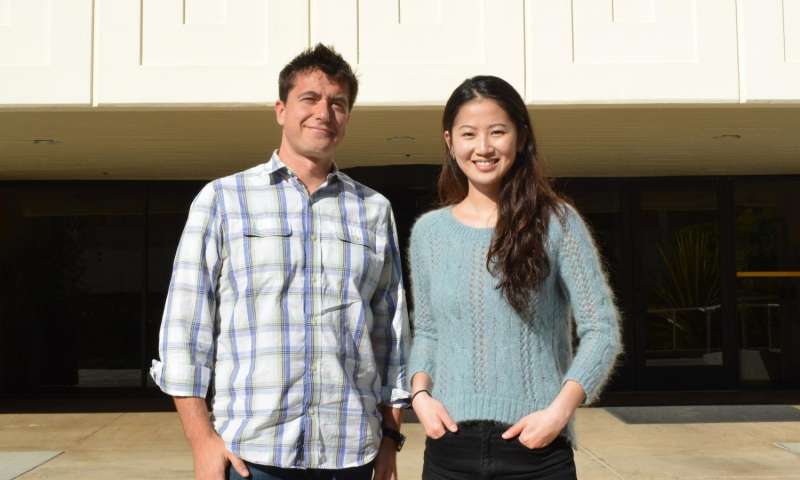
Associate Professor Eros Lazzerini Denchi (left) and Graduate Student Julia Su Zhou Li led the study at The Scripps Research Institute. (Credit: Madeline McCurry-Schmidt)

Scientists at The Scripps Research Institute (TSRI) have discovered a protein that fine-tunes the cellular clock involved in aging.

This novel protein, named TZAP, binds the ends of chromosomes and determines how long telomeres, the segments of DNA that protect chromosome ends, can be. Understanding telomere length is crucial because telomeres set the lifespan of cells in the body, dictating critical processes such as aging and the incidence of cancer.

“Telomeres represent the clock of a cell,” said TSRI Associate Professor Eros Lazzerini Denchi, corresponding author of the new study, published online today in the journal Science. “You are born with telomeres of a certain length, and every time a cell divides, it loses a little bit of the telomere. Once the telomere is too short, the cell cannot divide anymore.”

Naturally, researchers are curious whether lengthening telomeres could slow aging, and many scientists have looked into using a specialized enzyme called telomerase to “fine-tune” the biological clock. One drawback they’ve discovered is that unnaturally long telomeres are a risk factor in developing cancer.

“This cellular clock needs to be finely tuned to allow sufficient cell divisions to develop differentiated tissues and maintain renewable tissues in our body and, at the same time, to limit the proliferation of cancerous cells,” said Lazzerini Denchi.

In this new study, the researcher found that TZAP controls a process called telomere trimming, ensuring that telomeres do not become too long.

“This protein sets the upper limit of telomere length,” added Lazzerini Denchi. “This allows cells to proliferate—but not too much.”

For the last few decades, the only proteins known to specifically bind telomeres is the telomerase enzyme and a protein complex known as the Shelterin complex. The discovery TZAP, which binds specifically to telomeres, was a surprise since many scientists in the field believed there were no additional proteins binding to telomeres.

“There is a protein complex that was found to localize specifically at chromosome ends, but since its discovery, no protein has been shown to specifically localize to telomeres,” said study first author Julia Su Zhou Li, a graduate student in the Lazzerini Denchi lab.

“This study opens up a lot of new and exciting questions,” said Lazzerini Denchi.

 

Related Articles Read More >

Alphabet-spinoff Isomorphic Labs raises $2.1 billion in quest to ‘solve all disease’ with AI-based drug discovery tools
We are still likely years away from a hantavirus vaccine
Study reveals fungal strains can survive sterilization procedures and Martian conditions
Trump administration canceled hantavirus research funding last year
rd newsletter
EXPAND YOUR KNOWLEDGE AND STAY CONNECTED
Get the latest info on technologies, trends, and strategies in Research & Development.

R&D World Digital Issues

Fall 2025 issue

Browse the most current issue of R&D World and back issues in an easy to use high quality format. Clip, share and download with the leading R&D magazine today.

R&D 100 Awards
Research & Development World
  • Subscribe to R&D World Magazine
  • Sign up for R&D World’s newsletter
  • Contact Us
  • About Us
  • Drug Discovery & Development
  • Pharmaceutical Processing
  • Global Funding Forecast

Copyright © 2026 WTWH Media LLC. All Rights Reserved. The material on this site may not be reproduced, distributed, transmitted, cached or otherwise used, except with the prior written permission of WTWH Media
Privacy Policy | Advertising | About Us

Search R&D World

  • R&D World Home
  • Topics
    • Aerospace
    • Automotive
    • Biotech
    • Careers
    • Chemistry
    • Environment
    • Energy
    • Life Science
    • Material Science
    • R&D Management
    • Physics
  • Technology
    • 3D Printing
    • A.I./Robotics
    • Software
    • Battery Technology
    • Controlled Environments
      • Cleanrooms
      • Graphene
      • Lasers
      • Regulations/Standards
      • Sensors
    • Imaging
    • Nanotechnology
    • Scientific Computing
      • Big Data
      • HPC/Supercomputing
      • Informatics
      • Security
    • Semiconductors
  • R&D Market Pulse
  • R&D 100
    • 2025 R&D 100 Award Winners
    • 2025 Professional Award Winners
    • 2025 Special Recognition Winners
    • R&D 100 Awards Event
    • R&D 100 Submissions
    • Winner Archive
  • Resources
    • Research Reports
    • Digital Issues
    • Educational Assets
    • Subscribe
    • Video
    • Webinars
    • Content submission guidelines for R&D World
  • Global Funding Forecast
  • Top Labs
  • Advertise
  • SUBSCRIBE