Research & Development World

  • R&D World Home
  • Topics
    • Aerospace
    • Automotive
    • Biotech
    • Careers
    • Chemistry
    • Environment
    • Energy
    • Life Science
    • Material Science
    • R&D Management
    • Physics
  • Technology
    • 3D Printing
    • A.I./Robotics
    • Software
    • Battery Technology
    • Controlled Environments
      • Cleanrooms
      • Graphene
      • Lasers
      • Regulations/Standards
      • Sensors
    • Imaging
    • Nanotechnology
    • Scientific Computing
      • Big Data
      • HPC/Supercomputing
      • Informatics
      • Security
    • Semiconductors
  • R&D Market Pulse
  • R&D 100
    • 2026 R&D 100 Award Winners
    • 2026 Professional Award Winners
    • 2026 Special Recognition Winners
    • R&D 100 Awards Event
    • R&D 100 Submissions
    • Winner Archive
  • Resources
    • Research Reports
    • Digital Issues
    • Educational Assets
    • Subscribe
    • Video
    • Webinars
    • PharmSci360
    • Content submission guidelines for R&D World
  • Global Funding Forecast
  • Top Labs
  • Advertise
  • SUBSCRIBE

SpaceX unveils $100B Louisiana spaceport, targets 175 kW NVIDIA AI system for orbit in 2027

By Brian Buntz | August 25, 2026

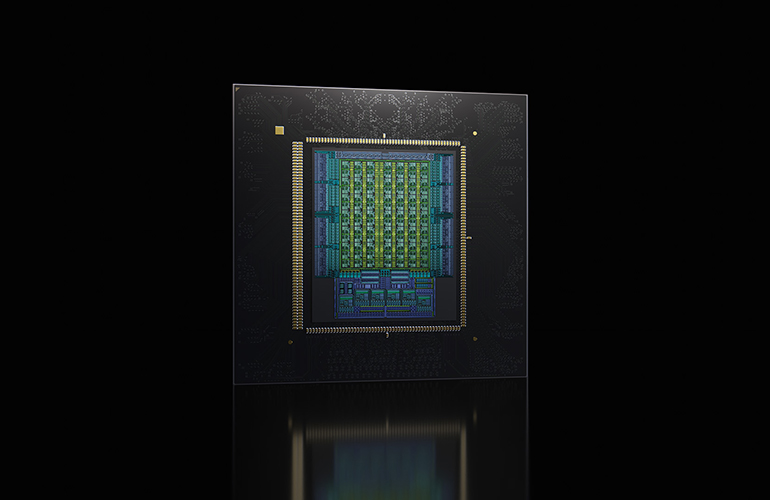
Vera Rubin image from NVIDIA

Vera Rubin image from NVIDIA

Over the past several months, SpaceX CEO Elon Musk has been increasingly vocal about putting AI data centers in space. In February, he predicted that, within five years, “we will launch and be operating every year more AI in space than the cumulative total on Earth” He said then that SpaceX, then still a private company, was preparing for 10,000 to 30,000 launches annually.

Now, SpaceX has made the biggest stride towards realizing that vision with a $100 billion Louisiana spaceport designed to support thousands of launches per year. Meanwhile, Musk set a fourth-quarter 2027 target for the first Starmind AI1 satellite, which will carry an optimized NVIDIA Vera Rubin NVL72 system rated for 175 kW of average compute and up to 250 kW at peak. The Vera Rubin architecture was unveiled at CES on January 5, 2026.

“SpaceX, in partnership with Nvidia, has designed a space-optimized Vera Rubin NVL72 system for launch to orbit in Q4 next year, with significant scale in 2028,” Musk wrote on X. “Our design is significantly simpler, lower cost, denser and lighter than a traditional rack,” Musk added.

Musk recently told The Economist that power and cooling have become tighter constraints on AI growth than chip availability outside China. SpaceX argues that near-continuous solar exposure, reduced battery requirements and freedom from terrestrial grid interconnection bottlenecks could eventually make orbit the cheapest place to run AI.

According to Louisiana Economic Development, construction is expected to begin in 2027, with the first launch targeted for as early as 2029. That would place the Louisiana spaceport’s debut after the first Starmind AI1 mission and Musk’s planned move to “significant scale” in 2028. Early Starmind missions would thus rely on SpaceX’s existing launch infrastructure, with Louisiana providing longer-term capacity.

The program also offers SpaceX a path from launch provider to vertically integrated computing company. The company has also signaled its intent to launch a standalone direct-to-consumer Starlink Mobile service to compete against traditional wireless carriers. Similarly in its potential orbital data center business, SpaceX stands to capture revenue from both transportation and inference.

Tell Us What You Think! Cancel reply

You must be logged in to post a comment.

Related Articles Read More >

NVIDIA and Apple unveil compact AI computers for robots and agents, claiming 2x and 4x generational AI gains
Businessman working with modern computer virtual dashboard analyzing finance sales data and economic growth graph chart and block chain technology.
Anthropic backers eye $2 trillion valuation. Its projected Q2 revenue was $10.9B
Norstella launches Atlas, a biopharma agentic platform that can ‘train you’
AI landmine detection reveals bigger problems in computer vision testing 
rd newsletter
EXPAND YOUR KNOWLEDGE AND STAY CONNECTED
Get the latest info on technologies, trends, and strategies in Research & Development.

R&D World Digital Issues

Fall 2025 issue

Browse the most current issue of R&D World and back issues in an easy to use high quality format. Clip, share and download with the leading R&D magazine today.

R&D 100 Awards
Research & Development World
  • Subscribe to R&D World Magazine
  • Sign up for R&D World’s newsletter
  • Contact Us
  • About Us
  • Drug Discovery & Development
  • Pharmaceutical Processing
  • Global Funding Forecast

Copyright © 2026 Arrowfly LLC. All Rights Reserved. The material on this site may not be reproduced, distributed, transmitted, cached or otherwise used, except with the prior written permission of Arrowfly
Privacy Policy | Advertising | About Us

Search R&D World

  • R&D World Home
  • Topics
    • Aerospace
    • Automotive
    • Biotech
    • Careers
    • Chemistry
    • Environment
    • Energy
    • Life Science
    • Material Science
    • R&D Management
    • Physics
  • Technology
    • 3D Printing
    • A.I./Robotics
    • Software
    • Battery Technology
    • Controlled Environments
      • Cleanrooms
      • Graphene
      • Lasers
      • Regulations/Standards
      • Sensors
    • Imaging
    • Nanotechnology
    • Scientific Computing
      • Big Data
      • HPC/Supercomputing
      • Informatics
      • Security
    • Semiconductors
  • R&D Market Pulse
  • R&D 100
    • 2026 R&D 100 Award Winners
    • 2026 Professional Award Winners
    • 2026 Special Recognition Winners
    • R&D 100 Awards Event
    • R&D 100 Submissions
    • Winner Archive
  • Resources
    • Research Reports
    • Digital Issues
    • Educational Assets
    • Subscribe
    • Video
    • Webinars
    • PharmSci360
    • Content submission guidelines for R&D World
  • Global Funding Forecast
  • Top Labs
  • Advertise
  • SUBSCRIBE