Research & Development World

  • R&D World Home
  • Topics
    • Aerospace
    • Automotive
    • Biotech
    • Careers
    • Chemistry
    • Environment
    • Energy
    • Life Science
    • Material Science
    • R&D Management
    • Physics
  • Technology
    • 3D Printing
    • A.I./Robotics
    • Software
    • Battery Technology
    • Controlled Environments
      • Cleanrooms
      • Graphene
      • Lasers
      • Regulations/Standards
      • Sensors
    • Imaging
    • Nanotechnology
    • Scientific Computing
      • Big Data
      • HPC/Supercomputing
      • Informatics
      • Security
    • Semiconductors
  • R&D Market Pulse
  • R&D 100
    • 2025 R&D 100 Award Winners
    • 2025 Professional Award Winners
    • 2025 Special Recognition Winners
    • R&D 100 Awards Event
    • R&D 100 Submissions
    • Winner Archive
  • Resources
    • Research Reports
    • Digital Issues
    • Educational Assets
    • Subscribe
    • Video
    • Webinars
    • PharmSci360
    • Content submission guidelines for R&D World
  • Global Funding Forecast
  • Top Labs
  • Advertise
  • SUBSCRIBE

Transition Metal Dichalcogenides Could Increase Computer Speed, Memory by a Million Times

By Georgia State University | October 2, 2018

This is Dr. Mark Stockman, director of the Center for Nano-Optics and a Regents’ Professor in the Department of Physics and Astronomy at Georgia State University. (Credit: Courtesy of Georgia State University)

Transition metal dichalcogenides (TMDCs) possess optical properties that could be used to make computers run a million times faster and store information a million times more energy-efficiently, according to a study led by Georgia State University.

Computers operate on the time scale of a fraction of a nanosecond, but the researchers suggest constructing computers on the basis of TMDCs, atomically thin semiconductors, could make them run on the femtosecond time scale, a million times faster. This would also increase computer memory speed by a millionfold.

“There is nothing faster, except light,” said Dr. Mark Stockman, lead author of the study and director of the Center for Nano-Optics and a Regents’ Professor in the Department of Physics and Astronomy at Georgia State. “The only way to build much faster computers is to use optics, not electronics. Electronics, which is used by current computers, can’t go any faster, which is why engineers have been increasing the number of processors. We propose the TMDCs to make computers a million times more efficient. This is a fundamentally different approach to information technology.”

The researchers propose a theory that TMDCs have the potential to process information within a couple of femtoseconds. A femtosecond is one millionth of one billionth of a second. A TMDC has a hexagonal lattice structure that consists of a layer of transition metal atoms sandwiched between two layers of chalcogen atoms. This hexagonal structure aids in the computer processor speed and also enables more efficient information storage. The findings are published in the journal Physical Review B in the prestigious Rapid Communications section.

The TMDCs have a number of positive qualities, including being stable, non-toxic, thin, light and mechanically strong. Examples include molybdenum disulfide (MOS2) and tungsten diselenide (WSe2). TMDCs are part of a large family called 2D materials, which is named after their extraordinary thinness of one or a few atoms. In this study, the researchers also established the optical properties of the TMDCs, which allow them to be ultrafast.

In the hexagonal lattice structure of TMDCs, electrons rotate in circles in different states, with some electrons spinning to the left and others turning to the right depending on their position on the hexagon. This motion causes a new effect that is called topological resonance. Such an effect allows one to read, write or process a bit of information in only a few femtoseconds.

There are numerous examples of TMDCs, so in the future, the researchers would like to determine the best one to use for computer technology.


Related Articles Read More >

How a Duke-led HPC method brought cell-scale cancer simulation to a single cloud node 
Quantum computing advance: Atom-placed silicon lattice hits 15,000 quantum dots, reveals metal-insulator transition
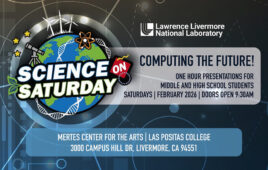
Lawrence Livermore’s “Science on Saturday” returns, linking computing research with classroom learning
Qunova’s HI-VQE quantum chemistry algorithm is now on AWS Marketplace
rd newsletter
EXPAND YOUR KNOWLEDGE AND STAY CONNECTED
Get the latest info on technologies, trends, and strategies in Research & Development.

R&D World Digital Issues

Fall 2025 issue

Browse the most current issue of R&D World and back issues in an easy to use high quality format. Clip, share and download with the leading R&D magazine today.

R&D 100 Awards
Research & Development World
  • Subscribe to R&D World Magazine
  • Sign up for R&D World’s newsletter
  • Contact Us
  • About Us
  • Drug Discovery & Development
  • Pharmaceutical Processing
  • Global Funding Forecast

Copyright © 2026 Arrowfly LLC. All Rights Reserved. The material on this site may not be reproduced, distributed, transmitted, cached or otherwise used, except with the prior written permission of Arrowfly
Privacy Policy | Advertising | About Us

Search R&D World

  • R&D World Home
  • Topics
    • Aerospace
    • Automotive
    • Biotech
    • Careers
    • Chemistry
    • Environment
    • Energy
    • Life Science
    • Material Science
    • R&D Management
    • Physics
  • Technology
    • 3D Printing
    • A.I./Robotics
    • Software
    • Battery Technology
    • Controlled Environments
      • Cleanrooms
      • Graphene
      • Lasers
      • Regulations/Standards
      • Sensors
    • Imaging
    • Nanotechnology
    • Scientific Computing
      • Big Data
      • HPC/Supercomputing
      • Informatics
      • Security
    • Semiconductors
  • R&D Market Pulse
  • R&D 100
    • 2025 R&D 100 Award Winners
    • 2025 Professional Award Winners
    • 2025 Special Recognition Winners
    • R&D 100 Awards Event
    • R&D 100 Submissions
    • Winner Archive
  • Resources
    • Research Reports
    • Digital Issues
    • Educational Assets
    • Subscribe
    • Video
    • Webinars
    • PharmSci360
    • Content submission guidelines for R&D World
  • Global Funding Forecast
  • Top Labs
  • Advertise
  • SUBSCRIBE