Research & Development World

  • R&D World Home
  • Topics
    • Aerospace
    • Automotive
    • Biotech
    • Careers
    • Chemistry
    • Environment
    • Energy
    • Life Science
    • Material Science
    • R&D Management
    • Physics
  • Technology
    • 3D Printing
    • A.I./Robotics
    • Software
    • Battery Technology
    • Controlled Environments
      • Cleanrooms
      • Graphene
      • Lasers
      • Regulations/Standards
      • Sensors
    • Imaging
    • Nanotechnology
    • Scientific Computing
      • Big Data
      • HPC/Supercomputing
      • Informatics
      • Security
    • Semiconductors
  • R&D Market Pulse
  • R&D 100
    • 2026 R&D 100 Award Winners
    • 2026 Professional Award Winners
    • 2026 Special Recognition Winners
    • R&D 100 Awards Event
    • R&D 100 Submissions
    • Winner Archive
  • Resources
    • Research Reports
    • Digital Issues
    • Educational Assets
    • Subscribe
    • Video
    • Webinars
    • PharmSci360
    • Content submission guidelines for R&D World
  • Global Funding Forecast
  • Top Labs
  • Advertise
  • SUBSCRIBE

Virus-Infected Bacteria Could Provide Help in the Fight Against Climate Change

By University of Tennessee at Knoxville | February 20, 2019

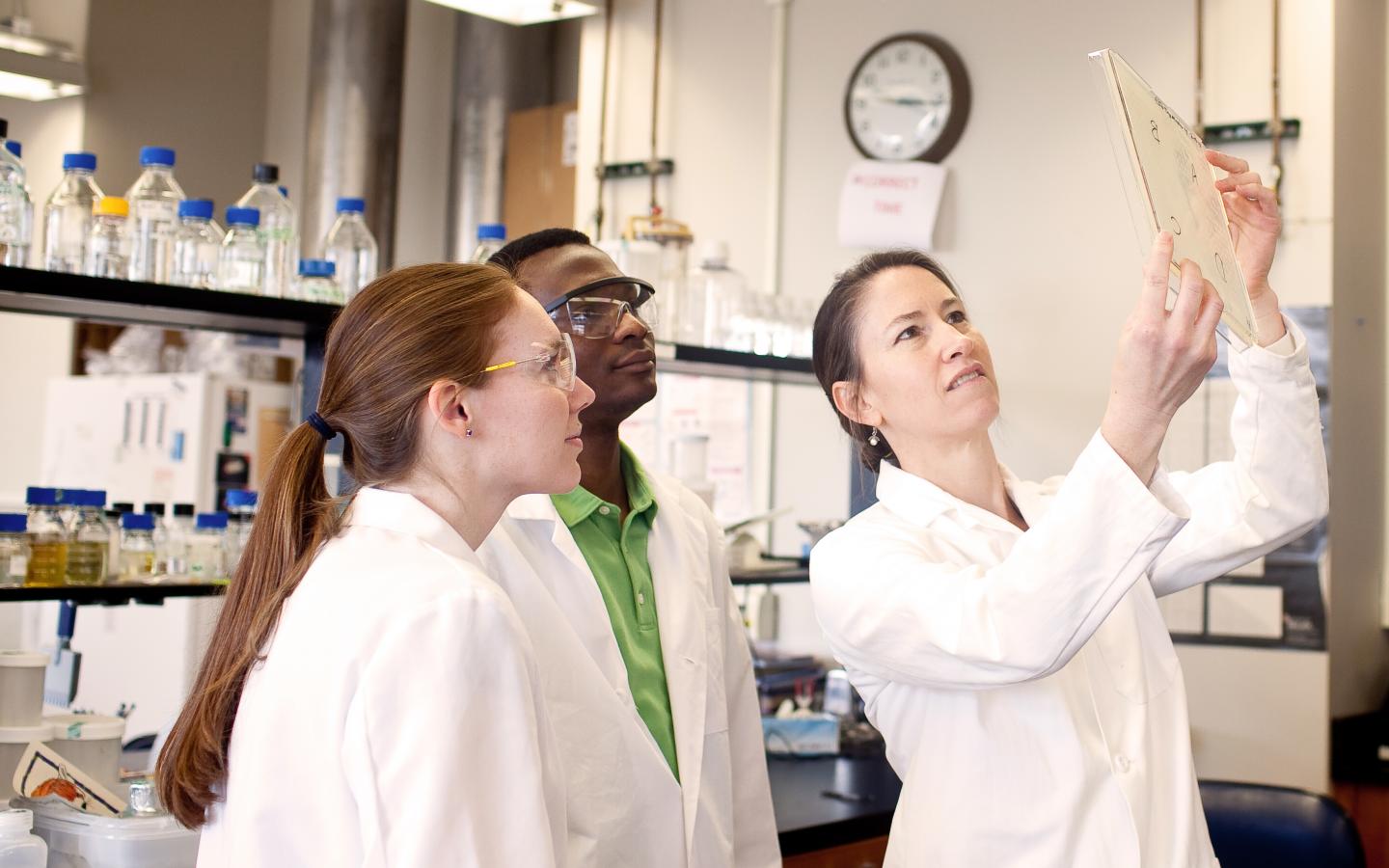
This is Alison Buchan, Carolyn W. Fite professor of microbiology at the University of Tennessee, Knoxville, works with students in her lab. Credit: University of Tennessee, Knoxville

Viruses don’t always kill their microbial hosts. In many cases, they develop a mutually beneficial relationship: the virus establishes itself inside the microbe and, in return, grants its host with immunity against attack by similar viruses.

Understanding this relationship is beneficial not only for medical research and practical applications but also in marine biology, says Alison Buchan, Carolyn W. Fite Professor of Microbiology at the University of Tennessee, Knoxville.

“Marine microbes are uniquely responsible for carrying out processes that are essential for all of earth’s biogeochemical cycles, including many that play a role in climate change,” she said.

Buchan will explain some of these interactions on Sunday, February 17, during the annual meeting of the American Association for the Advancement of Science in Washington, D.C.

Her talk, “It’s Only Mostly Dead: Deciphering Mechanisms Underlying Virus-Microbe Interactions,” will be part of the scientific session titled Viruses, Microbes and Their Entangled Fates.

The function of a microbial community is in large part dictated by its composition: what microbes are present and how many of each.

Within the community, bacteria compete with one another for resources. In the course of this fight, some bacteria produce antibiotics and use them against other types of bacteria. This kind of interaction has been known for some time.

But there is another fight strategy that scientists like Buchan are just now considering: bacteria might use the viruses that infect them as weapons against other types of microbes.

“We have recently discovered that while they are in the process of dying, microbes can produce new viruses that then go to attack their original invader. This is a form of resistance we had not observed before,” said Buchan.

This type of competitive interaction, Buchan said, is important for stabilizing the size of microbial populations in marine systems. This balance may be crucial for biogeochemical processes, including many related to climate change.

During Sunday’s presentation, Buchan will be sharing the stage with Joshua Weitz, professor or theoretical ecology and quantitative biology at the Georgia Institute of Technology, and Matthew Sullivan, associate professor of microbiology and civil, environmental, and geodetic engineering at the Ohio State University.
Related Articles Read More >

Research vessel Nautilus is mapping the bottom of the Mariana Trench with new multibeam sonar 
Inside the Lab: NETL’s Oil and Gas Center of Excellence focuses on technologies to enhance production   
How LLNL won a $2M grant and found a commercialization partner for its methanol reactor design 
New process could reduce energy needed for crude-oil distillation by 31%
rd newsletter
EXPAND YOUR KNOWLEDGE AND STAY CONNECTED
Get the latest info on technologies, trends, and strategies in Research & Development.

R&D World Digital Issues

Fall 2025 issue

Browse the most current issue of R&D World and back issues in an easy to use high quality format. Clip, share and download with the leading R&D magazine today.

R&D 100 Awards
Research & Development World
  • Subscribe to R&D World Magazine
  • Sign up for R&D World’s newsletter
  • Contact Us
  • About Us
  • Drug Discovery & Development
  • Pharmaceutical Processing
  • Global Funding Forecast

Copyright © 2026 Arrowfly LLC. All Rights Reserved. The material on this site may not be reproduced, distributed, transmitted, cached or otherwise used, except with the prior written permission of Arrowfly
Privacy Policy | Advertising | About Us

Search R&D World

  • R&D World Home
  • Topics
    • Aerospace
    • Automotive
    • Biotech
    • Careers
    • Chemistry
    • Environment
    • Energy
    • Life Science
    • Material Science
    • R&D Management
    • Physics
  • Technology
    • 3D Printing
    • A.I./Robotics
    • Software
    • Battery Technology
    • Controlled Environments
      • Cleanrooms
      • Graphene
      • Lasers
      • Regulations/Standards
      • Sensors
    • Imaging
    • Nanotechnology
    • Scientific Computing
      • Big Data
      • HPC/Supercomputing
      • Informatics
      • Security
    • Semiconductors
  • R&D Market Pulse
  • R&D 100
    • 2026 R&D 100 Award Winners
    • 2026 Professional Award Winners
    • 2026 Special Recognition Winners
    • R&D 100 Awards Event
    • R&D 100 Submissions
    • Winner Archive
  • Resources
    • Research Reports
    • Digital Issues
    • Educational Assets
    • Subscribe
    • Video
    • Webinars
    • PharmSci360
    • Content submission guidelines for R&D World
  • Global Funding Forecast
  • Top Labs
  • Advertise
  • SUBSCRIBE