Research & Development World

  • R&D World Home
  • Topics
    • Aerospace
    • Automotive
    • Biotech
    • Careers
    • Chemistry
    • Environment
    • Energy
    • Life Science
    • Material Science
    • R&D Management
    • Physics
  • Technology
    • 3D Printing
    • A.I./Robotics
    • Software
    • Battery Technology
    • Controlled Environments
      • Cleanrooms
      • Graphene
      • Lasers
      • Regulations/Standards
      • Sensors
    • Imaging
    • Nanotechnology
    • Scientific Computing
      • Big Data
      • HPC/Supercomputing
      • Informatics
      • Security
    • Semiconductors
  • R&D Market Pulse
  • R&D 100
    • 2025 R&D 100 Award Winners
    • 2025 Professional Award Winners
    • 2025 Special Recognition Winners
    • R&D 100 Awards Event
    • R&D 100 Submissions
    • Winner Archive
  • Resources
    • Research Reports
    • Digital Issues
    • Educational Assets
    • Subscribe
    • Video
    • Webinars
    • PharmSci360
    • Content submission guidelines for R&D World
  • Global Funding Forecast
  • Top Labs
  • Advertise
  • SUBSCRIBE

World’s Brightest X-Ray Probes Nitrogen Molecules

By R&D Editors | June 24, 2010

World’s Brightest X-Ray Probes Nitrogen Molecules

The SLAC National Accelerator Laboratory in Menlo Park, California has already made a name for itself as one of the world’s largest and most prolific particle accelerator facilities dedicated to high energy particle physics. It is now beginning a new life as a source of x-rays a billion times brighter than any other research x-ray source to date.

Early results reveal how molecules respond to intense radiation from the facility’s Linac Coherent Light Source (LCLS).

The early LCLS research takes advantage of the machine’s bright, brief flash to study how x-rays strip electrons from molecules built of pairs of nitrogen atoms. Once the electrons are removed, the nitrogen atoms strongly repel each other, and the molecule rapidly blows apart. But in addition to being very bright, the x-ray pulses from the LCLS can be made extremely brief, which allows researchers to capture data from the molecule before it disintegrates.

The result is the x-ray equivalent of a flash bulb that freezes the action in a photograph. Unlike photographic flashes that are thousandths of a second in duration, flashes from the LCLS are measured in femtoseconds, which are a millionth of a billionth of a second long.

Researchers report that nitrogen molecules absorb less x-ray radiation when illuminated with shorter flashes compared to longer ones. In addition to helping develop a model for x-ray absorption in molecules, the results show that the LCLS will likely be able to provide snapshots of never-before-seen, ultra-fast chemical and molecular processes, including those involving the biomolecules that are critical components in living cells.

The study results are set to be published the week of June 20, 2010, in the journal Physical Review Letters.


Related Articles Read More >

How a Duke-led HPC method brought cell-scale cancer simulation to a single cloud node 
Quantum computing advance: Atom-placed silicon lattice hits 15,000 quantum dots, reveals metal-insulator transition
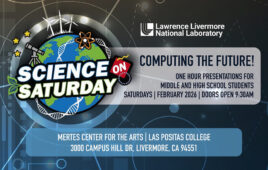
Lawrence Livermore’s “Science on Saturday” returns, linking computing research with classroom learning
Qunova’s HI-VQE quantum chemistry algorithm is now on AWS Marketplace
rd newsletter
EXPAND YOUR KNOWLEDGE AND STAY CONNECTED
Get the latest info on technologies, trends, and strategies in Research & Development.

R&D World Digital Issues

Fall 2025 issue

Browse the most current issue of R&D World and back issues in an easy to use high quality format. Clip, share and download with the leading R&D magazine today.

R&D 100 Awards
Research & Development World
  • Subscribe to R&D World Magazine
  • Sign up for R&D World’s newsletter
  • Contact Us
  • About Us
  • Drug Discovery & Development
  • Pharmaceutical Processing
  • Global Funding Forecast

Copyright © 2026 Arrowfly LLC. All Rights Reserved. The material on this site may not be reproduced, distributed, transmitted, cached or otherwise used, except with the prior written permission of Arrowfly
Privacy Policy | Advertising | About Us

Search R&D World

  • R&D World Home
  • Topics
    • Aerospace
    • Automotive
    • Biotech
    • Careers
    • Chemistry
    • Environment
    • Energy
    • Life Science
    • Material Science
    • R&D Management
    • Physics
  • Technology
    • 3D Printing
    • A.I./Robotics
    • Software
    • Battery Technology
    • Controlled Environments
      • Cleanrooms
      • Graphene
      • Lasers
      • Regulations/Standards
      • Sensors
    • Imaging
    • Nanotechnology
    • Scientific Computing
      • Big Data
      • HPC/Supercomputing
      • Informatics
      • Security
    • Semiconductors
  • R&D Market Pulse
  • R&D 100
    • 2025 R&D 100 Award Winners
    • 2025 Professional Award Winners
    • 2025 Special Recognition Winners
    • R&D 100 Awards Event
    • R&D 100 Submissions
    • Winner Archive
  • Resources
    • Research Reports
    • Digital Issues
    • Educational Assets
    • Subscribe
    • Video
    • Webinars
    • PharmSci360
    • Content submission guidelines for R&D World
  • Global Funding Forecast
  • Top Labs
  • Advertise
  • SUBSCRIBE