Research & Development World

  • R&D World Home
  • Topics
    • Aerospace
    • Automotive
    • Biotech
    • Careers
    • Chemistry
    • Environment
    • Energy
    • Life Science
    • Material Science
    • R&D Management
    • Physics
  • Technology
    • 3D Printing
    • A.I./Robotics
    • Software
    • Battery Technology
    • Controlled Environments
      • Cleanrooms
      • Graphene
      • Lasers
      • Regulations/Standards
      • Sensors
    • Imaging
    • Nanotechnology
    • Scientific Computing
      • Big Data
      • HPC/Supercomputing
      • Informatics
      • Security
    • Semiconductors
  • R&D Market Pulse
  • R&D 100
    • 2025 R&D 100 Award Winners
    • 2025 Professional Award Winners
    • 2025 Special Recognition Winners
    • R&D 100 Awards Event
    • R&D 100 Submissions
    • Winner Archive
  • Resources
    • Research Reports
    • Digital Issues
    • Educational Assets
    • R&D Index
    • Subscribe
    • Video
    • Webinars
    • Content submission guidelines for R&D World
  • Global Funding Forecast
  • Top Labs
  • Advertise
  • SUBSCRIBE

16 Genetic Markers Can Shorten Life Span

By Swiss Institute of Bioinformatics | July 27, 2017

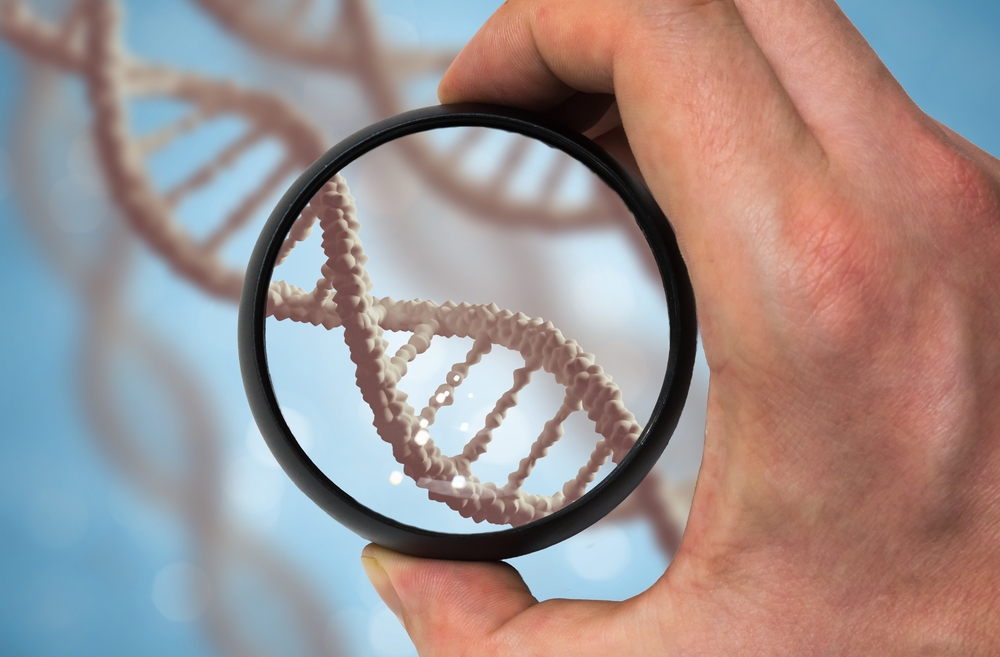
Why do some of us live longer than others? While the environment in which we live, including our socio-economic status or the food we eat, plays the biggest part, about 20 to 30% of the variation in human lifespan comes down to our genome. Changes in particular locations in our DNA sequence, such as single-nucleotide polymorphisms (SNPs), could therefore hold some of the keys to our longevity.

Until now, the most comprehensive studies had found only two hits in the genome, points out Prof. Zoltan Kutalik, Group Leader at SIB and assistant professor at the Institute of Social and Preventive Medicine (CHUV).

In a new study, a team of scientists, led by Kutalik, has used an innovative computational approach to analyse a dataset of 116,279 individuals and probe 2.3 million human SNPs.

An unparalleled number of SNPs associated with lifespan (16) were uncovered, including 14 new to science. In our approach, we prioritized changes in the DNA known to be linked to age-related diseases in order to scan the genome more efficiently, says Kutalik. This is the largest set of lifespan-associated genetic markers ever uncovered.

About 1 in 10 people carry some configurations of these markers that shorten their life by over a year compared with the population average. In addition, a person inheriting a lifespan-shortening version of one of these SNPs may die up to seven months earlier.

The approach also enabled the researchers to explore how the DNA changes affected lifespan in a holistic way. They found that most SNPs had an effect on lifespan by impacting more than a single disease or risk factor, for example through being more addicted to smoking as well as through being predisposed to schizophrenia.

The discovered SNPs, combined with gene expression data, allowed the researchers to identify that lower brain expression of three genes neighbouring the SNPs (RBM6, SULT1A1 and CHRNA5, involved in nicotine dependence) was causally linked to increased lifespan.

These three genes could therefore act as biomarkers of longevity, i.e. survival beyond 85-100 years. To support this hypothesis, we have shown that mice with a lower brain expression level of RBM6 lived substantially longer, comments Prof. Johan Auwerx, professor at the EPFL.

“Interestingly, the gene expression impact of some of these SNPs in humans is analogous to the consequence of a low-calorie diet in mice, which is known to have positive effects on lifespan, adds Prof. Marc Robinson-Rechavi, SIB Group Leader and professor at the University of Lausanne.

Our findings reveal shared molecular mechanisms between human and model organisms, which will be explored in more depth in the future, concludes Prof. Bart Deplancke, SIB Group Leader and professor at the EPFL.

This study, which is a part of the AgingX Project supported by SystemsX.ch (the Swiss Initiative in Systems Biology), therefore brings us a step closer to grasping the mechanisms of human aging and longevity. It also proposes an innovative computational framework to improve the power of genomewide investigations of diseases more generally. As such, the framework could have promising applications in the field of personalized medicine.
Related Articles Read More >

Parallel Bio’s embraces in-house drug development as FDA backs animal testing alternatives
R&D 100 Winner Spotlight: A closer look at Thermo Fisher Scientific’s trio of R&D 100 wins in 2025
Life sciences M&A hit $240B in 2025 as Big Pharma preps for patent cliffs
Hansoh Bio signs 32,000-sq.-ft. lab lease at Research Square in Rockville, MD
rd newsletter
EXPAND YOUR KNOWLEDGE AND STAY CONNECTED
Get the latest info on technologies, trends, and strategies in Research & Development.
RD 25 Power Index

R&D World Digital Issues

Fall 2025 issue

Browse the most current issue of R&D World and back issues in an easy to use high quality format. Clip, share and download with the leading R&D magazine today.

R&D 100 Awards
Research & Development World
  • Subscribe to R&D World Magazine
  • Sign up for R&D World’s newsletter
  • Contact Us
  • About Us
  • Drug Discovery & Development
  • Pharmaceutical Processing
  • Global Funding Forecast

Copyright © 2026 WTWH Media LLC. All Rights Reserved. The material on this site may not be reproduced, distributed, transmitted, cached or otherwise used, except with the prior written permission of WTWH Media
Privacy Policy | Advertising | About Us

Search R&D World

  • R&D World Home
  • Topics
    • Aerospace
    • Automotive
    • Biotech
    • Careers
    • Chemistry
    • Environment
    • Energy
    • Life Science
    • Material Science
    • R&D Management
    • Physics
  • Technology
    • 3D Printing
    • A.I./Robotics
    • Software
    • Battery Technology
    • Controlled Environments
      • Cleanrooms
      • Graphene
      • Lasers
      • Regulations/Standards
      • Sensors
    • Imaging
    • Nanotechnology
    • Scientific Computing
      • Big Data
      • HPC/Supercomputing
      • Informatics
      • Security
    • Semiconductors
  • R&D Market Pulse
  • R&D 100
    • 2025 R&D 100 Award Winners
    • 2025 Professional Award Winners
    • 2025 Special Recognition Winners
    • R&D 100 Awards Event
    • R&D 100 Submissions
    • Winner Archive
  • Resources
    • Research Reports
    • Digital Issues
    • Educational Assets
    • R&D Index
    • Subscribe
    • Video
    • Webinars
    • Content submission guidelines for R&D World
  • Global Funding Forecast
  • Top Labs
  • Advertise
  • SUBSCRIBE