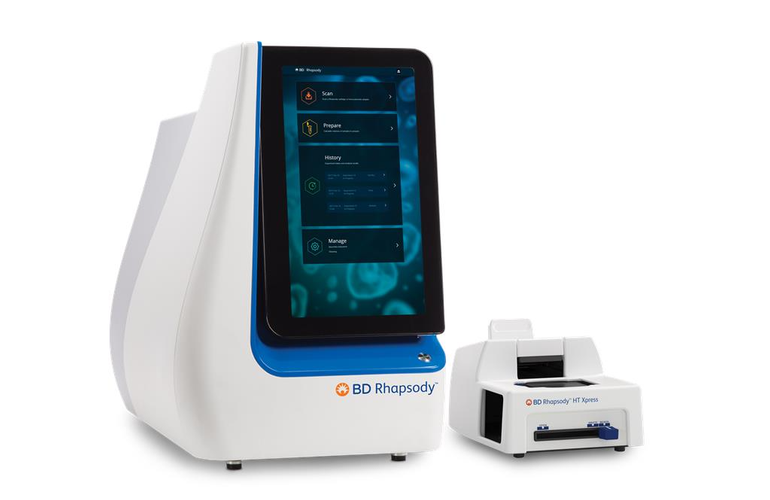
BD Rhapsody and BD Rhapsody HT Xpress [Image courtesy of Waters]
IMU Biosciences, a London-based biotechnology company specializing in immune profiling, is running the analysis with instruments from Waters and sequencing technology from Ultima Genomics. IMU says the 80,000-sample study, announced Oct. 19, will generate more than 100 million immune data points per sample. In written responses to R&D World, IMU and Waters explained how the instruments divide the work.
Two instruments, one donor
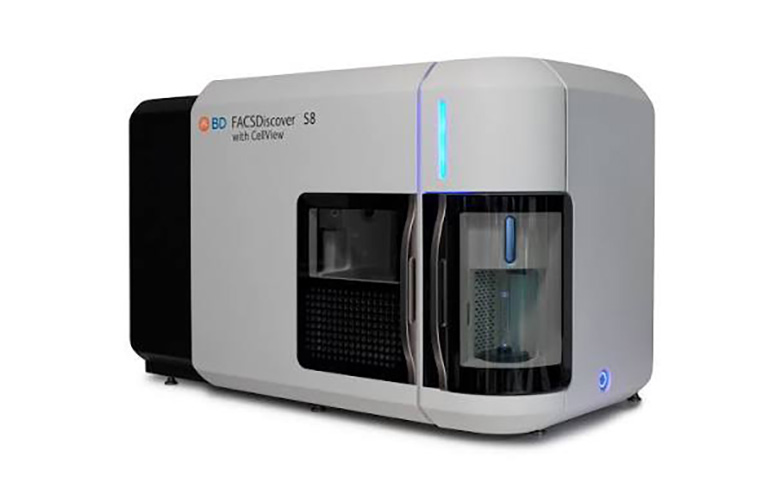
BD FACSDiscover [Image courtesy of Waters]
Another device active in the research is the BD Rhapsody, a sample-preparation platform for single-cell transcriptomics, which measures gene activity in individual cells. It prepares sequencing libraries from the donor’s cells, and Ultima’s UG200 sequencing instrument reads those libraries.
“The two Waters platforms give us complementary layers of immune data from the same donor,” IMU wrote. In addition, IMU says its machine-learning methods integrate the immune-cell and gene-activity measurements.
The initial 80,000 samples divide evenly with 40,000 fresh and 40,000 cryopreserved, or frozen for storage. The stored samples let researchers compare immune profiles from blood drawn years ago with diseases participants developed later. IMU says every sample goes through a single automated, standardized workflow, and it has developed experimental and analytical methods to make measurements from fresh and frozen blood comparable.
The first 10,000 and data access
IMU and Waters confirmed that the first 10,000 samples, partly funded through a UK Sovereign AI grant, will receive both immune-cell profiling and single-cell gene-expression analysis from the same donors. Profiling began in September, according to IMU, and the partners aim to expand immune profiling to the full cohort of 500,000 participants.
The resulting profiles will add to UK Biobank’s existing measurements of circulating proteins, metabolites and blood-cell counts, with access following the biobank’s established procedures. “[W]e’ll be working closely with the UK Biobank to make it available to approved researchers through their established access procedures,” IMU and Waters wrote.

Tell Us What You Think!
You must be logged in to post a comment.