Medical device development offers lessons in the gap between a working prototype and a product people can, and will, use.

[Adobe Stock]
The stakes are especially high in the medical device sector. About 75% of medical device startups fail to reach the market or achieve commercial success, according to an estimate cited by Eric Vogel, executive director of Georgia Tech’s Institute for Matter and Systems. For Isha Sharma, who manages product development at MiniMed (formerly Medtronic Diabetes), one early vulnerability is a poorly defined customer. “First, you need clarity on your target segment and who your customers will be,” she said. Sharma began her career as a graduate researcher at UC Berkeley, where she worked on an osteoarthritis therapy that never left the lab, and has since led product launches in medtech and digital health. “A lot of startups and innovations stay in the lab because that clarity is missing,” she said.
For Sharma’s Berkeley team, that meant interviewing patients to find out whether the proposed therapy addressed a need they actually had. “You might have a really cool technology, but if nobody needs it, that’s the first blocker to translating it and bringing it to market,” she said.
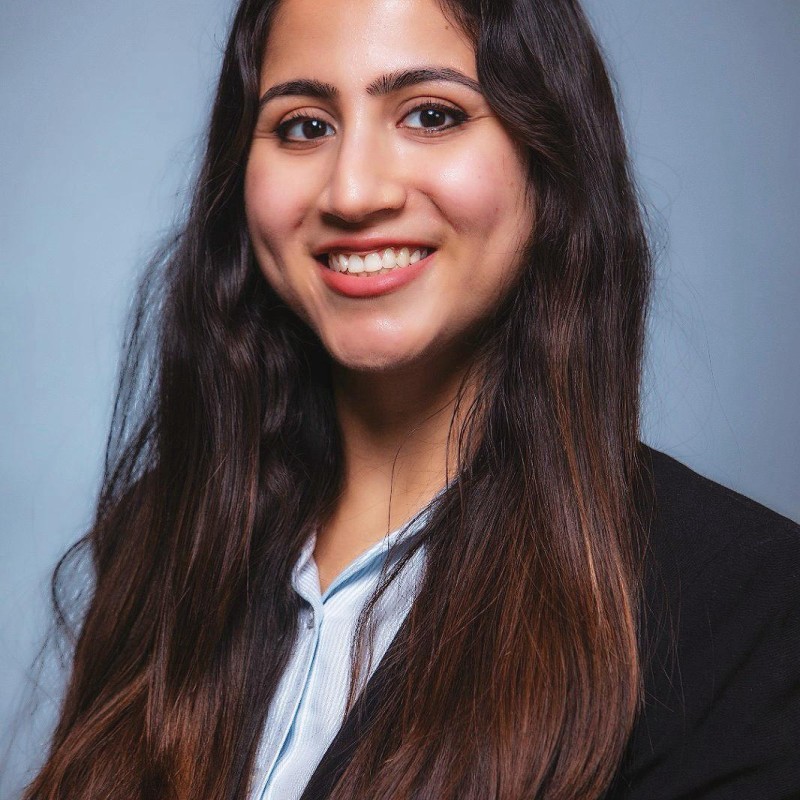
Isha Sharma
The problem extends far beyond academic labs. In a 2021 CB Insights analysis of 111 startup post-mortems, 35% of founders cited no market need as a reason their company failed. Only running out of cash, at 38%, came up more often.
Payers, funding and the FDA pathway
Finding users who want a product is only the first gap; getting it to them takes a different skill set that many inventors lack. “Often the person working on the technology doesn’t have the expertise or the resources to understand the path to market,” Sharma said. That path includes who pays for the product (patients, hospitals or insurers), how it will be reimbursed and how the team will raise funds. Sharma argued that tech transfer offices at universities and research institutes should take on that role. Many already offer inventors mentorship, business development guidance and access to incubators and accelerators, help that can turn a promising technology into a fundable business with a clear route to market.
You might have a really cool technology, but if nobody needs it, that’s the first blocker to translating it and bringing it to market.
A product based on an existing technology may be able to go through the FDA’s 510(k) process, Sharma noted. That route, also called premarket notification, lets a company clear a device by showing it is substantially equivalent to one already legally on the market. Novel devices of low to moderate risk may qualify for the De Novo pathway, while high-risk devices generally require premarket approval (PMA). PMA, the FDA’s most stringent device review, typically requires clinical evidence of safety and effectiveness. The FDA’s review goals are 90 days for a 510(k), 150 days for a De Novo request and 180 days for a PMA, though those clocks count only agency review time, not the studies needed to assemble a submission. “That’s where the gap lies,” Sharma said. Founders often understand their technology but not the business and regulatory steps needed to commercialize it, she said, and academic or external training should fill that gap. For founders nearing launch, she pointed to accelerators as a source of hands-on help.
Bring in quality and safety early
Regulatory specialists are one part of the development team. “There’s regulatory, but the most important one, in my view, is quality,” Sharma said. “Your regulatory pathway can be clear, but if the product doesn’t meet quality requirements, it’s useless.” Her advice: consider the product’s safety profile and bring quality and safety specialists into development early. Investors, she said, usually ask two questions about a new technology: Does it work, and can it make money? “What’s often missed is the safety and quality component, which I believe is extremely critical, at least in the medtech space.”
Usability and surgeon inertia
Even a product that clears those hurdles can stall in use. “A new device might come out to market and it may be successful clinically but may be very difficult to use and therefore fail,” Mary Beth Privitera, then a design professor at the University of Cincinnati, told this reporter in a 2011 MD+DI interview. Easier is not always better, either. A complex procedure can leave surgeons “jazzed” by the challenge or convinced it is “not worth the effort,” she said. Her group considered fitting surgeons with heart-rate and temperature monitors, but such readings “give you a measure but you are not really sure what it means.” Instead, she said, teams should ask physicians which steps are hard, whether they could be easier and what the ideal would be “if they could have a clean slate.”
Sharma sees the same pull toward the familiar. Surgeons who prefer an older system do so “because they’ve been trained on it and have used it for years,” she said. “People definitely have inertia about adopting something new.” A truly game-changing technology with lots of new functionality can overcome that, she said, but a product that performs a similar function or gives a similar output will be slow to win users. Simplicity and an easy-to-understand training module help a new technology get absorbed. Without them, she said, a product people cannot use, or do not know how to use, becomes irrelevant.
Evidence, then price
Asked what most improves the odds of commercialization, Sharma returned to evidence. “You have to show that your product works, that it’s effective and that it’s safe to use,” she said. That means showing the product performs well across diverse patients, care settings and regions. Cost is another test. “If the product isn’t reasonably priced, nobody will buy it or use it,” she said. A higher price requires something exceptional in return: an MRI setup already costs a great deal, she noted, so a new imaging system costing twice as much would need added features compelling enough for a hospital to adopt it.

Tell Us What You Think!
You must be logged in to post a comment.