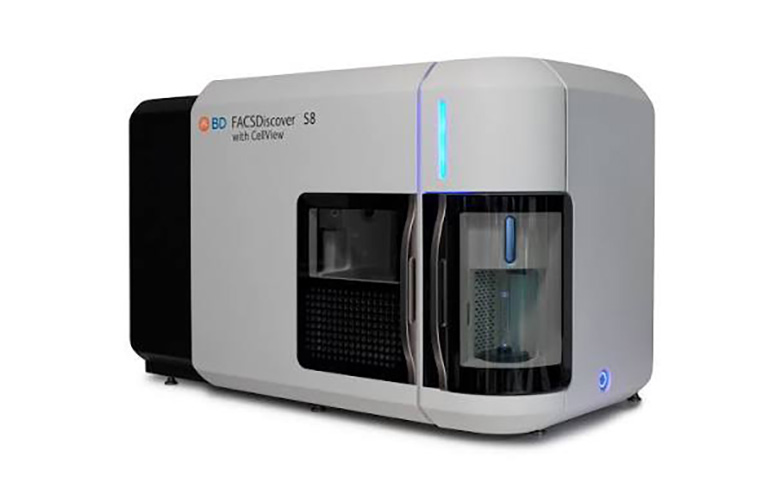
BD FACSDiscover [Image courtesy of Waters]
The project includes 40,000 fresh samples and 40,000 cryopreserved samples, according to IMU. Profiling began in September. The stored blood lets researchers compare earlier immune profiles with diseases participants developed later.
Those comparisons could identify associations between immune profiles and subsequent disease. IMU says the study will map how immune-cell populations vary with age, sex and medical history. That reference could help researchers assess whether a particular immune-cell pattern is typical for someone of a given age and sex.
UK Biobank already holds measurements of circulating proteins, metabolites and blood-cell counts. Detailed immune-cell profiling would add another way to investigate differences among participants and connect them to health outcomes.
Waters will supply flow-cytometry and single-cell multiomics technologies, including its BD FACSDiscover and BD Rhapsody platforms. Ultima’s UG200 will provide sequencing readouts, while IMU combines immune measurements with computational analysis. The project builds on the Waters–IMU partnership announced in June.
IMU says a UK Sovereign AI grant supports the first 10,000 samples, which will also generate single-cell transcriptomic data, measuring gene activity in individual cells.
The partners intend to return the resulting data to UK Biobank for access by approved researchers. IMU’s longer-term ambition is to expand profiling across the full cohort of 500,000 participants.
IMU says it will use one profiling platform and protocol across the cohort, linking each immune profile to genetic, imaging, lifestyle and clinical data. The aim is to give AI models consistent measurements from which to learn how immune-cell patterns relate to health.


Tell Us What You Think!
You must be logged in to post a comment.