Research & Development World

  • R&D World Home
  • Topics
    • Aerospace
    • Automotive
    • Biotech
    • Careers
    • Chemistry
    • Environment
    • Energy
    • Life Science
    • Material Science
    • R&D Management
    • Physics
  • Technology
    • 3D Printing
    • A.I./Robotics
    • Software
    • Battery Technology
    • Controlled Environments
      • Cleanrooms
      • Graphene
      • Lasers
      • Regulations/Standards
      • Sensors
    • Imaging
    • Nanotechnology
    • Scientific Computing
      • Big Data
      • HPC/Supercomputing
      • Informatics
      • Security
    • Semiconductors
  • R&D Market Pulse
  • R&D 100
    • 2026 R&D 100 Award Winners
    • 2026 Professional Award Winners
    • 2026 Special Recognition Winners
    • R&D 100 Awards Event
    • R&D 100 Submissions
    • Winner Archive
  • Resources
    • Research Reports
    • Digital Issues
    • Educational Assets
    • Subscribe
    • Video
    • Webinars
    • PharmSci360
    • Content submission guidelines for R&D World
  • Global Funding Forecast
  • Top Labs
  • Advertise
  • SUBSCRIBE

New Research Shows Way for Anti-Cancer Treatment

By University of Huddersfield | October 31, 2016

Researchers at the University of Huddersfield have developed a new lab technique that may aid the development and success rate of an important anti-cancer treatment.

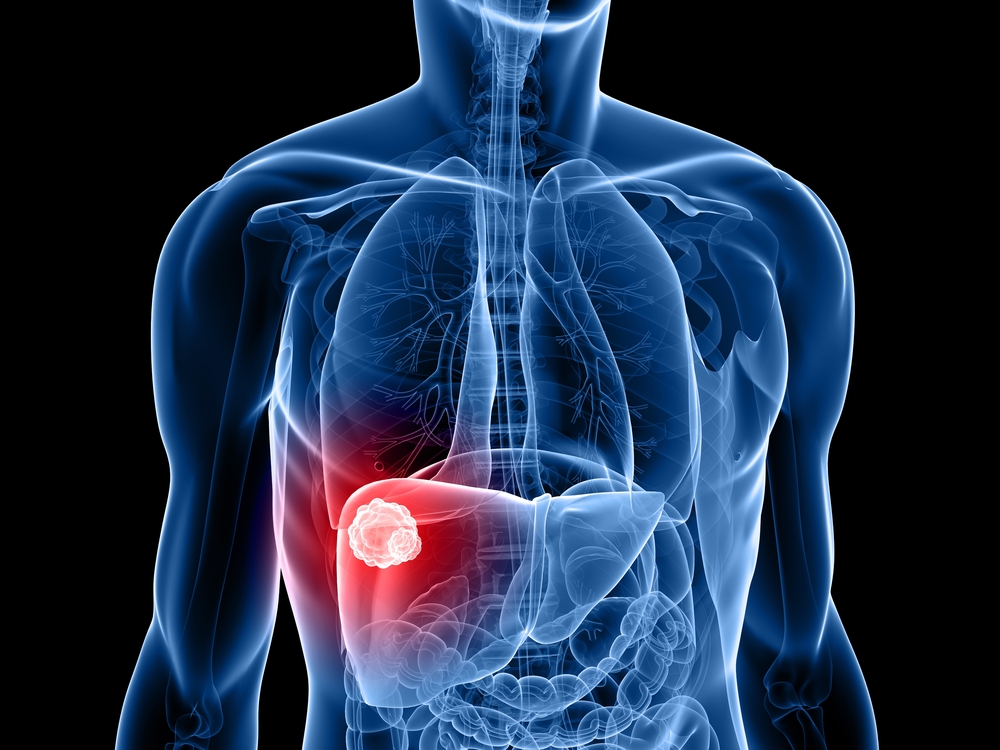
Used particularly in cases of liver cancer, polymer beads are injected into arteries that feed a tumour, where they block the blood flow, cutting off the supply of oxygen and nutrients.  The beads then also release an anticancer drug directly into the tumour, reducing the systemic side effects. 

What developers need is a safe way of predicting what would happen in a patient’s body if the beads and the drug they contain are modified.  Now the new research has provided them with a method and the findings are described in an article in the European Journal of Pharmaceutical Sciences.

“There was no lab mimic that was able to adequately predict how the drug was released from these drug-eluting beads once they were in the body,” said one of the co-authors, University of Huddersfield pharmaceutical science lecturer and researcher Dr Laura Waters.  “The article describes a way of doing it in the lab.  We compared our results with in vivo data and proved that the method worked.”

Dr Waters is supervising the PhD researcher Tanya Swaine, a graduate of the University of Huddersfield whose doctoral project is sponsored by the company BTG, which manufactures the embolization beads that are used in the therapy.

Tanya and co-researchers were able to carry out lab experiments in which a buffer – a liquid that mimics blood – was pumped at different rates through the beads.  They also modified the quantities of drug contained in the beads.  By comparing their laboratory observations with in vivo data, the research team was able to establish the validity of their simulation technique.

It will be of practical value to any medical researcher working on a bead-based system, said Dr Waters, enabling them to make accurate predictions without running any risks to patients.

Professor Andy Lewis, Director of R&D at BTG and industrial supervisor in the collaboration commented: “We are continually innovating our drug-eluting bead technologies to introduce new features, such as X-ray visibility or biodegradability.  It’s important from a product development perspective that if we wanted to put other drugs into the beads, or change anything about their chemistry, we could use this system to predict product behaviour before it is given to people.”
Related Articles Read More >

100 million data points per blood sample: How IMU will profile immunity across 80,000 UK Biobank donors
Jabil’s 2026 digital health survey: Confidence in AI’s potential rises as confidence in internal readiness falls
Two RFD4-Proteina-designed enzymes that break down the pesticide paraoxon, with their structural accuracy and catalytic efficiency.
NVIDIA and UW’s protein design model produces 158 binders from 188 designs
Schematic of a whole-brain Perturb-seq atlas split into 1,946 perturbation profiles, each analyzed by its own AI agent.
OpenAI deploys nearly 2,000 GPT-Rosalind agents to generate biological research leads in 32 minutes
rd newsletter
EXPAND YOUR KNOWLEDGE AND STAY CONNECTED
Get the latest info on technologies, trends, and strategies in Research & Development.

R&D World Digital Issues

Fall 2025 issue

Browse the most current issue of R&D World and back issues in an easy to use high quality format. Clip, share and download with the leading R&D magazine today.

R&D 100 Awards
Research & Development World
  • Subscribe to R&D World Magazine
  • Sign up for R&D World’s newsletter
  • Contact Us
  • About Us
  • Drug Discovery & Development
  • Pharmaceutical Processing
  • Global Funding Forecast

Copyright © 2026 Arrowfly LLC. All Rights Reserved. The material on this site may not be reproduced, distributed, transmitted, cached or otherwise used, except with the prior written permission of Arrowfly
Privacy Policy | Advertising | About Us

Search R&D World

  • R&D World Home
  • Topics
    • Aerospace
    • Automotive
    • Biotech
    • Careers
    • Chemistry
    • Environment
    • Energy
    • Life Science
    • Material Science
    • R&D Management
    • Physics
  • Technology
    • 3D Printing
    • A.I./Robotics
    • Software
    • Battery Technology
    • Controlled Environments
      • Cleanrooms
      • Graphene
      • Lasers
      • Regulations/Standards
      • Sensors
    • Imaging
    • Nanotechnology
    • Scientific Computing
      • Big Data
      • HPC/Supercomputing
      • Informatics
      • Security
    • Semiconductors
  • R&D Market Pulse
  • R&D 100
    • 2026 R&D 100 Award Winners
    • 2026 Professional Award Winners
    • 2026 Special Recognition Winners
    • R&D 100 Awards Event
    • R&D 100 Submissions
    • Winner Archive
  • Resources
    • Research Reports
    • Digital Issues
    • Educational Assets
    • Subscribe
    • Video
    • Webinars
    • PharmSci360
    • Content submission guidelines for R&D World
  • Global Funding Forecast
  • Top Labs
  • Advertise
  • SUBSCRIBE