Research & Development World

  • R&D World Home
  • Topics
    • Aerospace
    • Automotive
    • Biotech
    • Careers
    • Chemistry
    • Environment
    • Energy
    • Life Science
    • Material Science
    • R&D Management
    • Physics
  • Technology
    • 3D Printing
    • A.I./Robotics
    • Software
    • Battery Technology
    • Controlled Environments
      • Cleanrooms
      • Graphene
      • Lasers
      • Regulations/Standards
      • Sensors
    • Imaging
    • Nanotechnology
    • Scientific Computing
      • Big Data
      • HPC/Supercomputing
      • Informatics
      • Security
    • Semiconductors
  • R&D Market Pulse
  • R&D 100
    • 2025 R&D 100 Award Winners
    • 2025 Professional Award Winners
    • 2025 Special Recognition Winners
    • R&D 100 Awards Event
    • R&D 100 Submissions
    • Winner Archive
  • Resources
    • Research Reports
    • Digital Issues
    • Educational Assets
    • Subscribe
    • Video
    • Webinars
    • PharmSci360
    • Content submission guidelines for R&D World
  • Global Funding Forecast
  • Top Labs
  • Advertise
  • SUBSCRIBE

Why Some Cancers May Not Respond to Immunotherapy

By UCLA | February 10, 2017

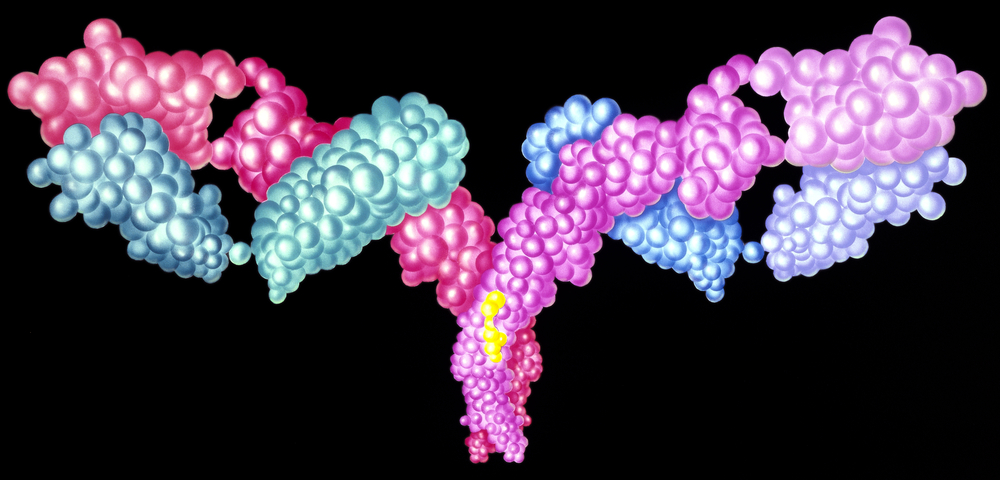
UCLA scientists have discovered that people with cancers containing genetic mutations JAK1 or JAK2, which are known to prevent tumors from recognizing or receiving signals from T cells to stop growing, will have little or no benefit from the immunotherapy drug pembrolizumab. This early-stage research has allowed them to determine for the first time why some people with advanced melanoma or advanced colon cancer will not respond to pembrolizumab, an anti-PD-1 treatment.

The study, led by Dr. Antoni Ribas, director of the UCLA Jonsson Comprehensive Cancer Center Tumor Immunology Program, also found that JAK1 or JAK2 genetic mutations led to a loss of reactive PD-L1 expression. PD-L1 is an immune biomarker expressed on tumor cells and pembrolizumab requires an abundance of it to effectively attack cancer cells.

In previous findings published in the New England Journal of Medicine, UCLA researchers analyzed pairs of tumors before a person underwent immunotherapy treatment and after relapse. Ribas and colleagues discovered that one of the tumors lost a gene called B2M, which changed how the body’s immune system recognized the cancer. The loss of gene B2M caused JAK1 and JAK2 to function improperly by preventing the immune system from attacking the cancer.

In 2014, pembrolizumab, which is marketed as Keytruda, was approved by the U.S. Food and Drug Administration to treat advanced melanoma. Since then it has helped thousands of people live longer. The drug was also approved last year to treat people with advanced non-small-cell lung cancer. It works by blocking the interaction between two negative immune signals mediated by PD-1, a cell receptor expressed on immune cells, and its ligand PD-L1, a biomarker expressed on cancer cells.

The study was conducted over a two-year period and used biopsies from people with melanoma and colon cancer who received pembrolizumab. The researchers also studied the effects of genetic mutations in 48 previously studied melanoma cells lines.

UCLA researchers are currently studying animal models with JAK1 and JAK2 genetic mutations to help develop new and improved combination treatments for people who do not respond to anti-PD-1 treatment.

Related Articles Read More >

How a Duke-led HPC method brought cell-scale cancer simulation to a single cloud node 
As AI floods drug discovery with designs, Twist uses DNA chips to tackle the wet-lab bottleneck
Purple Glowing Spiral Fractal Background Image, Illustration - Vortex repeating spiral patterns, Symmetrical repeating geometric patterns. Abstract design, black background
Recursion says its Norstella-backed real-time simulation can expand trial eligibility by up to 40%
NIH employees warn of ‘institutionalized destruction’ one year after Bethesda Declaration
rd newsletter
EXPAND YOUR KNOWLEDGE AND STAY CONNECTED
Get the latest info on technologies, trends, and strategies in Research & Development.

R&D World Digital Issues

Fall 2025 issue

Browse the most current issue of R&D World and back issues in an easy to use high quality format. Clip, share and download with the leading R&D magazine today.

R&D 100 Awards
Research & Development World
  • Subscribe to R&D World Magazine
  • Sign up for R&D World’s newsletter
  • Contact Us
  • About Us
  • Drug Discovery & Development
  • Pharmaceutical Processing
  • Global Funding Forecast

Copyright © 2026 Arrowfly LLC. All Rights Reserved. The material on this site may not be reproduced, distributed, transmitted, cached or otherwise used, except with the prior written permission of Arrowfly
Privacy Policy | Advertising | About Us

Search R&D World

  • R&D World Home
  • Topics
    • Aerospace
    • Automotive
    • Biotech
    • Careers
    • Chemistry
    • Environment
    • Energy
    • Life Science
    • Material Science
    • R&D Management
    • Physics
  • Technology
    • 3D Printing
    • A.I./Robotics
    • Software
    • Battery Technology
    • Controlled Environments
      • Cleanrooms
      • Graphene
      • Lasers
      • Regulations/Standards
      • Sensors
    • Imaging
    • Nanotechnology
    • Scientific Computing
      • Big Data
      • HPC/Supercomputing
      • Informatics
      • Security
    • Semiconductors
  • R&D Market Pulse
  • R&D 100
    • 2025 R&D 100 Award Winners
    • 2025 Professional Award Winners
    • 2025 Special Recognition Winners
    • R&D 100 Awards Event
    • R&D 100 Submissions
    • Winner Archive
  • Resources
    • Research Reports
    • Digital Issues
    • Educational Assets
    • Subscribe
    • Video
    • Webinars
    • PharmSci360
    • Content submission guidelines for R&D World
  • Global Funding Forecast
  • Top Labs
  • Advertise
  • SUBSCRIBE