Research & Development World

  • R&D World Home
  • Topics
    • Aerospace
    • Automotive
    • Biotech
    • Careers
    • Chemistry
    • Environment
    • Energy
    • Life Science
    • Material Science
    • R&D Management
    • Physics
  • Technology
    • 3D Printing
    • A.I./Robotics
    • Software
    • Battery Technology
    • Controlled Environments
      • Cleanrooms
      • Graphene
      • Lasers
      • Regulations/Standards
      • Sensors
    • Imaging
    • Nanotechnology
    • Scientific Computing
      • Big Data
      • HPC/Supercomputing
      • Informatics
      • Security
    • Semiconductors
  • R&D Market Pulse
  • R&D 100
    • 2026 R&D 100 Award Winners
    • 2026 Professional Award Winners
    • 2026 Special Recognition Winners
    • R&D 100 Awards Event
    • R&D 100 Submissions
    • Winner Archive
  • Resources
    • Research Reports
    • Digital Issues
    • Educational Assets
    • Subscribe
    • Video
    • Webinars
    • PharmSci360
    • Content submission guidelines for R&D World
  • Global Funding Forecast
  • Top Labs
  • Advertise
  • SUBSCRIBE

New Materials for High-Voltage Supercapacitors

By Tohoku University | February 7, 2019

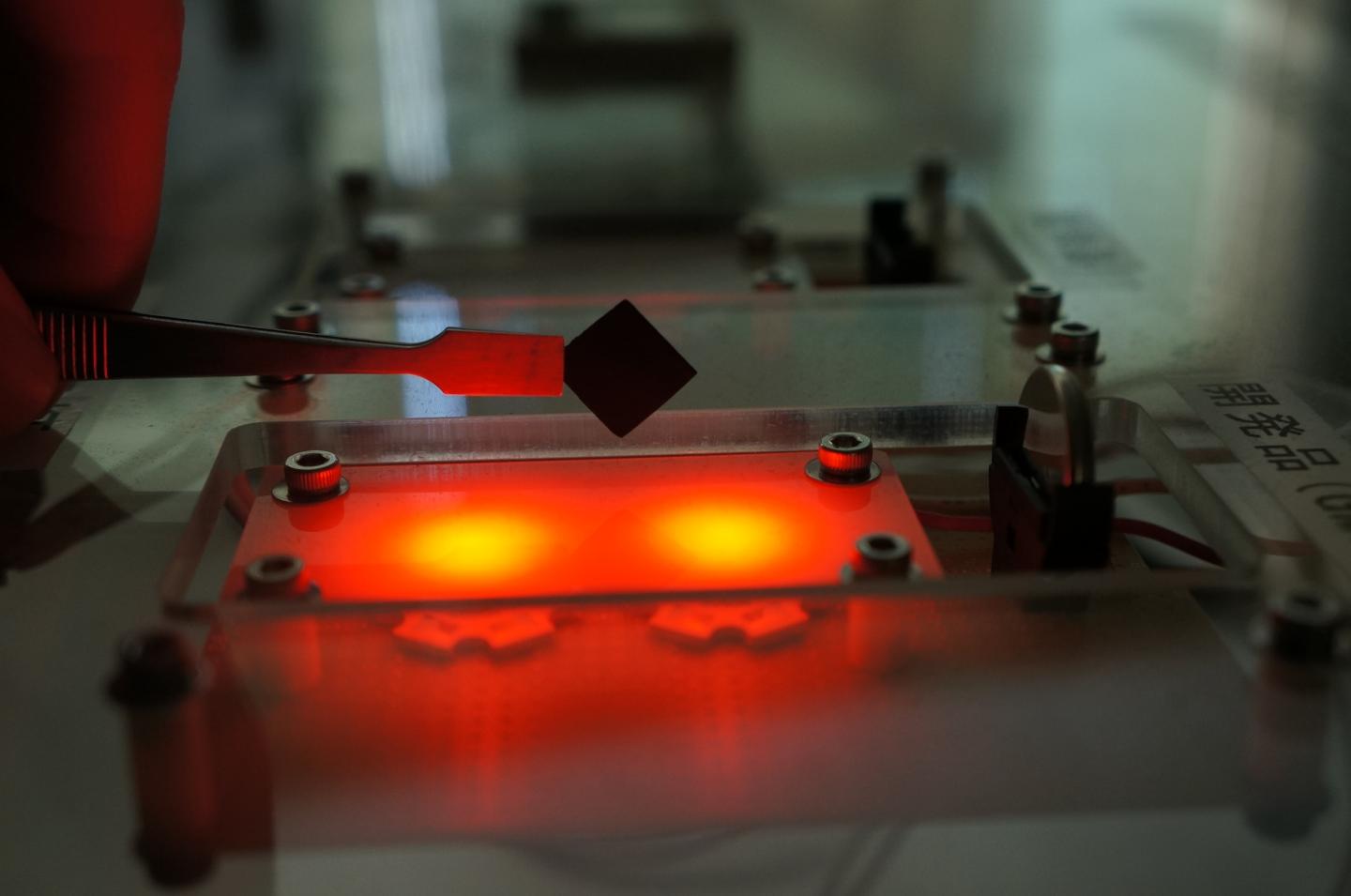
Developed GMS sheet and its supercapacitor connected to two LEDs. Credit: Hirotomo Nishihara

A research team led by Tohoku University in Japan has developed new materials for supercapacitors with higher voltage and better stability than other materials. Their research was recently published in the journal Energy and Environmental Science.

Supercapacitors are rechargeable energy storage devices with a broad range of applications, from machinery to smart meters. They offer many advantages over batteries, including faster charging and longer lifespans, but they are not so good at storing lots of energy.

Scientists have long been looking for high-performance materials for supercapacitors that can meet the requirements for energy-intensive applications such as cars. “It is very challenging to find materials which can both operate at high-voltage and remain stable under harsh conditions,” says Hirotomo Nishihara, materials scientist at Tohoku University and co-author of the paper.

Nishihara and his colleagues collaborated with the supercapacitor production company TOC Capacitor Co. to develop a new material that exhibits extraordinarily high stability under conditions of high voltage and high temperature.

Conventionally, activated carbons are used for the electrodes in capacitors, but these are limited by low voltage in single cells, the building blocks that make up capacitors. This means that a large number of cells must be stacked together to achieve the required voltage. Crucially, the new material has higher single-cell voltage, reducing the stacking number and allowing devices to be more compact.

The new material is a sheet made from a continuous three-dimensional framework of graphene mesosponge, a carbon-based material containing nanoscale pores. A key feature of the materials is that it is seamless – it contains a very small amount of carbon edges, the sites where corrosion reactions originate, and this makes it extremely stable.

The researchers investigated the physical properties of their new material using electron microscopy and a range of physical tests, including X-ray diffraction and vibrational spectroscopy techniques. They also tested commercial graphene-based materials, including single-walled carbon nanotubes, reduced graphene oxides, and 3D graphene, using activated carbons as a benchmark for comparison.

They showed that the material had excellent stability at high temperatures of 60 °C and high voltage of 3.5 volts in a conventional organic electrolyte. Significantly, it showed ultra-high stability at 25°C and 4.4 volts – 2.7 times higher than conventional activated carbons and other graphene-based materials. “This is a world record for voltage stability of carbon materials in a symmetric supercapacitor,” says Nishihara.

The new material paves the way for development of highly durable, high-voltage supercapacitors that could be used for many applications, including motor vehicles.
Related Articles Read More >

How a Duke-led HPC method brought cell-scale cancer simulation to a single cloud node 
Princeton researchers uncover hidden mathematical link between origami and structural design
NTT Research taps Tetsuomi Sogawa to lead PHI Lab as optical-computing work advances
IBM physicist and Montreal computer scientist share Turing Award for quantum information breakthroughs
rd newsletter
EXPAND YOUR KNOWLEDGE AND STAY CONNECTED
Get the latest info on technologies, trends, and strategies in Research & Development.

R&D World Digital Issues

Fall 2025 issue

Browse the most current issue of R&D World and back issues in an easy to use high quality format. Clip, share and download with the leading R&D magazine today.

R&D 100 Awards
Research & Development World
  • Subscribe to R&D World Magazine
  • Sign up for R&D World’s newsletter
  • Contact Us
  • About Us
  • Drug Discovery & Development
  • Pharmaceutical Processing
  • Global Funding Forecast

Copyright © 2026 Arrowfly LLC. All Rights Reserved. The material on this site may not be reproduced, distributed, transmitted, cached or otherwise used, except with the prior written permission of Arrowfly
Privacy Policy | Advertising | About Us

Search R&D World

  • R&D World Home
  • Topics
    • Aerospace
    • Automotive
    • Biotech
    • Careers
    • Chemistry
    • Environment
    • Energy
    • Life Science
    • Material Science
    • R&D Management
    • Physics
  • Technology
    • 3D Printing
    • A.I./Robotics
    • Software
    • Battery Technology
    • Controlled Environments
      • Cleanrooms
      • Graphene
      • Lasers
      • Regulations/Standards
      • Sensors
    • Imaging
    • Nanotechnology
    • Scientific Computing
      • Big Data
      • HPC/Supercomputing
      • Informatics
      • Security
    • Semiconductors
  • R&D Market Pulse
  • R&D 100
    • 2026 R&D 100 Award Winners
    • 2026 Professional Award Winners
    • 2026 Special Recognition Winners
    • R&D 100 Awards Event
    • R&D 100 Submissions
    • Winner Archive
  • Resources
    • Research Reports
    • Digital Issues
    • Educational Assets
    • Subscribe
    • Video
    • Webinars
    • PharmSci360
    • Content submission guidelines for R&D World
  • Global Funding Forecast
  • Top Labs
  • Advertise
  • SUBSCRIBE