Scientists at Rice University and Ben-Gurion University of the Negev (BGU) have discovered that laser-induced graphene (LIG) is a highly effective anti-fouling material and, when electrified, bacteria zapper.
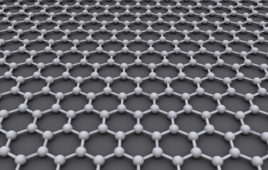
LIG is a spongy version of graphene, the single-atom layer of carbon atoms. The Rice lab of chemist James Tour developed it three years ago by burning partway through an inexpensive polyimide sheet with a laser, which turned the surface into a lattice of interconnected graphene sheets. The researchers have since suggested uses for the material in wearable electronics and fuel cells and for superhydrophobic or superhydrophilic surfaces.
According to their report in the American Chemical Society’s ACS Applied Materials and Interfaces, LIG also protects surfaces from biofouling, the buildup of microorganisms, plants or other biological material on wet surfaces.
“This form of graphene is extremely resistant to biofilm formation, which has promise for places like water-treatment plants, oil-drilling operations, hospitals and ocean applications like underwater pipes that are sensitive to fouling,” Tour says. “The antibacterial qualities when electricity is applied is a great additional benefit.”
When used as electrodes with a small applied voltage, LIG becomes the bacterial equivalent of a backyard bug zapper. Tests without the charge confirmed what has long been known — that graphene-based nanoparticles have antibacterial properties. When 1.1 to 2.5 volts were applied, the highly conductive LIG electrodes “greatly enhanced” those properties.
Under the microscope, the researchers watched as fluorescently tagged Pseudomonas aeruginosa bacteria in a solution with LIG electrodes above 1.1 volts were drawn toward the anode. Above 1.5 volts, the cells began to disappear and vanished completely within 30 seconds. At 2.5 volts, bacteria disappeared almost completely from the surface after one second.
The Rice lab partnered with Professor Christopher Arnusch, a lecturer at the BGU Zuckerberg Institute for Water Research who specializes in water purification. Arnusch’s lab tested LIG electrodes in a bacteria-laden solution with 10 percent secondary treated wastewater and found that after nine hours at 2.5 volts, 99.9 percent of the bacteria were killed and the electrodes strongly resisted biofilm formation.
The researchers suspect bacteria may meet their demise through a combination of contact with the rough surface of LIG, the electrical charge and toxicity from localized production of hydrogen peroxide. The contact may be something like a knee hitting pavement, but in this case, the bacteria are all knee and the sharp graphene edges quickly destroy their membranes.
Fortunately, LIG’s anti-fouling properties keep dead bacteria from accumulating on the surface, Tour says.
“The combination of passive biofouling inhibition and active voltage-induced microbial removal will likely make this a highly sought-after material for inhibiting the growth of troublesome natural fouling that plagues many industries,” Tour says.
Swatantra Singh, a postdoctoral fellow at BGU, and Yilun Li, a graduate student at Rice, are lead authors of the paper. Co-authors are Avraham Be’er, a senior lecturer, and Yoram Oren, an emeritus professor, both of BGU. Tour is the T.T. and W.F. Chao Chair in Chemistry as well as a professor of computer science and of materials science and nanoengineering at Rice.
The research was supported by the United States−Israel Binational Science Foundation, the Canadian Associates of Ben-Gurion University of the Negev Quebec Region, the Israel Science Foundation, the Air Force Office of Scientific Research and its Multidisciplinary University Research Initiative.
Source: Rice University