Research & Development World

  • R&D World Home
  • Topics
    • Aerospace
    • Automotive
    • Biotech
    • Careers
    • Chemistry
    • Environment
    • Energy
    • Life Science
    • Material Science
    • R&D Management
    • Physics
  • Technology
    • 3D Printing
    • A.I./Robotics
    • Software
    • Battery Technology
    • Controlled Environments
      • Cleanrooms
      • Graphene
      • Lasers
      • Regulations/Standards
      • Sensors
    • Imaging
    • Nanotechnology
    • Scientific Computing
      • Big Data
      • HPC/Supercomputing
      • Informatics
      • Security
    • Semiconductors
  • R&D Market Pulse
  • R&D 100
    • 2025 R&D 100 Award Winners
    • 2025 Professional Award Winners
    • 2025 Special Recognition Winners
    • R&D 100 Awards Event
    • R&D 100 Submissions
    • Winner Archive
  • Resources
    • Research Reports
    • Digital Issues
    • Educational Assets
    • Subscribe
    • Video
    • Webinars
    • PharmSci360
    • Content submission guidelines for R&D World
  • Global Funding Forecast
  • Top Labs
  • Advertise
  • SUBSCRIBE

Researcher Identifies a New Way To Treat HIV

By University Of Southern California | August 24, 2017

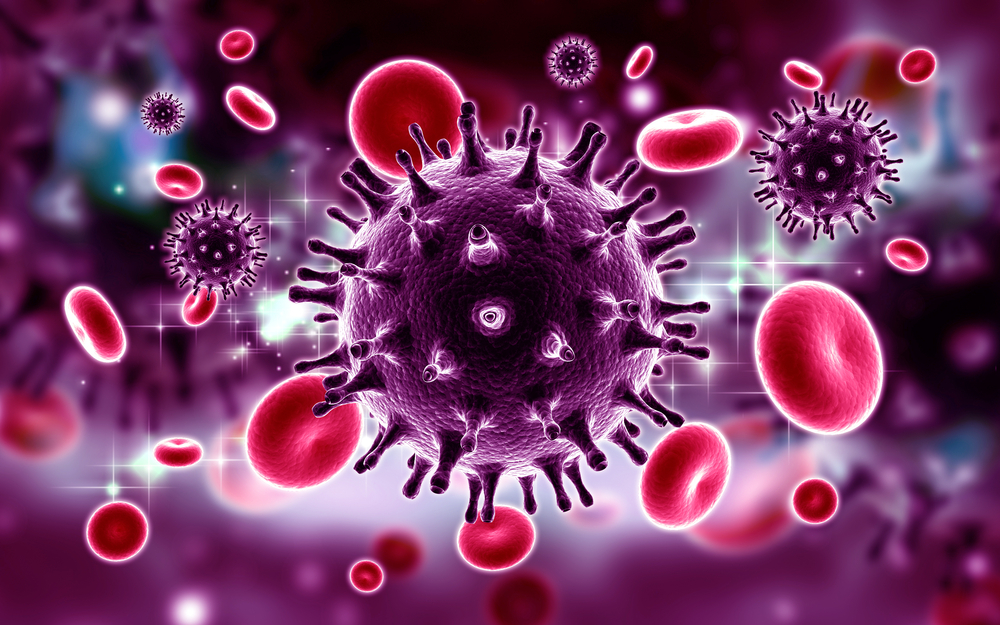
Medical treatment that targets human proteins rather than ever-mutating viruses may one day help HIV-positive people whose bodies have built a resistance to “cocktails” currently used to keep them healthy, according to a Keck School of Medicine of USC researcher.

I-Chueh Huang has spent 13 years researching how the human immune system controls viral infections. His lab recently pinpointed a protein variant that can be targeted to prevent the human immunodeficiency virus from harming HIV-positive individuals.

“Most HIV drugs target the virus,” said Huang, assistant professor of molecular microbiology and immunology at the Keck School of Medicine, which ranked No. 1 in National Institutes of Health funds received per principal investigator in 2016.

“But the virus is not stable; it always mutates — problematic because the virus can become resistant to effective drugs.”

The study, published in the July 3 issue of the Proceedings of the National Academy of Sciences, is a first step toward enabling doctors to direct the body’s own immune system to better fend off disease. This method differs from the more traditional method of targeting viruses that may eventually become resistant to specific medical therapies.

“Much more research needs to be done, but we may have identified a new approach to treating acute HIV infection,” Huang said.

About 37 million people worldwide have HIV and 20 million received antiviral therapy in 2016, according to the World Health Organization. Although most people are doing well with HIV-suppressing treatment, a growing number of people are experiencing drug resistance.

Preventing viral spread

Huang’s lab previously identified a family of proteins that restrict highly contagious viruses — including SARS, the flu, dengue virus and West Nile virus — from viral replication at the early stage of infection.

The new study focused on HIV-1, the most widespread version worldwide. HIV can be classified into R5 and X4 viruses. R5 viruses are exclusively associated with primary infection, and X4 viruses emerge in later stages of HIV diseases in half of HIV carriers. Detection of X4 is an indication that the patient’s HIV infection has progressed to a very toxic state.

The Huang Lab identified a novel variant within the previously identified family of proteins. They nicknamed it “Delta 20,” an immune system protein that suppresses the most damaging HIV strains, X4, by preventing the virus from infecting cells.

“Our finding will not help develop a vaccine because the focus is on innate immunity rather than the virus,” Huang said. “Perhaps one day scientists will create medicine that, like ‘HIV cocktails,’ have to be taken indefinitely. But the new treatment may be more effective because it is harder for viruses to escape the body’s defenses.”

Researchers across disciplines at USC are working on multiple methods of attacking wicked problems such as HIV. For example, Paula Cannon at USC Stem Cell is working to edit human genes to create HIV-resistant cells.

Related Articles Read More >

How a Duke-led HPC method brought cell-scale cancer simulation to a single cloud node 
As AI floods drug discovery with designs, Twist uses DNA chips to tackle the wet-lab bottleneck
Purple Glowing Spiral Fractal Background Image, Illustration - Vortex repeating spiral patterns, Symmetrical repeating geometric patterns. Abstract design, black background
Recursion says its Norstella-backed real-time simulation can expand trial eligibility by up to 40%
NIH employees warn of ‘institutionalized destruction’ one year after Bethesda Declaration
rd newsletter
EXPAND YOUR KNOWLEDGE AND STAY CONNECTED
Get the latest info on technologies, trends, and strategies in Research & Development.

R&D World Digital Issues

Fall 2025 issue

Browse the most current issue of R&D World and back issues in an easy to use high quality format. Clip, share and download with the leading R&D magazine today.

R&D 100 Awards
Research & Development World
  • Subscribe to R&D World Magazine
  • Sign up for R&D World’s newsletter
  • Contact Us
  • About Us
  • Drug Discovery & Development
  • Pharmaceutical Processing
  • Global Funding Forecast

Copyright © 2026 Arrowfly LLC. All Rights Reserved. The material on this site may not be reproduced, distributed, transmitted, cached or otherwise used, except with the prior written permission of Arrowfly
Privacy Policy | Advertising | About Us

Search R&D World

  • R&D World Home
  • Topics
    • Aerospace
    • Automotive
    • Biotech
    • Careers
    • Chemistry
    • Environment
    • Energy
    • Life Science
    • Material Science
    • R&D Management
    • Physics
  • Technology
    • 3D Printing
    • A.I./Robotics
    • Software
    • Battery Technology
    • Controlled Environments
      • Cleanrooms
      • Graphene
      • Lasers
      • Regulations/Standards
      • Sensors
    • Imaging
    • Nanotechnology
    • Scientific Computing
      • Big Data
      • HPC/Supercomputing
      • Informatics
      • Security
    • Semiconductors
  • R&D Market Pulse
  • R&D 100
    • 2025 R&D 100 Award Winners
    • 2025 Professional Award Winners
    • 2025 Special Recognition Winners
    • R&D 100 Awards Event
    • R&D 100 Submissions
    • Winner Archive
  • Resources
    • Research Reports
    • Digital Issues
    • Educational Assets
    • Subscribe
    • Video
    • Webinars
    • PharmSci360
    • Content submission guidelines for R&D World
  • Global Funding Forecast
  • Top Labs
  • Advertise
  • SUBSCRIBE