Research & Development World

  • R&D World Home
  • Topics
    • Aerospace
    • Automotive
    • Biotech
    • Careers
    • Chemistry
    • Environment
    • Energy
    • Life Science
    • Material Science
    • R&D Management
    • Physics
  • Technology
    • 3D Printing
    • A.I./Robotics
    • Software
    • Battery Technology
    • Controlled Environments
      • Cleanrooms
      • Graphene
      • Lasers
      • Regulations/Standards
      • Sensors
    • Imaging
    • Nanotechnology
    • Scientific Computing
      • Big Data
      • HPC/Supercomputing
      • Informatics
      • Security
    • Semiconductors
  • R&D Market Pulse
  • R&D 100
    • 2025 R&D 100 Award Winners
    • 2025 Professional Award Winners
    • 2025 Special Recognition Winners
    • R&D 100 Awards Event
    • R&D 100 Submissions
    • Winner Archive
  • Resources
    • Research Reports
    • Digital Issues
    • Educational Assets
    • Subscribe
    • Video
    • Webinars
    • Content submission guidelines for R&D World
  • Global Funding Forecast
  • Top Labs
  • Advertise
  • SUBSCRIBE

Cleveland Clinic’s quantum computer, CAS data power new Alzheimer’s research pact

By Brian Buntz | April 11, 2025

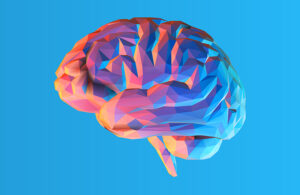
[Adobe Stock]

CAS and Cleveland Clinic are joining forces, uniting CAS’s scientific knowledge management expertise with Cleveland Clinic’s AI and quantum computing capabilities to tackle drug discovery challenges in Alzheimer’s disease, while also focusing on broader research related to health, wellness, and healthy aging. The collaboration will apply Cleveland Clinic’s advanced AI algorithms to analyze CAS’s curated scientific data. The aim is to build sophisticated disease models and identify potential therapeutic pathways more swiftly.

The collaboration was announced during the Cleveland Discovery & Innovation Forum, where officials underscored the need for new approaches to brain health research. The collaboration will draw from “Cleveland Clinic’s expertise in biomedical research and clinical care with CAS leadership in scientific data and technology,” noted Lara Jehi, M.D., Cleveland Clinic Chief Research Information Officer, Cleveland Clinic in a release. The partnership will tap the IBM Quantum System One at Cleveland Clinic, the first quantum computer fully dedicated to healthcare research, tapping its computational muscle for complex research problems pertinent to drug discovery.

One pillar of the collaboration is CAS Content Collection, a comprehensive resource of curated scientific information. In the alliance, researchers will tap this dataset with AI and quantum algorithms to build and train sophisticated, disease-specific models.

The partnership aims to create broader healthcare innovation beyond its initial Alzheimer’s focus. Disease-specific models developed for Alzheimer’s are intended as potential templates for tackling other chronic diseases, with an emphasis on advancing preventative and predictive strategies. This ambition addresses the lengthy traditional timeline for therapeutic development. “Recognizing it takes 17 years for a scientific discovery in a lab to become an approved test or therapy, we are confident that together, we can close that gap,” stated Manuel Guzman, CAS President.

The initiative draws support from the IBM–Cleveland Clinic Discovery Accelerator, a broader 10-year alliance within which this collaboration operates, also involving hybrid cloud, digital health, and education initiatives.

The initiative is further bolstered by the Cleveland Innovation District, which unites state and local resources with Cleveland’s health and education sectors to accelerate research and economic growth.

CAS is a division of the American Chemical Society specializing in scientific content and knowledge management.

Related Articles Read More >

Genetically modified hookworms could produce and deliver therapeutics within a host
Five costly mistakes when scaling spray drying from lab to commercial production
Leica, Indica Labs and Lunit team up as AI biomarker scoring moves toward clinical scale
Beyond the sequence: how Ötzi the Iceman exposed the blind spots of pure metagenomics
rd newsletter
EXPAND YOUR KNOWLEDGE AND STAY CONNECTED
Get the latest info on technologies, trends, and strategies in Research & Development.

R&D World Digital Issues

Fall 2025 issue

Browse the most current issue of R&D World and back issues in an easy to use high quality format. Clip, share and download with the leading R&D magazine today.

R&D 100 Awards
Research & Development World
  • Subscribe to R&D World Magazine
  • Sign up for R&D World’s newsletter
  • Contact Us
  • About Us
  • Drug Discovery & Development
  • Pharmaceutical Processing
  • Global Funding Forecast

Copyright © 2026 WTWH Media LLC. All Rights Reserved. The material on this site may not be reproduced, distributed, transmitted, cached or otherwise used, except with the prior written permission of WTWH Media
Privacy Policy | Advertising | About Us

Search R&D World

  • R&D World Home
  • Topics
    • Aerospace
    • Automotive
    • Biotech
    • Careers
    • Chemistry
    • Environment
    • Energy
    • Life Science
    • Material Science
    • R&D Management
    • Physics
  • Technology
    • 3D Printing
    • A.I./Robotics
    • Software
    • Battery Technology
    • Controlled Environments
      • Cleanrooms
      • Graphene
      • Lasers
      • Regulations/Standards
      • Sensors
    • Imaging
    • Nanotechnology
    • Scientific Computing
      • Big Data
      • HPC/Supercomputing
      • Informatics
      • Security
    • Semiconductors
  • R&D Market Pulse
  • R&D 100
    • 2025 R&D 100 Award Winners
    • 2025 Professional Award Winners
    • 2025 Special Recognition Winners
    • R&D 100 Awards Event
    • R&D 100 Submissions
    • Winner Archive
  • Resources
    • Research Reports
    • Digital Issues
    • Educational Assets
    • Subscribe
    • Video
    • Webinars
    • Content submission guidelines for R&D World
  • Global Funding Forecast
  • Top Labs
  • Advertise
  • SUBSCRIBE