Research & Development World

  • R&D World Home
  • Topics
    • Aerospace
    • Automotive
    • Biotech
    • Careers
    • Chemistry
    • Environment
    • Energy
    • Life Science
    • Material Science
    • R&D Management
    • Physics
  • Technology
    • 3D Printing
    • A.I./Robotics
    • Software
    • Battery Technology
    • Controlled Environments
      • Cleanrooms
      • Graphene
      • Lasers
      • Regulations/Standards
      • Sensors
    • Imaging
    • Nanotechnology
    • Scientific Computing
      • Big Data
      • HPC/Supercomputing
      • Informatics
      • Security
    • Semiconductors
  • R&D Market Pulse
  • R&D 100
    • 2026 R&D 100 Award Winners
    • 2026 Professional Award Winners
    • 2026 Special Recognition Winners
    • R&D 100 Awards Event
    • R&D 100 Submissions
    • Winner Archive
  • Resources
    • Research Reports
    • Digital Issues
    • Educational Assets
    • Subscribe
    • Video
    • Webinars
    • PharmSci360
    • Content submission guidelines for R&D World
  • Global Funding Forecast
  • Top Labs
  • Advertise
  • SUBSCRIBE

Startup Architect Labs says its AI-designed chip beats NVIDIA’s Jetson Orin Nano

By Brian Buntz | August 27, 2026

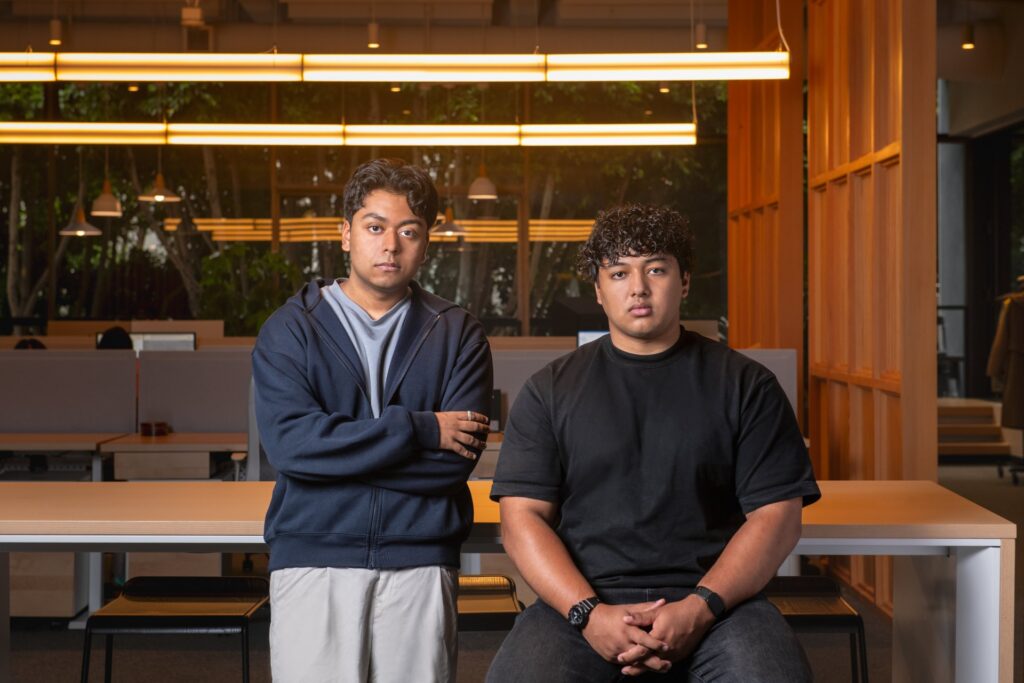
Architect Labs co-founders Ebrahim Hussain (left) and Aaditya Subedi.

Architect Labs co-founders Ebrahim Hussain (left) and Aaditya Subedi.

Palo Alto–based startup Architect Labs, which emerged from stealth in June with a $24 million seed round, is boasting that its AI-designed and validated Redwood chip beats one NVIDIA edge product, the Jetson Orin Nano, in a specific AI-inference comparison.

The company projects that a Samsung 8 nm implementation of Redwood would deliver 1.75× the inference throughput while consuming about 47% less power than a measured Jetson Orin Nano baseline.

The flex is based on a projection. Redwood currently exists as a design deployed on an AMD Versal FPGA at 250 MHz. Architect Labs calibrated its Samsung 8 nm estimate using measurements from that FPGA implementation, then compared the modeled results with a measured Jetson Orin Nano reference.

In related news, NVIDIA announced the Jetson Orin Nano 2 earlier this week, which is scheduled to arrive in the first half of 2027. NVIDIA says the new module will deliver twice the inference performance of the Jetson Orin Nano Super and consumes 40% less power at equivalent performance. The current Nano Super had already raised the original Nano’s peak AI performance from 40 to 67 TOPS through a software upgrade.

In a press release, Architect Labs said its AI system generated the design in less than two weeks from an architectural specification drafted by two human architects.

Architect Labs is pitching Redwood for power-constrained inference in robots, drones and other edge devices. It says the accelerator could also be integrated into a larger data-center SoC or manufactured as a standalone chiplet.

Redwood would enter a crowded field. NVIDIA says more than 3 million developers build on its robotics stack, while Ambarella reports an installed base exceeding 46 million units for its edge AI platform. Qualcomm offers Dragonwing processors with up to 100 dense TOPS, AMD markets production-ready Kria modules for robotics, and Hailo offers a 40-TOPS INT4 accelerator for edge LLMs and vision-language models.


Tell Us What You Think! Cancel reply

You must be logged in to post a comment.

Related Articles Read More >

SK Telecom puts SK hynix fabs into an NVIDIA Omniverse twin, following Samsung and TSMC
What Apple’s new CEO could mean for its R&D strategy
Copper is hitting its physical limit with AI. Why NTT thinks photonics is could unblock it.
Nanoscale ridges in a substrate add 15 K and 50 Tesla to a superconductor’s limits
rd newsletter
EXPAND YOUR KNOWLEDGE AND STAY CONNECTED
Get the latest info on technologies, trends, and strategies in Research & Development.

R&D World Digital Issues

Fall 2025 issue

Browse the most current issue of R&D World and back issues in an easy to use high quality format. Clip, share and download with the leading R&D magazine today.

R&D 100 Awards
Research & Development World
  • Subscribe to R&D World Magazine
  • Sign up for R&D World’s newsletter
  • Contact Us
  • About Us
  • Drug Discovery & Development
  • Pharmaceutical Processing
  • Global Funding Forecast

Copyright © 2026 Arrowfly LLC. All Rights Reserved. The material on this site may not be reproduced, distributed, transmitted, cached or otherwise used, except with the prior written permission of Arrowfly
Privacy Policy | Advertising | About Us

Search R&D World

  • R&D World Home
  • Topics
    • Aerospace
    • Automotive
    • Biotech
    • Careers
    • Chemistry
    • Environment
    • Energy
    • Life Science
    • Material Science
    • R&D Management
    • Physics
  • Technology
    • 3D Printing
    • A.I./Robotics
    • Software
    • Battery Technology
    • Controlled Environments
      • Cleanrooms
      • Graphene
      • Lasers
      • Regulations/Standards
      • Sensors
    • Imaging
    • Nanotechnology
    • Scientific Computing
      • Big Data
      • HPC/Supercomputing
      • Informatics
      • Security
    • Semiconductors
  • R&D Market Pulse
  • R&D 100
    • 2026 R&D 100 Award Winners
    • 2026 Professional Award Winners
    • 2026 Special Recognition Winners
    • R&D 100 Awards Event
    • R&D 100 Submissions
    • Winner Archive
  • Resources
    • Research Reports
    • Digital Issues
    • Educational Assets
    • Subscribe
    • Video
    • Webinars
    • PharmSci360
    • Content submission guidelines for R&D World
  • Global Funding Forecast
  • Top Labs
  • Advertise
  • SUBSCRIBE