Research & Development World

  • R&D World Home
  • Topics
    • Aerospace
    • Automotive
    • Biotech
    • Careers
    • Chemistry
    • Environment
    • Energy
    • Life Science
    • Material Science
    • R&D Management
    • Physics
  • Technology
    • 3D Printing
    • A.I./Robotics
    • Software
    • Battery Technology
    • Controlled Environments
      • Cleanrooms
      • Graphene
      • Lasers
      • Regulations/Standards
      • Sensors
    • Imaging
    • Nanotechnology
    • Scientific Computing
      • Big Data
      • HPC/Supercomputing
      • Informatics
      • Security
    • Semiconductors
  • R&D Market Pulse
  • R&D 100
    • 2025 R&D 100 Award Winners
    • 2025 Professional Award Winners
    • 2025 Special Recognition Winners
    • R&D 100 Awards Event
    • R&D 100 Submissions
    • Winner Archive
  • Resources
    • Research Reports
    • Digital Issues
    • Educational Assets
    • Subscribe
    • Video
    • Webinars
    • PharmSci360
    • Content submission guidelines for R&D World
  • Global Funding Forecast
  • Top Labs
  • Advertise
  • SUBSCRIBE

A Biomarker in the Brain’s Circulation System may be Alzheimer’s Earliest Warning

By University Of Southern California | September 25, 2018

USC scientists say Alzheimer’s could be diagnosed earlier if scientists focus on an early warning within the brain’s circulation system.

That’s important because researchers believe that the earlier Alzheimer’s is spotted, the better chance there is to stop or slow the disease.

“Cognitive impairment, and accumulation in the brain of the abnormal proteins amyloid and tau, are what we currently rely upon to diagnose Alzheimer’s disease, but blood-brain barrier breakdown and cerebral blood flow changes can be seen much earlier,” said Berislav Zlokovic, the Mary Hayley and Selim Zilkha Chair in Alzheimer’s Disease Research at the Keck School of Medicine of USC. “This shows why healthy blood vessels are so important for normal brain functioning.”

In a new review article in the Sept. 24 issue of Nature Neuroscience, Zlokovic and his colleagues recommend that the blood-brain barrier, or BBB, be considered an important biomarker — and potential drug target — for Alzheimer’s disease. Because Alzheimer’s is irreversible, and not fully understood, understanding the first step in the disease process is a critical step in fighting it.

Alzheimer’s afflicts 5.7 million Americans and is expected to impair about 14 million by 2050, according to the U.S. Centers for Disease Control and Prevention. Treatment costs total hundreds of billions of dollars annually in the United States. Alzheimer’s kills more people than breast cancer and prostate cancer combined.

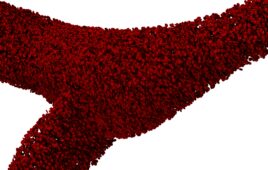
The blood-brain barrier is a filtration system, letting in good things (glucose, amino acids) and keeping out bad things (viruses, bacteria, blood). It’s mostly comprised of endothelial cells lining the 400 miles of arteries, veins and capillaries that feed our brains.

Some evidence indicates that leaks in the blood-brain barrier may allow a protein called amyloid into the brain where it sticks to neurons. This triggers the accumulation of more amyloid, which eventually overwhelms and kills brain cells.

“Something is off with the system when that happens,” said Arthur Toga, director of the Laboratory of Neuro Imaging (LONI) and the USC Mark and Mary Stevens Neuroimaging and Informatics Institute at the Keck School of Medicine. “Healthy people have amyloid in their bodies. When the system is dysregulated, amyloid can build up and cells die off.”

Blood-to-brain leaks are seen in other neurodegenerative diseases, such as Huntington’s disease, Parkinson’s and multiple sclerosis.

BBB leaks can be detected with an intravenously administered contrast substance in concert with magnetic resonance imaging. Brain microbleeds, another sign of leakage, also can be picked up with MRI. A slowdown in the brain’s uptake of glucose, visible via PET scan, can be a another result of BBB breakdown.

Zlokovic notes that these aren’t tests routinely offered at a doctor’s office.
Related Articles Read More >

How a Duke-led HPC method brought cell-scale cancer simulation to a single cloud node 
As AI floods drug discovery with designs, Twist uses DNA chips to tackle the wet-lab bottleneck
Purple Glowing Spiral Fractal Background Image, Illustration - Vortex repeating spiral patterns, Symmetrical repeating geometric patterns. Abstract design, black background
Recursion says its Norstella-backed real-time simulation can expand trial eligibility by up to 40%
NIH employees warn of ‘institutionalized destruction’ one year after Bethesda Declaration
rd newsletter
EXPAND YOUR KNOWLEDGE AND STAY CONNECTED
Get the latest info on technologies, trends, and strategies in Research & Development.

R&D World Digital Issues

Fall 2025 issue

Browse the most current issue of R&D World and back issues in an easy to use high quality format. Clip, share and download with the leading R&D magazine today.

R&D 100 Awards
Research & Development World
  • Subscribe to R&D World Magazine
  • Sign up for R&D World’s newsletter
  • Contact Us
  • About Us
  • Drug Discovery & Development
  • Pharmaceutical Processing
  • Global Funding Forecast

Copyright © 2026 Arrowfly LLC. All Rights Reserved. The material on this site may not be reproduced, distributed, transmitted, cached or otherwise used, except with the prior written permission of Arrowfly
Privacy Policy | Advertising | About Us

Search R&D World

  • R&D World Home
  • Topics
    • Aerospace
    • Automotive
    • Biotech
    • Careers
    • Chemistry
    • Environment
    • Energy
    • Life Science
    • Material Science
    • R&D Management
    • Physics
  • Technology
    • 3D Printing
    • A.I./Robotics
    • Software
    • Battery Technology
    • Controlled Environments
      • Cleanrooms
      • Graphene
      • Lasers
      • Regulations/Standards
      • Sensors
    • Imaging
    • Nanotechnology
    • Scientific Computing
      • Big Data
      • HPC/Supercomputing
      • Informatics
      • Security
    • Semiconductors
  • R&D Market Pulse
  • R&D 100
    • 2025 R&D 100 Award Winners
    • 2025 Professional Award Winners
    • 2025 Special Recognition Winners
    • R&D 100 Awards Event
    • R&D 100 Submissions
    • Winner Archive
  • Resources
    • Research Reports
    • Digital Issues
    • Educational Assets
    • Subscribe
    • Video
    • Webinars
    • PharmSci360
    • Content submission guidelines for R&D World
  • Global Funding Forecast
  • Top Labs
  • Advertise
  • SUBSCRIBE