Research & Development World

  • R&D World Home
  • Topics
    • Aerospace
    • Automotive
    • Biotech
    • Careers
    • Chemistry
    • Environment
    • Energy
    • Life Science
    • Material Science
    • R&D Management
    • Physics
  • Technology
    • 3D Printing
    • A.I./Robotics
    • Software
    • Battery Technology
    • Controlled Environments
      • Cleanrooms
      • Graphene
      • Lasers
      • Regulations/Standards
      • Sensors
    • Imaging
    • Nanotechnology
    • Scientific Computing
      • Big Data
      • HPC/Supercomputing
      • Informatics
      • Security
    • Semiconductors
  • R&D Market Pulse
  • R&D 100
    • 2025 R&D 100 Award Winners
    • 2025 Professional Award Winners
    • 2025 Special Recognition Winners
    • R&D 100 Awards Event
    • R&D 100 Submissions
    • Winner Archive
  • Resources
    • Research Reports
    • Digital Issues
    • Educational Assets
    • R&D Index
    • Subscribe
    • Video
    • Webinars
    • Content submission guidelines for R&D World
  • Global Funding Forecast
  • Top Labs
  • Advertise
  • SUBSCRIBE

A new defense against fraud

By R&D Editors | May 18, 2011

Money

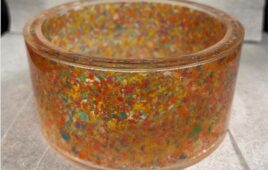
The polymer materials can be made into robust layers that could be used as anti-counterfeit measures on banknotes.

Scientists from the Univ. of Sheffield
have developed pigment-free, intensely colored polymer materials, which could
provide anti-counterfeit devices on passports or banknotes.

The
polymers do not use pigments, but instead exhibit intense color due to their
structure, similar to the way nature creates color for beetle shells and
butterfly wings.

These colors were created by highly ordered
polymer layers, which the researchers produced using block copoylmers. By
mixing block copolymers together, the researchers were able to create any color
in the rainbow from two non-colored solutions.

This type of polymer then automatically organizes
itself into a layered structure, causing optical effects similar to opals. The color
also changes depending on the viewing angle. This system has huge advantage in
terms of cost, processing, and color selection compared to existing systems.

The complexity of the chemistry involved in
making the polymer means they are very difficult for fraudsters to copy, making
them ideally suited for use on passports or banknotes.

The academics used Diamond Light Source, the UK’s national
synchrotron science facility in Oxfordshire, to probe the ordered, layered
structures using high power x-rays. This helped them understand how the colors
were formed, and how to improve the appearance.

Dr Andrew Parnell, from the Univ. of Sheffield’s
Department of Physics and Astronomy, said: “Our aim was to mimic the
wonderful and funky colored patterns found in nature, such as Peacock feathers.
We now have a painter’s palette of colors that we can choose from using just
two polymers to do this. We think that these materials have huge potential to
be used commercially.”

Professor Nick Terrill, Principal Beamline
Scientist for I22, the Diamond laboratory used for the experiment, explained:
“Small Angle x-ray Scattering is a simple technique that in this case has
provided valuable confirmatory information. By using Diamond’s x-rays to
confirm the structure of the polymer, the group was able to identify the
appropriate blends for the colors required, meaning they can now tailor the
polymer composition accordingly.”
SOURCE

Related Articles Read More >

Gadolyn names Jack Lifton advisory board chair, adds Gareth Hatch
Lead-free piezoelectric material converts motion to power without lead
R&D 100 Winners protecting nuclear materials
R&D Winners turn fruit waste into ‘leather’
rd newsletter
EXPAND YOUR KNOWLEDGE AND STAY CONNECTED
Get the latest info on technologies, trends, and strategies in Research & Development.
RD 25 Power Index

R&D World Digital Issues

Fall 2025 issue

Browse the most current issue of R&D World and back issues in an easy to use high quality format. Clip, share and download with the leading R&D magazine today.

R&D 100 Awards
Research & Development World
  • Subscribe to R&D World Magazine
  • Sign up for R&D World’s newsletter
  • Contact Us
  • About Us
  • Drug Discovery & Development
  • Pharmaceutical Processing
  • Global Funding Forecast

Copyright © 2025 WTWH Media LLC. All Rights Reserved. The material on this site may not be reproduced, distributed, transmitted, cached or otherwise used, except with the prior written permission of WTWH Media
Privacy Policy | Advertising | About Us

Search R&D World

  • R&D World Home
  • Topics
    • Aerospace
    • Automotive
    • Biotech
    • Careers
    • Chemistry
    • Environment
    • Energy
    • Life Science
    • Material Science
    • R&D Management
    • Physics
  • Technology
    • 3D Printing
    • A.I./Robotics
    • Software
    • Battery Technology
    • Controlled Environments
      • Cleanrooms
      • Graphene
      • Lasers
      • Regulations/Standards
      • Sensors
    • Imaging
    • Nanotechnology
    • Scientific Computing
      • Big Data
      • HPC/Supercomputing
      • Informatics
      • Security
    • Semiconductors
  • R&D Market Pulse
  • R&D 100
    • 2025 R&D 100 Award Winners
    • 2025 Professional Award Winners
    • 2025 Special Recognition Winners
    • R&D 100 Awards Event
    • R&D 100 Submissions
    • Winner Archive
  • Resources
    • Research Reports
    • Digital Issues
    • Educational Assets
    • R&D Index
    • Subscribe
    • Video
    • Webinars
    • Content submission guidelines for R&D World
  • Global Funding Forecast
  • Top Labs
  • Advertise
  • SUBSCRIBE