Research & Development World

  • R&D World Home
  • Topics
    • Aerospace
    • Automotive
    • Biotech
    • Careers
    • Chemistry
    • Environment
    • Energy
    • Life Science
    • Material Science
    • R&D Management
    • Physics
  • Technology
    • 3D Printing
    • A.I./Robotics
    • Software
    • Battery Technology
    • Controlled Environments
      • Cleanrooms
      • Graphene
      • Lasers
      • Regulations/Standards
      • Sensors
    • Imaging
    • Nanotechnology
    • Scientific Computing
      • Big Data
      • HPC/Supercomputing
      • Informatics
      • Security
    • Semiconductors
  • R&D Market Pulse
  • R&D 100
    • 2026 R&D 100 Award Winners
    • 2026 Professional Award Winners
    • 2026 Special Recognition Winners
    • R&D 100 Awards Event
    • R&D 100 Submissions
    • Winner Archive
  • Resources
    • Research Reports
    • Digital Issues
    • Educational Assets
    • Subscribe
    • Video
    • Webinars
    • PharmSci360
    • Content submission guidelines for R&D World
  • Global Funding Forecast
  • Top Labs
  • Advertise
  • SUBSCRIBE

Ancient Carpet Shark Discovered With ‘Spaceship-Shaped’ Teeth

By North Carolina State University | January 21, 2019

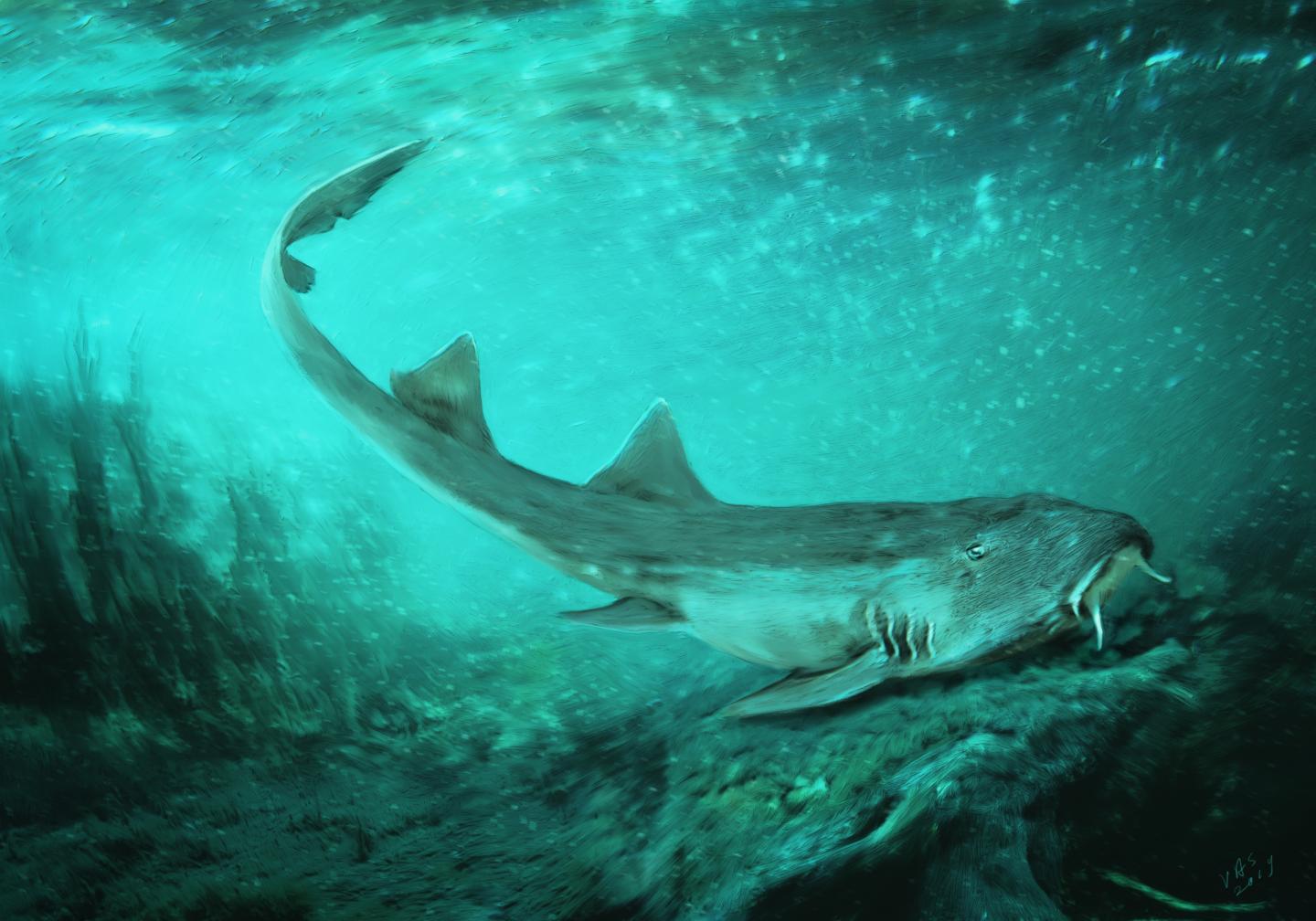
Galagadon Credit: Velizar Simeonovski, Field Museum

The world of the dinosaurs just got a bit more bizarre with a newly discovered species of freshwater shark whose tiny teeth resemble the alien ships from the popular 1980s video game Galaga.

Unlike its gargantuan cousin the megalodon, Galagadon nordquistae was a small shark (approximately 12 to 18 inches long), related to modern-day carpet sharks such as the “whiskered” wobbegong. Galagadon once swam in the Cretaceous rivers of what is now South Dakota, and its remains were uncovered beside “Sue,” the world’s most famous T. rex fossil.

“The more we discover about the Cretaceous period just before the non-bird dinosaurs went extinct, the more fantastic that world becomes,” says Terry Gates, lecturer at North Carolina State University and research affiliate with the North Carolina Museum of Natural Sciences. Gates is lead author of a paper describing the new species along with colleagues Eric Gorscak and Peter J. Makovicky of the Field Museum of Natural History.

“It may seem odd today, but about 67 million years ago, what is now South Dakota was covered in forests, swamps and winding rivers,” Gates says. “Galagadon was not swooping in to prey on T. rex, Triceratops, or any other dinosaurs that happened into its streams. This shark had teeth that were good for catching small fish or crushing snails and crawdads.”

The tiny teeth – each one measuring less than a millimeter across – were discovered in the sediment left behind when paleontologists at the Field Museum uncovered the bones of “Sue,” currently the most complete T. rex specimen ever described. Gates sifted through the almost two tons of dirt with the help of volunteer Karen Nordquist, whom the species name, nordquistae, honors. Together, the pair recovered over two dozen teeth belonging to the new shark species.

“It amazes me that we can find microscopic shark teeth sitting right beside the bones of the largest predators of all time,” Gates says. “These teeth are the size of a sand grain. Without a microscope you’d just throw them away.”

Despite its diminutive size, Gates sees the discovery of Galagadon as an important addition to the fossil record. “Every species in an ecosystem plays a supporting role, keeping the whole network together,” he says. “There is no way for us to understand what changed in the ecosystem during the mass extinction at the end of the Cretaceous without knowing all the wonderful species that existed before.”

Gates credits the idea for Galagadon’s name to middle school teacher Nate Bourne, who worked alongside Gates in paleontologist Lindsay Zanno’s lab at the N.C. Museum of Natural Sciences.

Related Articles Read More >

Big Tech now spends almost 3x more on R&D than Big Pharma 
Inside the Lab: NARI’s Ga-68 Dolacga measures liver function CT scans can’t see
Verily secures new investment from Nvidia
How Lantern Med Digital is helping build the digital layer of Costa Rica’s medtech boom
rd newsletter
EXPAND YOUR KNOWLEDGE AND STAY CONNECTED
Get the latest info on technologies, trends, and strategies in Research & Development.

R&D World Digital Issues

Fall 2025 issue

Browse the most current issue of R&D World and back issues in an easy to use high quality format. Clip, share and download with the leading R&D magazine today.

R&D 100 Awards
Research & Development World
  • Subscribe to R&D World Magazine
  • Sign up for R&D World’s newsletter
  • Contact Us
  • About Us
  • Drug Discovery & Development
  • Pharmaceutical Processing
  • Global Funding Forecast

Copyright © 2026 Arrowfly LLC. All Rights Reserved. The material on this site may not be reproduced, distributed, transmitted, cached or otherwise used, except with the prior written permission of Arrowfly
Privacy Policy | Advertising | About Us

Search R&D World

  • R&D World Home
  • Topics
    • Aerospace
    • Automotive
    • Biotech
    • Careers
    • Chemistry
    • Environment
    • Energy
    • Life Science
    • Material Science
    • R&D Management
    • Physics
  • Technology
    • 3D Printing
    • A.I./Robotics
    • Software
    • Battery Technology
    • Controlled Environments
      • Cleanrooms
      • Graphene
      • Lasers
      • Regulations/Standards
      • Sensors
    • Imaging
    • Nanotechnology
    • Scientific Computing
      • Big Data
      • HPC/Supercomputing
      • Informatics
      • Security
    • Semiconductors
  • R&D Market Pulse
  • R&D 100
    • 2026 R&D 100 Award Winners
    • 2026 Professional Award Winners
    • 2026 Special Recognition Winners
    • R&D 100 Awards Event
    • R&D 100 Submissions
    • Winner Archive
  • Resources
    • Research Reports
    • Digital Issues
    • Educational Assets
    • Subscribe
    • Video
    • Webinars
    • PharmSci360
    • Content submission guidelines for R&D World
  • Global Funding Forecast
  • Top Labs
  • Advertise
  • SUBSCRIBE