Research & Development World

  • R&D World Home
  • Topics
    • Aerospace
    • Automotive
    • Biotech
    • Careers
    • Chemistry
    • Environment
    • Energy
    • Life Science
    • Material Science
    • R&D Management
    • Physics
  • Technology
    • 3D Printing
    • A.I./Robotics
    • Software
    • Battery Technology
    • Controlled Environments
      • Cleanrooms
      • Graphene
      • Lasers
      • Regulations/Standards
      • Sensors
    • Imaging
    • Nanotechnology
    • Scientific Computing
      • Big Data
      • HPC/Supercomputing
      • Informatics
      • Security
    • Semiconductors
  • R&D Market Pulse
  • R&D 100
    • 2025 R&D 100 Award Winners
    • 2025 Professional Award Winners
    • 2025 Special Recognition Winners
    • R&D 100 Awards Event
    • R&D 100 Submissions
    • Winner Archive
  • Resources
    • Research Reports
    • Digital Issues
    • Educational Assets
    • R&D Index
    • Subscribe
    • Video
    • Webinars
    • Content submission guidelines for R&D World
  • Global Funding Forecast
  • Top Labs
  • Advertise
  • SUBSCRIBE

Brainwaves Could Be the Next Vital Health Sign

By Simon Fraser University | June 3, 2016

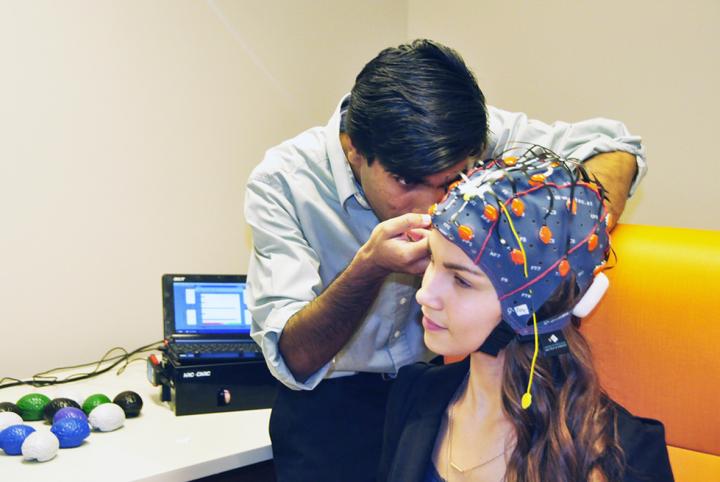
The brain vital signs platform works with any brainwave devices. Source: Marianne Meadahl, SFU

Simon Fraser University researchers hope that a brain vital-sign test becomes as routine during a doctor’s check-up as taking a blood pressure or heart rate measurement.

SFU researchers, led by professor Ryan D’Arcy with partners from the Mayo Clinic, Sheba Medical Centre in Israel and local high-tech company HealthTech Connex Inc., are developing a more accessible means to monitor brain health.

In a recent article published in the journal Frontiers in Neuroscience, the team introduces the world’s first advancement in physiology-based brain vital signs. Their discovery makes it possible to translate complex brainwaves into objective, practical and deployable brain vital signs, using longstanding brainwave technologies that have existed for nearly a century.

HealthTech Connex Inc. is currently developing the NeuroCatchTM platform to enable the highest quality recordings of the brain’s vital signs.

“The brain vital-sign framework described in Frontiers in Neuroscience represents the first step towards an easy way to monitor brain health,” says D’Arcy. “Potential applications are in concussion, brain injury, stroke, dementia and other devastating brain diseases and disorders.”

Vital sign measures are often used in clinics, hospitals and other care centres to assess the performance of various body systems.

Scientists in D’Arcy’s NeuroTech Lab, based in Surrey Memorial Hospital, have now developed a simple way to measure brain health over time by using non-invasive electrodes to track the brain’s electrical activity for key brain functions–in other words, the brain’s vital signs.

Researchers found that it is possible to monitor brain performance during auditory sensation, and basic attention and cognitive processing.

“We know brainwaves provide an objective physiological measurement of brain functions,” says D’Arcy, SFU’s BC Leadership Chair in Medical Technologies. “We’ve been working for the last 20 years to solve the major gap in terms of utilizing this for a rapid and accessible vital sign for brain function.”

Traditionally, brain function has been assessed only after trauma or disease has occurred and has relied heavily on subjective, behaviour-based assessments.

“However, tracking our brain’s vital signs is critically important for establishing a baseline for a person’s objective brain activity,” he adds, noting that in the event of injury or disease, it then becomes possible to evaluate if brain function changes, and whether treatments are effective.

“We describe the world’s first physiology-driven brain vital-sign measure allowing us to quantify brain vitality over time,” says Sujoy Ghosh Hajra, A PhD student working with D’Arcy and the paper’s lead author.

In the paper, researchers describe how their framework translates complex brainwave science into clinically accessible information and demonstrates successful measurement of brain vital signs in both younger and older adults. Their method identified age-related brain function changes that were not evident using traditional measures.

The paper has had significant hits–more than 1,000 views globally–which Ghosh Hajra says is a testament to the urgent need to quantify brain vitality.
Related Articles Read More >

JWST spots a 6-mile moon hiding in Uranus’ rings
DNA microscope offers new 3D view of organisms from the inside out
A tale of two industries: How manufacturing and medical imaging experts can learn from each other
Dark energy camera captures the glittering galaxies of the Antlia Cluster
rd newsletter
EXPAND YOUR KNOWLEDGE AND STAY CONNECTED
Get the latest info on technologies, trends, and strategies in Research & Development.
RD 25 Power Index

R&D World Digital Issues

Fall 2025 issue

Browse the most current issue of R&D World and back issues in an easy to use high quality format. Clip, share and download with the leading R&D magazine today.

R&D 100 Awards
Research & Development World
  • Subscribe to R&D World Magazine
  • Sign up for R&D World’s newsletter
  • Contact Us
  • About Us
  • Drug Discovery & Development
  • Pharmaceutical Processing
  • Global Funding Forecast

Copyright © 2025 WTWH Media LLC. All Rights Reserved. The material on this site may not be reproduced, distributed, transmitted, cached or otherwise used, except with the prior written permission of WTWH Media
Privacy Policy | Advertising | About Us

Search R&D World

  • R&D World Home
  • Topics
    • Aerospace
    • Automotive
    • Biotech
    • Careers
    • Chemistry
    • Environment
    • Energy
    • Life Science
    • Material Science
    • R&D Management
    • Physics
  • Technology
    • 3D Printing
    • A.I./Robotics
    • Software
    • Battery Technology
    • Controlled Environments
      • Cleanrooms
      • Graphene
      • Lasers
      • Regulations/Standards
      • Sensors
    • Imaging
    • Nanotechnology
    • Scientific Computing
      • Big Data
      • HPC/Supercomputing
      • Informatics
      • Security
    • Semiconductors
  • R&D Market Pulse
  • R&D 100
    • 2025 R&D 100 Award Winners
    • 2025 Professional Award Winners
    • 2025 Special Recognition Winners
    • R&D 100 Awards Event
    • R&D 100 Submissions
    • Winner Archive
  • Resources
    • Research Reports
    • Digital Issues
    • Educational Assets
    • R&D Index
    • Subscribe
    • Video
    • Webinars
    • Content submission guidelines for R&D World
  • Global Funding Forecast
  • Top Labs
  • Advertise
  • SUBSCRIBE