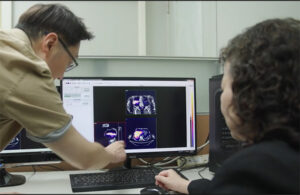
Visualizing functional liver reserve inside NARI’s laboratory.
Asisloglycoprotein receptors (ASGPRs) on healthy hepatocyte membranes physiologically function in clearing glycoproteins containing galactose or N-acetylglucosamine residues from the circulation. In mammalian circulation, approximately 90% of proteins are glycoproteins, typically adorned with terminal sialic acid residues. Physiologically, as these glycoproteins age, sialic acids are removed, exposing galactose, lactose, or N-acetylgalactosamine residues. These exposed sugars are then recognized by the carbohydrate recognition domain of ASGPRs. Dolacga, engineered with terminal galactose, specifically targets to ASGPRs. By binding specifically to these receptors on healthy hepatocytes, Ga-68 Dolacga provides a precise metabolic map of the liver. When liver tissue is diseased or cancerous, ASGPR expression drops dramatically, allowing Ga-68 Dolacga PET scans to clearly delineate cancer boundaries within just 15 to 30 minutes of imaging.
Chronic hepatitis remains a progressive global health threat stemming from diverse etiologies, primarily categorized as viral or metabolic hepatitis. According to the WHO Global Hepatitis Report 20261, approximately 240 million (95% UI: 202–296 million) people are living with chronic HBV and 47 million (95% UI:31–71 million) with chronic HCV. This totals 287 million individuals, representing approximately 4% of the global population (estimated at 8.2 billion in 2024), which aligns with the CDC’s viral-only estimates2.
Furthermore, non-alcoholic steatohepatitis (NASH), clinically redefined as metabolic dysfunction-associated steatohepatitis (MASH), is recognized as another significant risk factor for the development of liver cancer. As a progressive form of fatty liver disease, it causes chronic inflammation and liver damage that can escalate to cirrhosis and eventually malignancy. MASH represents the leading non-viral cause of chronic liver inflammation. Driven by global epidemics of obesity and type 2 diabetes, a landmark meta-analysis in Hepatology (Younossi et al., 2023)3 reported that NASH affects 5.27% of the global general population. Alarmingly, approximately 30 to 40% of patients with NASH-related HCC present with no history of cirrhosis at the time of cancer diagnosis (Llovet, 2025)4. This is because MASH-induced lipotoxicity, chronic inflammation, insulin resistance, and oxidative stress can bypass the traditional cirrhosis-carcinoma sequence to directly trigger oncogenic mutations in hepatocytes (Llovet, 2025)4. This highlights that clinicians must not simply wait until conventional ultrasound detects cirrhosis to initiate cancer prevention; instead, they should implement early liver function assessments—such as utilizing Ga-68 Dolacga PET/CT imaging— to evaluate functional liver reserve and detect early-stage, metabolically driven lesions before irreversible malignant transformation occurs.
Combining these distinct viral (~4%) and metabolic (~5.27%) pathways, the total prevalence of chronic liver inflammation and progressive liver damage stands at approximately 9%, meaning that nearly one in ten people globally are affected by chronic hepatic inflammation.
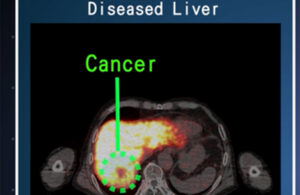
Figure 1: The high-affinity Ga-68 Dolacga radiopharmaceutical targets ASGP receptors, enabling PET scans to map healthy hepatocyte regions and delineate cancer boundaries with unmatched precision.
With hepatitis affecting one in ten people globally, assessing functional liver reserve is key to halting disease progression, as accurate diagnostic quantification serves as an indispensable clinical guide for timely, life-saving interventions. Although the imaging assessment itself does not biochemically reverse liver damage, it helps to halt clinical progression toward mortality in three critical ways, as demonstrated in our study:
- Prevents Postoperative Liver Failure: For patients with liver cancer and cirrhosis who present with a compromised hepatic background, precise ASGPR-targeted quantification of the remnant liver reserve allows for optimal surgical planning, thereby preventing fatal post-hepatectomy liver failure.
- Identifies Critical Transplantation Windows: Measuring actual residual functional liver mass provides a reliable clinical threshold for determining exactly when a liver transplant must be initiated before irreversible organ failure occurs.
- Monitors Regeneration and Prognosis: Imaging assessment serves as a quantitative parameter to monitor hepatocyte regeneration post-surgery and evaluate prognosis against a critical survival threshold (e.g., the 25% reserve limit identified in our preclinical model) (Wang et al., 2015)5, allowing clinicians to implement aggressive preemptive therapies before clinical decompensation sets in.
While conventional contrast CT scans provide detailed anatomical structures, they are strictly limited to morphological evaluation and remain completely blind to actual, ongoing liver function or metabolic reserve. This functional blindness not only prevents them from distinguishing benign lesions from malignant tumors—often subjecting patients to unnecessary, invasive surgeries—but also leaves clinicians without a reliable way to assess dynamic liver safety. To resolve this critical diagnostic bottleneck, Ga-68 Dolacga offers a functional breakthrough. Engineered by Mei-Hui Wang’s team at the National Atomic Research Institute (NARI), this molecular imaging agent targets the asialoglycoprotein receptor (ASGPR) on healthy hepatocytes. Because ASGPR expression drops in diseased regions, Ga-68 Dolacga clearly maps functional liver reserve and delineates cancer boundaries with unmatched metabolic precision in just 15 to 30 minutes of imaging. Specifically, by quantifying functional hepatocytes via ASGPR expression rather than relying on structural volume alone — which CT scans merely approximate without functional context — clinicians can prevent fatal post-hepatectomy liver failure in surgical planning. Furthermore, in severe cirrhosis or acute liver failure, measuring functional liver mass establishes a precise prognostic indicator and identifies the optimal clinical window for liver transplantation before irreversible decompensation occurs. Dynamic monitoring of functional reserve also allows clinicians to track active hepatocyte regeneration post-surgery and evaluate treatment efficacy against a critical survival threshold (Wang et al., 2015)5.
A key innovation of Ga-68 Dolacga lies in its formulation and ease of preparation. Dolacga features a uniquely designed, patented lyophilized formulation (US10925981B2)6,7. This enables the rapid, one-step preparation of Ga-68 Dolacga injection, streamlining clinical workflow. This robust approach to formulation not only accelerates preparation but also ensures reproducible batch quality for consistent imaging performance. Furthermore, it provides exceptional stability: the lyophilized kit boasts a long shelf life of at least 24 months when refrigerated and a robust 9 months at room temperature. This extended shelf life offers tremendous flexibility and enhanced accessibility for clinical sites.
This patented formulation is crucial for practical clinical application. It allows for the rapid radiolabeling of Dolacga with Gallium-68 (Ga-68), achieving a high purity exceeding 95% within just 15 minutes of Ga-68 addition and no purification requirement. Given that Ga-68 has a short half-life of only 68 minutes, this rapid preparation is absolutely vital. It facilitates an efficient on-site preparation workflow, enabling quick intravenous injection and immediate imaging. By providing such precise diagnostic information in a timely manner, Ga-68 Dolacga significantly enhances both liver function assessment and overall patient management.
To date, Ga-68 Dolacga has been evaluated in two completed regulatory trials registered on ClinicalTrials.gov (NCT03908957 and NCT05007548; n = 42). In one notable case, a PET scan revealed normal uptake in a CT-suspected malignant tumor, correctly identifying it as a benign nodule and sparing the patient from an unnecessary, invasive surgery. Beyond ruling out malignancy, Ga-68 Dolacga provides unmatched precision in tumor sizing and liver function assessment compared to CT alone. NARI is now leveraging this stable, rapid-preparation kit to streamline clinical workflows and expands its application across several academic studies—including mCRC liver metastases, post-radiation therapy, and radiofrequency ablation.
Below is the detailed clinical trials conducted to date:
- Phase I Trial (Healthy Subjects – NCT03908957): 12 subjects completed at National Taiwan University Hospital. (Completed; TFDA Case: PTK16081821)
https://e-sub.fda.gov.tw/ClinicalTrialInfo/case-search/PTK16081821 - Phase II Trial (HCC Surgical Resection – NCT05007548): 30 subjects completed at Chang Gung Memorial Hospital, Linkou. (Completed; TFDA Case: INER-V09DX-02)
https://e-sub.fda.gov.tw/ClinicalTrialInfo/case-search/INER-V09DX-02 - Colorectal Cancer Liver Metastases (mCRC) Cohort: 2 subjects completed at Koo Foundation Sun Yat-Sen Cancer Center, Taipei. (Completed; TFDA Case: INER-V09DX-HS)
https://e-sub.fda.gov.tw/ClinicalTrialInfo/case-search/INER-V09DX-HS - HCC Radiation/Proton Therapy Cohort – NCT06182865: 10 subjects completed at Chang Gung Memorial Hospital, Linkou. (Completed; TFDA Case: INER-V09DX-proton)
https://e-sub.fda.gov.tw/ClinicalTrialInfo/case-search/INER-V09DX-proton - HCC Proton Therapy Cohort: 10 subjects (18 abdominal scans completed to date; target: 20 scans) assessing functional liver changes pre- and post-proton therapy. (Expected completion: late September; TFDA Case: INER-V09DX-proton-k)
https://e-sub.fda.gov.tw/ClinicalTrialInfo/case-search/NARI-V09DX-proton-k - Radiofrequency Ablation [RFA] Cohort- NCT06792097: 14 scans completed to monitor functional reserve pre- and post-ablation. (Ongoing)
https://e-sub.fda.gov.tw/ClinicalTrialInfo/case-search/NARI-V09DX-RFA
Reference:
- Global Hepatitis Report 2026, World Health Organization.
- https://www.cdc.gov/hepatitis/global/index.html
- Younossi ZM, Golabi P, Paik JM, Henry A, Van Dongen C, Henry L. The global epidemiology of nonalcoholic fatty liver disease (NAFLD) and nonalcoholic steatohepatitis (NASH): a systematic review. Hepatology.1;77(4):1335-1347, 2023.
https://pubmed.ncbi.nlm.nih.gov/36626630/ - Llovet JM, Willoughby CE, Singal AG, Greten TF, Heikenwälder M, El-Serag HB, Finn RS, Friedman SL. Nonalcoholic steatohepatitis-related hepatocellular carcinoma: pathogenesis and treatment. Nat Rev Gastroenterol Hepatol. 2023 Aug;20(8):487-503. https://pubmed.ncbi.nlm.nih.gov/36932227/
- Wang MH., Chien CY, Wang PY., Yu HM., Lee HS., Lin WJ. The specificity and accuracy of ¹¹¹In-hexavalent lactoside in estimating liver reserve and its threshold value for mortality in mice. Journal of Hepatology, 63, 370–377, 2015. https://doi.org/10.1016/j.jhep.2015.02.052
- Lin WJ, Wang MH., Yu HM., Lin KL., Jiang YF., Chen RY. HS., Hexa-lactoside-triazanonane triacetic acid (NOTA) derivative, method for radiolabeling hexa-lactoside positron emission tomography (PET) imaging agent for liver receptor with Ga-68, and hexa-lactoside PET imaging agent for liver receptor. USUS10925981B2, application date 2018.11.27. https://patents.google.com/patent/US20190343971A1/en
- Yu HM., Chan CH., Chen JH., Chien CY., Wang PY., Juan WC., Yang CH., Hsia HT., Wang MH., Lin WJ. Development of single vial kits for preparation of 68Ga-labelled hexavalent lactoside for PET imaging of asialoglycoprotein receptor. Journal of Labelled Compounds and Radiopharmaceuticals, 61, 885–894, 2018. https://doi.org/10.1002/jlcr.3673

Mei-Hui Wang
Lead Researcher, National Atomic Research Institute (NARI)
Mei-Hui Wang, a senior molecular imaging expert at NARI, has dedicated over twenty years to the pioneering development of novel radiopharmaceuticals. Her long-term focus on ASGPR-targeted imaging agents has successfully bridged the gap between complex organ physiology and non-invasive molecular imaging, culminating in the historic clinical translation of Ga-68 Dolacga.

Tell Us What You Think!
You must be logged in to post a comment.