Research & Development World

  • R&D World Home
  • Topics
    • Aerospace
    • Automotive
    • Biotech
    • Careers
    • Chemistry
    • Environment
    • Energy
    • Life Science
    • Material Science
    • R&D Management
    • Physics
  • Technology
    • 3D Printing
    • A.I./Robotics
    • Software
    • Battery Technology
    • Controlled Environments
      • Cleanrooms
      • Graphene
      • Lasers
      • Regulations/Standards
      • Sensors
    • Imaging
    • Nanotechnology
    • Scientific Computing
      • Big Data
      • HPC/Supercomputing
      • Informatics
      • Security
    • Semiconductors
  • R&D Market Pulse
  • R&D 100
    • 2025 R&D 100 Award Winners
    • 2025 Professional Award Winners
    • 2025 Special Recognition Winners
    • R&D 100 Awards Event
    • R&D 100 Submissions
    • Winner Archive
  • Resources
    • Research Reports
    • Digital Issues
    • Educational Assets
    • Subscribe
    • Video
    • Webinars
    • Content submission guidelines for R&D World
  • Global Funding Forecast
  • Top Labs
  • Advertise
  • SUBSCRIBE

Capturing Graphene with Light Could Help Purify Water

By R&D Editors | March 17, 2016

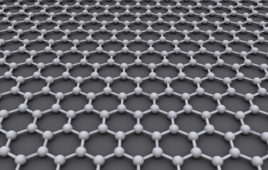
New Monash University research published this week in the Royal Society of Chemistry journal Nanoscale has found a simple and effective way of capturing graphenes and the toxins and contaminants they attract from water by using light. The findings could have significant implications for large-scale water purification.

A small amount of a special light-sensitive soap was added to the water containing the graphenes and contaminants. The soap changes its molecular structure when light of a particular color is shone onto it. This changes the way it interacts with carbon materials in the graphene and causes them to separate out (along with contaminants stuck to them), enabling easier extraction of the graphenes and contaminants. Shining a different colored light re-disperses the graphenes for re-use.

Monash researcher Dr. Rico Tabor explains the diverse technological opportunities offered by graphene owing to its unique structure and properties.

“Among its many potential uses, the prospect of using graphenes for the purpose of water purification is extremely promising. Because the structure is essentially two-dimensional and only an atom thick, graphene `sheets’ have the highest surface area possible, meaning their capacity to mop up contaminants in water surpass that of any currently used materials or membranes,” Tabor says.

“However, this raises the problem of how to extract the graphenes and contaminants from water. Traditional approaches use high amounts of energy by centrifugation, or adding large amounts of polymer at high cost,” Tabor says.

Co-researcher Thomas McCoy explains the significance of these latest research findings and the benefits of using light to capture graphenes.

“Light is appealing as it is abundantly available, simple and low cost when compared to most separation methods. Our latest research findings could have significant implications for cost-effective, large-scale water treatment,” McCoy says.

Source: Monash University 

Related Articles Read More >

The emerging materials shaping next-generation semiconductor electronics
24 R&D trends that redefined 2024
Graphene-based flowmeter sensor measures nano-rate fluid flows, Part 3: The sensor
Graphene-based flowmeter sensor measures nano-rate fluid flows, Part 2: The graphene context
rd newsletter
EXPAND YOUR KNOWLEDGE AND STAY CONNECTED
Get the latest info on technologies, trends, and strategies in Research & Development.

R&D World Digital Issues

Fall 2025 issue

Browse the most current issue of R&D World and back issues in an easy to use high quality format. Clip, share and download with the leading R&D magazine today.

R&D 100 Awards
Research & Development World
  • Subscribe to R&D World Magazine
  • Sign up for R&D World’s newsletter
  • Contact Us
  • About Us
  • Drug Discovery & Development
  • Pharmaceutical Processing
  • Global Funding Forecast

Copyright © 2026 WTWH Media LLC. All Rights Reserved. The material on this site may not be reproduced, distributed, transmitted, cached or otherwise used, except with the prior written permission of WTWH Media
Privacy Policy | Advertising | About Us

Search R&D World

  • R&D World Home
  • Topics
    • Aerospace
    • Automotive
    • Biotech
    • Careers
    • Chemistry
    • Environment
    • Energy
    • Life Science
    • Material Science
    • R&D Management
    • Physics
  • Technology
    • 3D Printing
    • A.I./Robotics
    • Software
    • Battery Technology
    • Controlled Environments
      • Cleanrooms
      • Graphene
      • Lasers
      • Regulations/Standards
      • Sensors
    • Imaging
    • Nanotechnology
    • Scientific Computing
      • Big Data
      • HPC/Supercomputing
      • Informatics
      • Security
    • Semiconductors
  • R&D Market Pulse
  • R&D 100
    • 2025 R&D 100 Award Winners
    • 2025 Professional Award Winners
    • 2025 Special Recognition Winners
    • R&D 100 Awards Event
    • R&D 100 Submissions
    • Winner Archive
  • Resources
    • Research Reports
    • Digital Issues
    • Educational Assets
    • Subscribe
    • Video
    • Webinars
    • Content submission guidelines for R&D World
  • Global Funding Forecast
  • Top Labs
  • Advertise
  • SUBSCRIBE