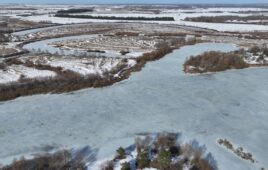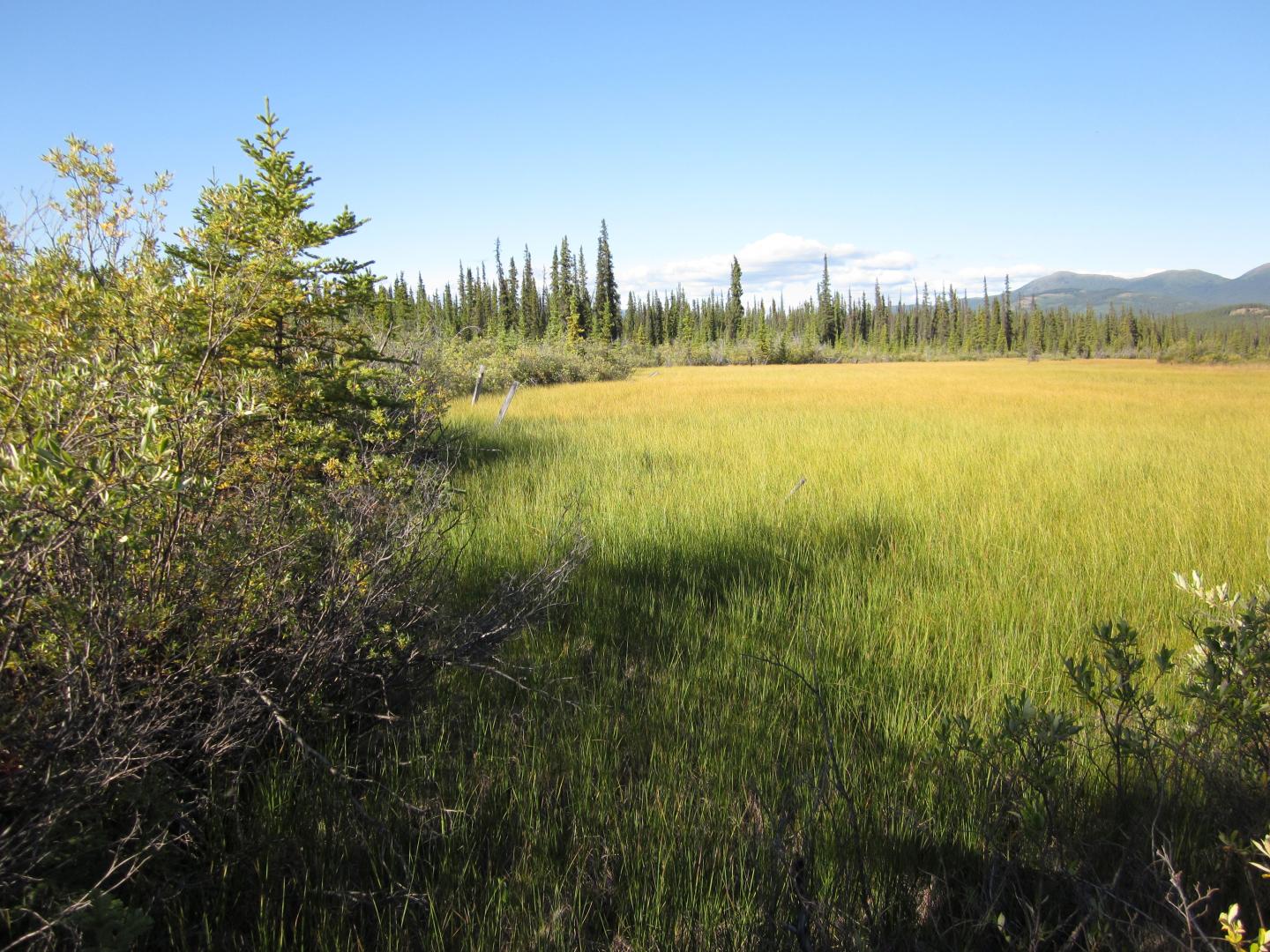
Source: Carbon release is caused by permafrost thaw in the Arctic, but depends on soil moisture. Source: Dr Iain Hartley
Carbon dioxide emissions from dry and oxygen-rich environments are likely to play a much greater role in controlling future rates of climate change caused by permafrost thaw than rates of methane release from oxygen-poor wetlands in the Arctic, according to research by a scientist at the University of Exeter.
Dr Iain Hartley, an associate professor in the department of Geography, and his co-authors found that both temperature and soil conditions affected the quantity of carbon released from thawing permafrost. A 10 °C increase in soil temperature released twice as much carbon into the atmosphere, but even more importantly, drier, oxygen-rich soil conditions resulted in more than three times more carbon release than wetter, low oxygen soil conditions.
The study published in Nature Climate Change and led by Northern Arizona University assistant research professor, Christina Schädel, analysed 25 Arctic soil incubation studies and discovered that the majority of that carbon emitted was in the form of carbon dioxide even in the low oxygen conditions, with only five per cent of the total anaerobic products being methane.
This means that even though methane packs 34 times the climate warming punch of carbon dioxide, methane fluxes were not high enough to compensate for the smaller total quantity of carbon released under low oxygen conditions in wet soils.
Dr Hartley said: “In different boreal and arctic ecosystems, permafrost thaw can expose previously-frozen organic matter to very different soil conditions. The results of our study indicate that where the soils remain dry there is much greater potential for large amounts of carbon to be released to the atmosphere and for there to a positive feedback to climate change.”
Scientists in the international Permafrost Carbon Network that Schädel co-leads with Northern Arizona University professor of ecosystem ecology, Ted Schuur, provided much of the data.
Dr Schädel said: “Our results show that increasing temperatures have a large effect on carbon release from permafrost but that changes in soil moisture conditions have an even greater effect,” says Schädel. “We conclude that the permafrost carbon feedback will be stronger when a larger percentage of the permafrost zone undergoes thaw in a dry and oxygen-rich environment.”
As the permafrost thaws, microbes wake up and begin digesting the newly available remains of ancient plants and animals stored as carbon in the soil. This digestion produces either carbon dioxide or methane, depending on soil conditions. Scientists want to understand the ratio of carbon dioxide to methane gas released by this process because it affects the strength of the permafrost carbon feedback loop: greenhouse gases released due to thawing permafrost cause temperatures to rise, leading to even more thawing and carbon release. Furthermore, the Arctic permafrost is like a vast underground storage tank of carbon, holding almost twice as much as the atmosphere. At that scale, small changes in how the carbon is released will have big effects.
The current study zeroed in on two factors: soil temperature and the availability of oxygen. Soils in the lab were incubated at a range of warmer temperatures projected for the future. The availability of oxygen is important because it determines how microbes digest carbon. Oxygen-rich, or aerobic, conditions are found in dry soils and produce carbon dioxide. Oxygen-poor, or anaerobic, conditions are found in wet soils and produce both carbon dioxide and methane. Lab incubations mimicked these two conditions.
The question of whether wet or dry soils will dominate the future Arctic permafrost zone remains. This study highlights the need to monitor changes in wetness associated with permafrost thaw, changes that will ultimately determine how much carbon will be released from across the Arctic landscape.