Research & Development World

  • R&D World Home
  • Topics
    • Aerospace
    • Automotive
    • Biotech
    • Careers
    • Chemistry
    • Environment
    • Energy
    • Life Science
    • Material Science
    • R&D Management
    • Physics
  • Technology
    • 3D Printing
    • A.I./Robotics
    • Software
    • Battery Technology
    • Controlled Environments
      • Cleanrooms
      • Graphene
      • Lasers
      • Regulations/Standards
      • Sensors
    • Imaging
    • Nanotechnology
    • Scientific Computing
      • Big Data
      • HPC/Supercomputing
      • Informatics
      • Security
    • Semiconductors
  • R&D Market Pulse
  • R&D 100
    • 2025 R&D 100 Award Winners
    • 2025 Professional Award Winners
    • 2025 Special Recognition Winners
    • R&D 100 Awards Event
    • R&D 100 Submissions
    • Winner Archive
  • Resources
    • Research Reports
    • Digital Issues
    • Educational Assets
    • R&D Index
    • Subscribe
    • Video
    • Webinars
    • Content submission guidelines for R&D World
  • Global Funding Forecast
  • Top Labs
  • Advertise
  • SUBSCRIBE

Cracking a Hit-and-Run Whodunit—with Lasers

By Duke University | June 8, 2016

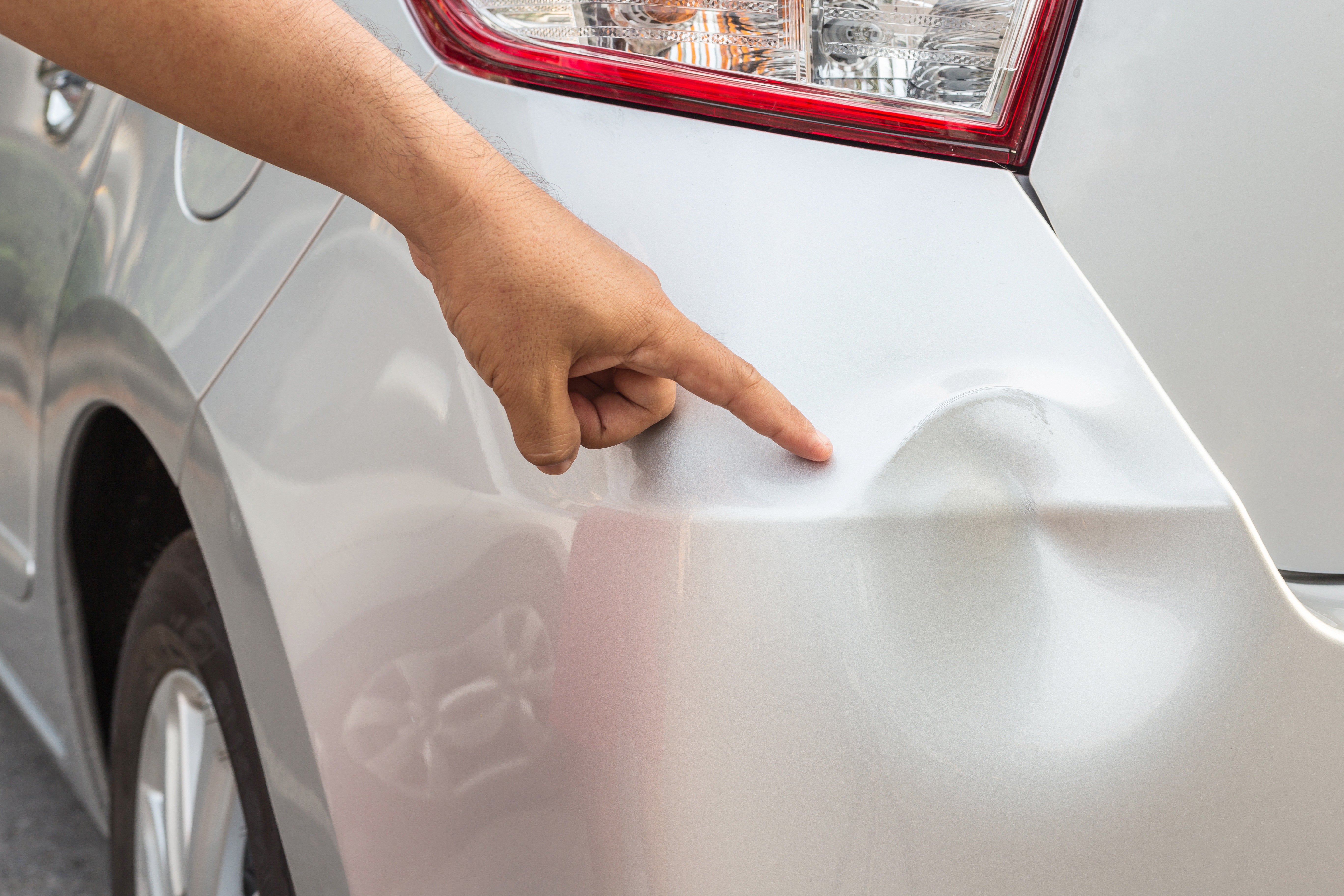
The scratch was deep, two feet long, and spattered with paint flecks. Another vehicle had clearly grazed the side of Duke graduate student Jin Yu’s silver Honda Accord.

But the culprit had left no note, no phone number, and no insurance information. The timing of the accident, the location of the scratch, and the color of the foreign paint all pointed to a likely suspect: another vehicle in her apartment complex parking lot, also sporting a fresh gash. She had a solid lead, but Yu wasn’t quite satisfied.

The chemistry student wanted to make sure her case was rock-solid. “I wanted to show them some scientific evidence,” Yu said.

And lucky for her, she had just the tools to do that. As a researcher in the Warren Warren lab, Yu spends her days as scientific sleuth, investigating how a laser-based tool called pump-probe microscopy can be used to differentiate between individual pigments of paint, even if they appear identical to the human eye.

The team is developing the technique as a way for art historians and conservators peer under the surface of priceless paintings, without causing damage to the artwork. But Yu thought there was no reason the technique couldn’t be used for forensics, too.

“The idea popped into my mind—car paint is made up of pigments, just like paintings,” Yu said. “So, if I can compare the pigments remaining on my car with the suspected car, and they match up, that would be a pretty nice clue for finding the suspected car.”

Using a clean set of eyebrow tweezers, Yu carefully gathered small flecks of paint from her car and from the suspected vehicle and sealed them up inside individual Ziploc bags. She collected samples both from the scratched up areas, where the paint was mixed, and from undamaged areas on both cars.

She left a note on the car, citing the preliminary evidence and stating her plan to test the paint samples. Then, back at the lab, she examined all four samples with the pump-probe microscope. Unlike a standard optical microscope, this device illuminates each sample with a precisely timed series of laser pulses; each pigment absorbs and then re-emits this laser light in a slightly different pattern depending on its chemical structure, creating a unique signature.

The samples from the undamaged areas gave her the characteristic pigment signatures from both of the two vehicles. She then looked at the paint samples taken from the scratched areas. She found clear evidence of paint pigment from the suspected car on her Honda, and clear evidence of paint pigment from her Honda on the suspected car. This was like DNA evidence, of the automotive variety. Fortunately, the owner of the suspect vehicle contacted Yu to confess and pay to have her car fixed, without demanding the results of the paint analysis.

“But it was reassuring to have some scientific evidence in case she denied the accident,” Yu said.

Yu added she had no interest in forensic science when she started the investigation, but the experience has certainly piqued her curiosity.

“I had never imagined that I can use pump-probe microscopy for forensic science before this car accident happened,” she concluded. “But I think it shows some interesting possibilities.”

Related Articles Read More >

U.S.–China pause eases rare-earth shock risk, but supply security questions remain
Materials driving the next phase in semiconductor performance
An easier way to separate rare earth elements
ORNL named on 20 R&D 100 Awards, including carbon-capture and AM tools
rd newsletter
EXPAND YOUR KNOWLEDGE AND STAY CONNECTED
Get the latest info on technologies, trends, and strategies in Research & Development.
RD 25 Power Index

R&D World Digital Issues

Fall 2024 issue

Browse the most current issue of R&D World and back issues in an easy to use high quality format. Clip, share and download with the leading R&D magazine today.

Research & Development World
  • Subscribe to R&D World Magazine
  • Sign up for R&D World’s newsletter
  • Contact Us
  • About Us
  • Drug Discovery & Development
  • Pharmaceutical Processing
  • Global Funding Forecast

Copyright © 2025 WTWH Media LLC. All Rights Reserved. The material on this site may not be reproduced, distributed, transmitted, cached or otherwise used, except with the prior written permission of WTWH Media
Privacy Policy | Advertising | About Us

Search R&D World

  • R&D World Home
  • Topics
    • Aerospace
    • Automotive
    • Biotech
    • Careers
    • Chemistry
    • Environment
    • Energy
    • Life Science
    • Material Science
    • R&D Management
    • Physics
  • Technology
    • 3D Printing
    • A.I./Robotics
    • Software
    • Battery Technology
    • Controlled Environments
      • Cleanrooms
      • Graphene
      • Lasers
      • Regulations/Standards
      • Sensors
    • Imaging
    • Nanotechnology
    • Scientific Computing
      • Big Data
      • HPC/Supercomputing
      • Informatics
      • Security
    • Semiconductors
  • R&D Market Pulse
  • R&D 100
    • 2025 R&D 100 Award Winners
    • 2025 Professional Award Winners
    • 2025 Special Recognition Winners
    • R&D 100 Awards Event
    • R&D 100 Submissions
    • Winner Archive
  • Resources
    • Research Reports
    • Digital Issues
    • Educational Assets
    • R&D Index
    • Subscribe
    • Video
    • Webinars
    • Content submission guidelines for R&D World
  • Global Funding Forecast
  • Top Labs
  • Advertise
  • SUBSCRIBE