Research & Development World

  • R&D World Home
  • Topics
    • Aerospace
    • Automotive
    • Biotech
    • Careers
    • Chemistry
    • Environment
    • Energy
    • Life Science
    • Material Science
    • R&D Management
    • Physics
  • Technology
    • 3D Printing
    • A.I./Robotics
    • Software
    • Battery Technology
    • Controlled Environments
      • Cleanrooms
      • Graphene
      • Lasers
      • Regulations/Standards
      • Sensors
    • Imaging
    • Nanotechnology
    • Scientific Computing
      • Big Data
      • HPC/Supercomputing
      • Informatics
      • Security
    • Semiconductors
  • R&D Market Pulse
  • R&D 100
    • 2025 R&D 100 Award Winners
    • 2025 Professional Award Winners
    • 2025 Special Recognition Winners
    • R&D 100 Awards Event
    • R&D 100 Submissions
    • Winner Archive
  • Resources
    • Research Reports
    • Digital Issues
    • Educational Assets
    • Subscribe
    • Video
    • Webinars
    • Content submission guidelines for R&D World
  • Global Funding Forecast
  • Top Labs
  • Advertise
  • SUBSCRIBE

Euroimmun launches SARS-CoV-2 NeutraLISA assay to determine the neutralizing capacity of anti-SARS-CoV-2 antibodies

By Heather Hall | April 2, 2021

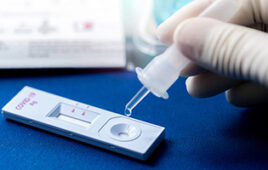
Euroimmun, a PerkinElmer company, has announced the launch of the SARS-CoV-2 NeutraLISA assay, a surrogate neutralization test intended for the detection of neutralizing antibodies against SARS-CoV-2, the pathogen causing COVID-19. The CE marked assay adds to the Company’s portfolio of COVID-19 diagnostics and is currently available in more than 30 countries that accept the CE mark.

In COVID-19, antibodies that target the viral receptor binding domain (RBD) in the S1 domain of the SARS-CoV-2 spike protein have been shown to exhibit a virus-neutralizing capacity, which predominately are IgG antibodies.

SARS-CoV-2 enters a human host cell through interaction of its RBD with the host cell ACE2 receptor. However, if the RBD is blocked by specific antibodies formed during immune response, the virus cannot continue to infect and proliferate within the human body. This is why many leading COVID-19 vaccine developments are also based on this protein domain.

The Euroimmun SARS-CoV-2 NeutraLISA imitates this natural process by determining the inhibitory effect of antibodies capable of hampering the interaction between biochemically produced RBD and ACE2. Unlike standard neutralization tests, which can be labor-intensive and require handling of the live virus in a specialized high-safety laboratory setting, the SARS-CoV-2-NeutraLISA assay is based on well-established ELISA technology and uses non-pathogenic viral proteins. As such, the assay can be processed in common lab settings either manually or automatically.

“In addition to disturbing or altogether inhibiting the pathogen from binding to a host cell, neutralizing antibodies may last for years in the human body and can potentially prevent SARS-CoV-2 infection and reinfection,” said Euroimmun CEO Dr. Wolfgang Schlumberger. “The SARS-CoV-2 NeutraLISA assay supplements Euroimmun’s existing CE-marked QuantiVac ELISA and SARS-CoV-2 Interferon-gamma Release Assay which is expected to be available with CE mark soon. In combination, the assays make a powerful trio to help evaluate the immune response to SARS-CoV-2 induced through natural infection or vaccination with S1/RBD-based vaccines from multiple angles.”

Euroimmun offers a comprehensive COVID-19 product portfolio, including real-time PCR tests, an antigen detection assay for acute diagnostics, multiple antibody tests and a dried blood spot solution to support assessment of the immune response. In addition, Euroimmun offers the Interferon-gamma Release Assay to evaluate specific T-cell response, currently available for research use only, and provides automation systems for small, medium and high sample throughput workflows.


Related Articles Read More >

The power of saliva in multi-omics biomarker discovery
Japanese drug shows promise in preventing COVID-19 infection
Chinese researchers uncover new bat virus HKU5-CoV-2 that shares COVID‑19’s entry pathway
Johns Hopkins APL model highlights testing’s role in pandemic response
rd newsletter
EXPAND YOUR KNOWLEDGE AND STAY CONNECTED
Get the latest info on technologies, trends, and strategies in Research & Development.

R&D World Digital Issues

Fall 2025 issue

Browse the most current issue of R&D World and back issues in an easy to use high quality format. Clip, share and download with the leading R&D magazine today.

R&D 100 Awards
Research & Development World
  • Subscribe to R&D World Magazine
  • Sign up for R&D World’s newsletter
  • Contact Us
  • About Us
  • Drug Discovery & Development
  • Pharmaceutical Processing
  • Global Funding Forecast

Copyright © 2026 WTWH Media LLC. All Rights Reserved. The material on this site may not be reproduced, distributed, transmitted, cached or otherwise used, except with the prior written permission of WTWH Media
Privacy Policy | Advertising | About Us

Search R&D World

  • R&D World Home
  • Topics
    • Aerospace
    • Automotive
    • Biotech
    • Careers
    • Chemistry
    • Environment
    • Energy
    • Life Science
    • Material Science
    • R&D Management
    • Physics
  • Technology
    • 3D Printing
    • A.I./Robotics
    • Software
    • Battery Technology
    • Controlled Environments
      • Cleanrooms
      • Graphene
      • Lasers
      • Regulations/Standards
      • Sensors
    • Imaging
    • Nanotechnology
    • Scientific Computing
      • Big Data
      • HPC/Supercomputing
      • Informatics
      • Security
    • Semiconductors
  • R&D Market Pulse
  • R&D 100
    • 2025 R&D 100 Award Winners
    • 2025 Professional Award Winners
    • 2025 Special Recognition Winners
    • R&D 100 Awards Event
    • R&D 100 Submissions
    • Winner Archive
  • Resources
    • Research Reports
    • Digital Issues
    • Educational Assets
    • Subscribe
    • Video
    • Webinars
    • Content submission guidelines for R&D World
  • Global Funding Forecast
  • Top Labs
  • Advertise
  • SUBSCRIBE