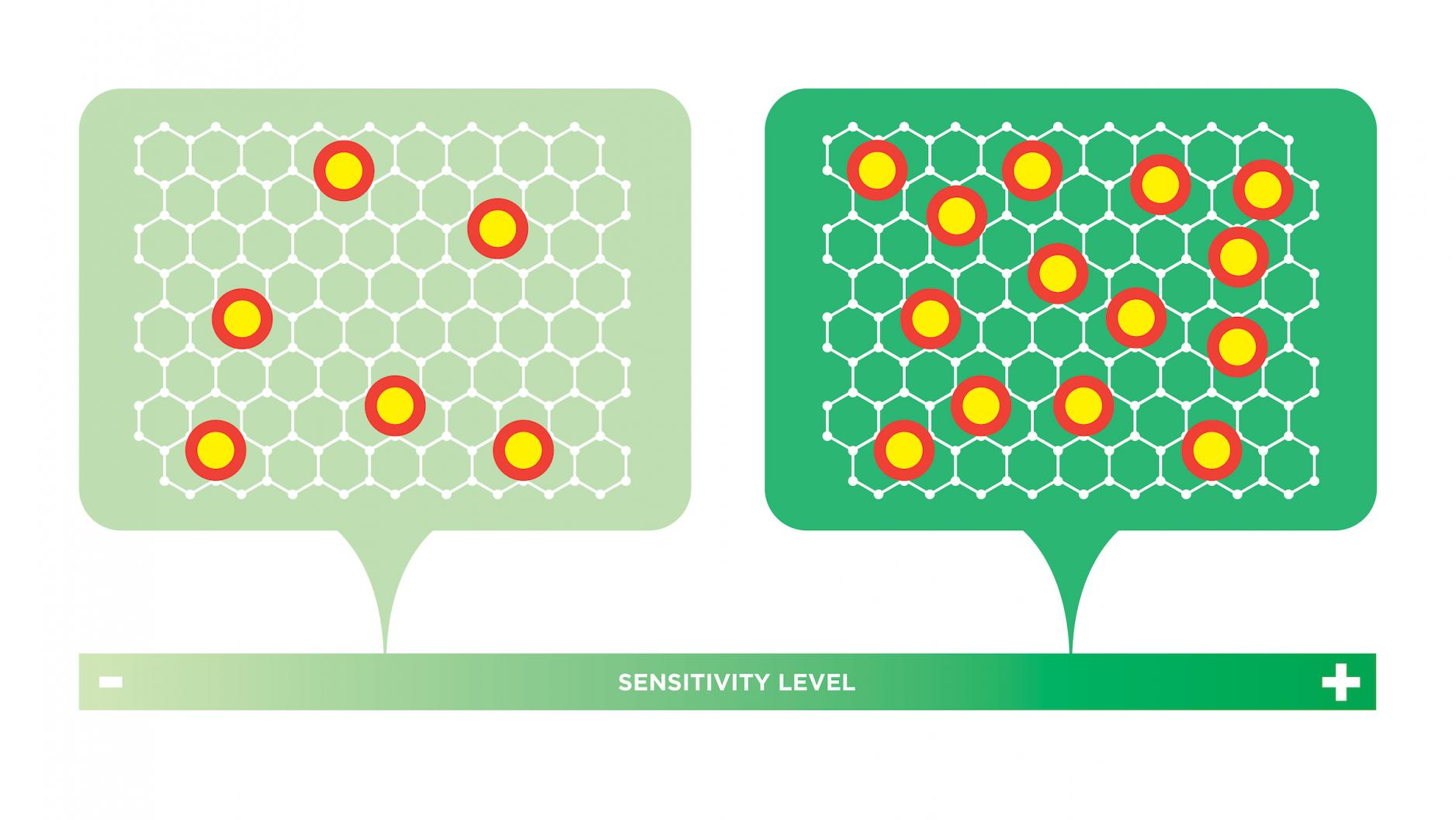
NYU researchers discovered how to predict the sensitivity of graphene electrodes — potentially paving the way to industrial-scale production of the ultra-small sensors: The density of intentionally introduced point defects is directly proportional to the sensitivity of the graphene electrode. If the density of these points is maximized, an electrode can be created that’s up to 20 times more sensitive than conventional electrodes.
A team of researchers at the New York University Tandon School of Engineering and NYU Center for Neural Science has solved a longstanding puzzle of how to build ultra-sensitive, ultra-small electrochemical sensors with homogenous and predictable properties by discovering how to engineer graphene structure on an atomic level.
Finely tuned electrochemical sensors (also referred to as electrodes) that are as small as biological cells are prized for medical diagnostics and environmental monitoring systems. Demand has spurred efforts to develop nanoengineered carbon-based electrodes, which offer unmatched electronic, thermal, and mechanical properties.
Yet these efforts have long been stymied by the lack of quantitative principles to guide the precise engineering of the electrode sensitivity to biochemical molecules.
Davood Shahrjerdi, an assistant professor of electrical and computer engineering at NYU Tandon, and Roozbeh Kiani, an assistant professor of neural science and psychology at the Center for Neural Science, Faculty of Arts and Science, have revealed the relationship between various structural defects in graphene and the sensitivity of the electrodes made of it.
This discovery opens the door for the precise engineering and industrial-scale production of homogeneous arrays of graphene electrodes.
The researchers detail their study in a paper published in the journal Advanced Materials.
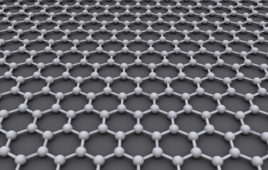
Graphene is a single, atom-thin sheet of carbon. There is a traditional consensus that structural defects in graphene can generally enhance the sensitivity of electrodes constructed from it.
However, a firm understanding of the relationship between various structural defects and the sensitivity has long eluded researchers. This information is particularly vital for tuning the density of different defects in graphene in order to achieve a desired level of sensitivity.
“Until now, achieving a desired sensitivity effect was akin to voodoo or alchemy — oftentimes, we weren’t sure why a certain approach yielded a more or less sensitive electrode,” Shahrjerdi said.
“By systematically studying the influence of various types and densities of material defects on the electrode’s sensitivity, we created a physics-based microscopic model that replaces superstition with scientific insight.”
In a surprise finding, the researchers discovered that only one group of defects in graphene’s structure — point defects — significantly impacts electrode sensitivity, which increases linearly with the average density of these defects, within a certain range.
“If we optimize these point defects in number and density, we can create an electrode that is up to 20 times more sensitive than conventional electrodes,” Kiani explained.
These findings stand to impact both the fabrication of and applications for graphene-based electrodes. Today’s carbon-based electrodes are calibrated for sensitivity post-fabrication, a time-consuming process that hampers large-scale production, but the researchers’ findings will allow for the precise engineering of the sensitivity during the material synthesis, thereby enabling industrial-scale production of carbon-based electrodes with reliable and reproducible sensitivity.
Currently, carbon-based electrodes are impractical for any application that requires a dense array of sensors: The results are unreliable due to large variations of the electrode-to-electrode sensitivity within the array.
These new findings will enable the use of ultra-small carbon-based electrodes with homogeneous and extraordinarily high sensitivities in next-generation neural probes and multiplexed “lab-on-a-chip” platforms for medical diagnostics and drug development, and they may replace optical methods for measuring biological samples including DNA.