Research & Development World

  • R&D World Home
  • Topics
    • Aerospace
    • Automotive
    • Biotech
    • Careers
    • Chemistry
    • Environment
    • Energy
    • Life Science
    • Material Science
    • R&D Management
    • Physics
  • Technology
    • 3D Printing
    • A.I./Robotics
    • Software
    • Battery Technology
    • Controlled Environments
      • Cleanrooms
      • Graphene
      • Lasers
      • Regulations/Standards
      • Sensors
    • Imaging
    • Nanotechnology
    • Scientific Computing
      • Big Data
      • HPC/Supercomputing
      • Informatics
      • Security
    • Semiconductors
  • R&D Market Pulse
  • R&D 100
    • 2025 R&D 100 Award Winners
    • 2025 Professional Award Winners
    • 2025 Special Recognition Winners
    • R&D 100 Awards Event
    • R&D 100 Submissions
    • Winner Archive
  • Resources
    • Research Reports
    • Digital Issues
    • Educational Assets
    • R&D Index
    • Subscribe
    • Video
    • Webinars
    • Content submission guidelines for R&D World
  • Global Funding Forecast
  • Top Labs
  • Advertise
  • SUBSCRIBE

Genes That Separate Humans From Fruit Flies Found

By University of Portsmouth | October 3, 2017

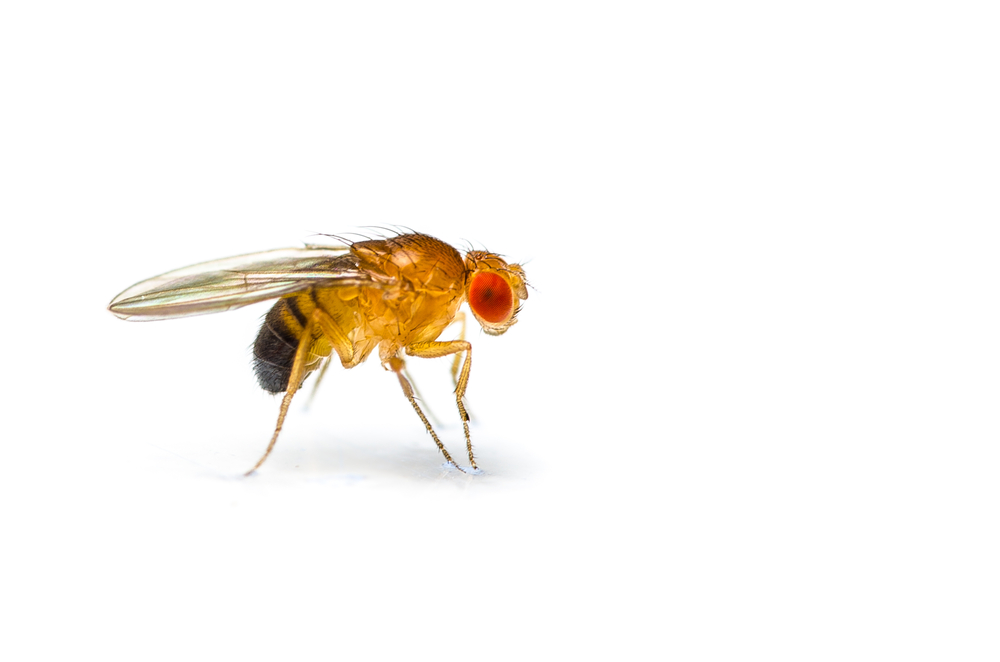
Genes which determine animal complexity – or what makes humans so much more complex than a fruit fly or a sea urchin – have been identified for the first time. 

The secret mechanism for how a cell in one animal can be significantly more complex than a similar cell in another animal appears to be due to proteins and their ability to control ‘events’ in a cell’s nucleus. 

The research, by biochemist Dr Colin Sharpe and colleagues in the University of Portsmouth, is published in PLoS One.

Dr Sharpe said: “Most people agree that mammals, and humans in particular, are more complex than a worm or a fruit fly, without really knowing why.  The question has been nagging at me and others for a long time.

“One common measure of complexity is the number of different cell types in an animal, but little is known about how complexity is achieved at the genetic level.  The total number of genes in a genome is not a driver, this value varies only slightly in multicellular animals, so we looked for other factors.”

Dr Sharpe and MRes student, Daniela Lopes Cardoso interrogated large amounts of data from the genomes of nine animals – from humans and macaque monkeys to nematode worms and the fruit fly, and calculated how diverse each was at the genetic level.

They found a small number of proteins which were better at interacting with other proteins and with chromatin, the packaged form of DNA in the cell nucleus.

“These proteins appear to be excellent candidates for what lies behind enormously varied degrees of complexity in animals,” Dr Sharpe said.

“We expected to identify genes that interacted directly with DNA to regulate other genes, but this was not the case.  Instead we identified genes that interacted with ‘chromatin’.

“Our results suggest that the increased ability of certain proteins to interact with each other to regulate the dynamic organisation of chromatin in the nucleus as a component of animal complexity.”

The results matter, he said, because biomedical scientists depend on better understanding human disease by studying it in animals. While this has value, there is an underlying concern that an animal model may be too simple to be useful, that results seen in a simpler animal may not correlate with what happens in a more complex animal.

Understanding the inherent differences in how animals are organised at genetic level and the limitations to interpretations that this imposes, will provide a more rational selection of appropriate animal models in biomedicine.

Dr Sharpe and team’s previous research found that three factors lay behind the proteins made by one gene – NCoR – being more diverse in complex animals such as humans compared to, for example, sea urchins:

  • Gene duplication, although the total number of genes in the genome doesn’t vary significantly, some specific genes duplicate one or more times, for example there is one NCoR gene in sea urchin and two in humans.
  • Single genes often make more than one protein. The messenger RNA (mRNA) that links gene to protein can be processed by ‘splicing’ to generate a range of different mRNAs, each of which encodes a related, but different protein.  For example, the sea urchin gene produces just one type of RNA while in humans the NCoR2 gene produces well over 30 and each is likely to have a different function.
  • Most proteins consist of domains that have a specific function. Dr Sharpe and team found that the number of domains increases, again with NCoR, from one in sea urchins to three in humans.


 

Related Articles Read More >

Breakthrough in the Discovery of DNA in Ancient Bones Buried in Water
Traces of Crawling in Italian Cave Give Clues to Ancient Humans’ Social Behavior
Freshwater Mussel Shells Were Material of Choice For Prehistoric Craftsmen
Middle Pleistocene Human Skull Reveals Variation and Continuity in Early Asian Humans
rd newsletter
EXPAND YOUR KNOWLEDGE AND STAY CONNECTED
Get the latest info on technologies, trends, and strategies in Research & Development.
RD 25 Power Index

R&D World Digital Issues

Fall 2025 issue

Browse the most current issue of R&D World and back issues in an easy to use high quality format. Clip, share and download with the leading R&D magazine today.

R&D 100 Awards
Research & Development World
  • Subscribe to R&D World Magazine
  • Sign up for R&D World’s newsletter
  • Contact Us
  • About Us
  • Drug Discovery & Development
  • Pharmaceutical Processing
  • Global Funding Forecast

Copyright © 2026 WTWH Media LLC. All Rights Reserved. The material on this site may not be reproduced, distributed, transmitted, cached or otherwise used, except with the prior written permission of WTWH Media
Privacy Policy | Advertising | About Us

Search R&D World

  • R&D World Home
  • Topics
    • Aerospace
    • Automotive
    • Biotech
    • Careers
    • Chemistry
    • Environment
    • Energy
    • Life Science
    • Material Science
    • R&D Management
    • Physics
  • Technology
    • 3D Printing
    • A.I./Robotics
    • Software
    • Battery Technology
    • Controlled Environments
      • Cleanrooms
      • Graphene
      • Lasers
      • Regulations/Standards
      • Sensors
    • Imaging
    • Nanotechnology
    • Scientific Computing
      • Big Data
      • HPC/Supercomputing
      • Informatics
      • Security
    • Semiconductors
  • R&D Market Pulse
  • R&D 100
    • 2025 R&D 100 Award Winners
    • 2025 Professional Award Winners
    • 2025 Special Recognition Winners
    • R&D 100 Awards Event
    • R&D 100 Submissions
    • Winner Archive
  • Resources
    • Research Reports
    • Digital Issues
    • Educational Assets
    • R&D Index
    • Subscribe
    • Video
    • Webinars
    • Content submission guidelines for R&D World
  • Global Funding Forecast
  • Top Labs
  • Advertise
  • SUBSCRIBE