Research & Development World

  • R&D World Home
  • Topics
    • Aerospace
    • Automotive
    • Biotech
    • Careers
    • Chemistry
    • Environment
    • Energy
    • Life Science
    • Material Science
    • R&D Management
    • Physics
  • Technology
    • 3D Printing
    • A.I./Robotics
    • Software
    • Battery Technology
    • Controlled Environments
      • Cleanrooms
      • Graphene
      • Lasers
      • Regulations/Standards
      • Sensors
    • Imaging
    • Nanotechnology
    • Scientific Computing
      • Big Data
      • HPC/Supercomputing
      • Informatics
      • Security
    • Semiconductors
  • R&D Market Pulse
  • R&D 100
    • 2025 R&D 100 Award Winners
    • 2025 Professional Award Winners
    • 2025 Special Recognition Winners
    • R&D 100 Awards Event
    • R&D 100 Submissions
    • Winner Archive
  • Resources
    • Research Reports
    • Digital Issues
    • Educational Assets
    • R&D Index
    • Subscribe
    • Video
    • Webinars
    • Content submission guidelines for R&D World
  • Global Funding Forecast
  • Top Labs
  • Advertise
  • SUBSCRIBE

Graphene Strengthens Nerve Signaling in Brain

By Bill Snyder, Vanderbilt University | March 2, 2018

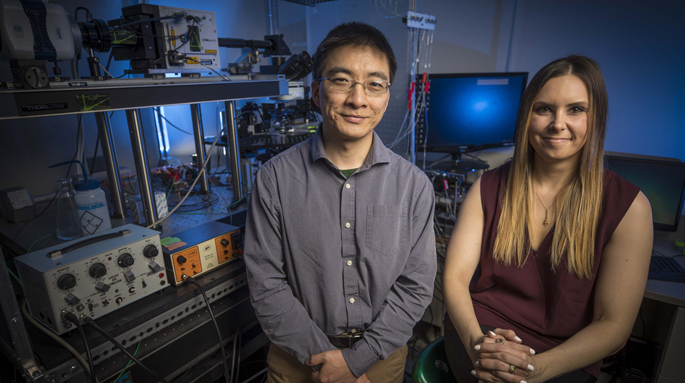
Qi Zhang, PhD, Kristina Kitko and colleagues are studying the way graphene impacts nerve cell signaling in the brain.

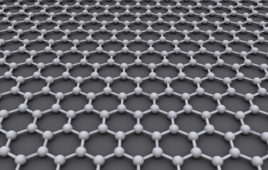
Less than 20 years after it was developed, a thin, resilient sheet of carbon atoms with remarkable properties known as graphene is transforming biomedical fields as far flung as tissue engineering, neuroprosthetics and drug discovery.

Because it readily conducts heat and electricity, graphene also may be a good biosensor. But it’s not neutral. When Vanderbilt University scientists tried to use graphene to measure electrical activity in the brain, they found that it actually enhanced nerve cell signaling.

It did so by enabling nerve cell membranes to pull in more cholesterol. The fatty substance was used to make more of the vesicles that package neurotransmitters, the chemical messengers that relay signals between nerve cells. More vesicles and more neurotransmitter meant stronger signals.

These findings, reported in the journal Nature Communications, came as a complete surprise to the investigators. They raise the possibility that graphene may enable researchers to change how cells communicate with each other by manipulating the cholesterol content in the cell membrane.

Graphene “not only may be a very good vehicle to deliver drugs but also a way to potentiate the drug effect,” says the paper’s senior author, Qi Zhang, PhD, assistant professor of Pharmacology in the Vanderbilt University School of Medicine.

The researchers began their experiment by growing neurons — nerve cells — on a sheet of graphene.

The paper’s first author, Kristina Kitko, a graduate student in interdisciplinary material science, picks up the story from there in an invited column she wrote for a Nature Chemistry blog: “We observed an increase in neuronal firing frequency on graphene,” she wrote. “This was substantial and our curiosity was piqued. When we began to look at more targeted measurements of presynaptic activity, what consistently emerged was surprising: synaptic potentiation on graphene.”

Realizing that graphene was likely acting at the nerve cell membrane, which consists primarily of cholesterol, the next question was: “Might cholesterol somehow be involved?”

“This led us to the idea of manipulating membrane cholesterol levels,” Kitko continues. “Cholesterol plays important and fundamental roles to cells in a variety of ways, but with particular relevance to drug discovery we demonstrated the effect of graphene on G protein-coupled receptors, whose activity are mediated by cholesterol.”

Half of all drugs target these receptors.

Kitko has been invited to present her group’s findings at a Gordon Research Conference on “neuroelectronic interfaces” next month in Galveston, Texas.

Other Vanderbilt co-authors were Yaqiong Xu, PhD, associate professor of Electrical Engineering and Physics, and postdoctoral research fellow Roman Lazarenko, PhD. John McLean, Ph.D., Stevenson Professor of Chemistry, and Anne Kenworthy, PhD, professor of Molecular Physiology and Biophysics, also contributed to the research.

Source: Vanderbilt University
Related Articles Read More >

The emerging materials shaping next-generation semiconductor electronics
24 R&D trends that redefined 2024
Graphene-based flowmeter sensor measures nano-rate fluid flows, Part 3: The sensor
Graphene-based flowmeter sensor measures nano-rate fluid flows, Part 2: The graphene context
rd newsletter
EXPAND YOUR KNOWLEDGE AND STAY CONNECTED
Get the latest info on technologies, trends, and strategies in Research & Development.
RD 25 Power Index

R&D World Digital Issues

Fall 2024 issue

Browse the most current issue of R&D World and back issues in an easy to use high quality format. Clip, share and download with the leading R&D magazine today.

Research & Development World
  • Subscribe to R&D World Magazine
  • Sign up for R&D World’s newsletter
  • Contact Us
  • About Us
  • Drug Discovery & Development
  • Pharmaceutical Processing
  • Global Funding Forecast

Copyright © 2025 WTWH Media LLC. All Rights Reserved. The material on this site may not be reproduced, distributed, transmitted, cached or otherwise used, except with the prior written permission of WTWH Media
Privacy Policy | Advertising | About Us

Search R&D World

  • R&D World Home
  • Topics
    • Aerospace
    • Automotive
    • Biotech
    • Careers
    • Chemistry
    • Environment
    • Energy
    • Life Science
    • Material Science
    • R&D Management
    • Physics
  • Technology
    • 3D Printing
    • A.I./Robotics
    • Software
    • Battery Technology
    • Controlled Environments
      • Cleanrooms
      • Graphene
      • Lasers
      • Regulations/Standards
      • Sensors
    • Imaging
    • Nanotechnology
    • Scientific Computing
      • Big Data
      • HPC/Supercomputing
      • Informatics
      • Security
    • Semiconductors
  • R&D Market Pulse
  • R&D 100
    • 2025 R&D 100 Award Winners
    • 2025 Professional Award Winners
    • 2025 Special Recognition Winners
    • R&D 100 Awards Event
    • R&D 100 Submissions
    • Winner Archive
  • Resources
    • Research Reports
    • Digital Issues
    • Educational Assets
    • R&D Index
    • Subscribe
    • Video
    • Webinars
    • Content submission guidelines for R&D World
  • Global Funding Forecast
  • Top Labs
  • Advertise
  • SUBSCRIBE