Research & Development World

  • R&D World Home
  • Topics
    • Aerospace
    • Automotive
    • Biotech
    • Careers
    • Chemistry
    • Environment
    • Energy
    • Life Science
    • Material Science
    • R&D Management
    • Physics
  • Technology
    • 3D Printing
    • A.I./Robotics
    • Software
    • Battery Technology
    • Controlled Environments
      • Cleanrooms
      • Graphene
      • Lasers
      • Regulations/Standards
      • Sensors
    • Imaging
    • Nanotechnology
    • Scientific Computing
      • Big Data
      • HPC/Supercomputing
      • Informatics
      • Security
    • Semiconductors
  • R&D Market Pulse
  • R&D 100
    • 2025 R&D 100 Award Winners
    • 2025 Professional Award Winners
    • 2025 Special Recognition Winners
    • R&D 100 Awards Event
    • R&D 100 Submissions
    • Winner Archive
  • Resources
    • Research Reports
    • Digital Issues
    • Educational Assets
    • Subscribe
    • Video
    • Webinars
    • Content submission guidelines for R&D World
  • Global Funding Forecast
  • Top Labs
  • Advertise
  • SUBSCRIBE

Hubble Space Telescope’s popular YouTube channel vanishes

By Brian Buntz | April 2, 2025

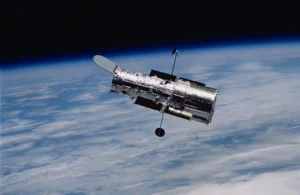
Hubble telescope

Hubble telescope [Image courtesy of NASA]

The dedicated YouTube channel for the Hubble Space Telescope, launched by the Space Telescope Science Institute (STScI) in 2007, has abruptly disappeared, leaving astronomy enthusiasts and educators searching for answers.

The channel’s removal appears to stem from either NASA budget constraints, organizational streamlining efforts, or a combination of both. While NASA’s fiscal year 2025 budget proposal shows Hubble facing a reduction from $98.3 million to $88.9 million—roughly a 10% cut compared to final fiscal year 2024 spending—some social media users suggest the change aligns with long-term efforts to consolidate the agency’s fragmented digital presence. In any event, the timing coincides with NASA’s broader trimming of $420 million in spending across various grants and contracts, affecting everything from lunar research to climate modeling programs.

The channel had been hosted on YouTube under the handle “hubblespacetelescope.”

Assessing the channel’s previous reach helps gauge the impact of its disappearance. Established on December 18, 2007, the channel built a substantial audience over nearly 17 years. Data from the analytics tool vidIQ, updated March 30, 2025, showed around 255,000 subscribers. Its 591 videos had collectively amassed over 27 million views.

This popularity stemmed from a content library, which InterestingEngineering called “a visual feast” in 2019. Offerings included scientific visualizations explaining concepts like stellar lifecycles and gravitational lensing. It also featured explorations of cosmic phenomena like supernovae and nebulae (such as the Pillars of Creation), alongside documentary-style content. “Hubble: The Great Space Telescope,” for instance, amassed more than 400,000 views across various platforms. Other videos celebrated mission milestones, like the 30th-anniversary montage with over 600 Hubble images providing mind-expanding cosmic views. The 0 updates per week upload frequency reported by vidIQ confirms new content ceased before March 2025.

Users on Reddit lamented the development with one users noting that other NASA technical websites and research papers also were inaccessible. Some technical content appears to be migrating rather than disappearing entirely, with the Space Telescope Science Institute redirecting users to its popular @spacetelescopevision YouTube channel. One Redditor noted that NASA has been “working for a long time to consolidate and streamline its web presence” to address the “crazy fractal growth of NASA websites, social media accounts, etc.” from the early internet era.


Related Articles Read More >

Senate hearing largely splits on party lines over proposed $5.6 billion NASA cut
Days after Artemis II, White House seeks 23% NASA cut that would slash science 47%
NASA is making an explicit systems engineering bet with Artemis: if you want a reliable landing, you do not skip the integrated tests.
This black hole’s jet is already a trillion Death Stars strong. Scientists say it won’t peak until 2027.
rd newsletter
EXPAND YOUR KNOWLEDGE AND STAY CONNECTED
Get the latest info on technologies, trends, and strategies in Research & Development.

R&D World Digital Issues

Fall 2025 issue

Browse the most current issue of R&D World and back issues in an easy to use high quality format. Clip, share and download with the leading R&D magazine today.

R&D 100 Awards
Research & Development World
  • Subscribe to R&D World Magazine
  • Sign up for R&D World’s newsletter
  • Contact Us
  • About Us
  • Drug Discovery & Development
  • Pharmaceutical Processing
  • Global Funding Forecast

Copyright © 2026 WTWH Media LLC. All Rights Reserved. The material on this site may not be reproduced, distributed, transmitted, cached or otherwise used, except with the prior written permission of WTWH Media
Privacy Policy | Advertising | About Us

Search R&D World

  • R&D World Home
  • Topics
    • Aerospace
    • Automotive
    • Biotech
    • Careers
    • Chemistry
    • Environment
    • Energy
    • Life Science
    • Material Science
    • R&D Management
    • Physics
  • Technology
    • 3D Printing
    • A.I./Robotics
    • Software
    • Battery Technology
    • Controlled Environments
      • Cleanrooms
      • Graphene
      • Lasers
      • Regulations/Standards
      • Sensors
    • Imaging
    • Nanotechnology
    • Scientific Computing
      • Big Data
      • HPC/Supercomputing
      • Informatics
      • Security
    • Semiconductors
  • R&D Market Pulse
  • R&D 100
    • 2025 R&D 100 Award Winners
    • 2025 Professional Award Winners
    • 2025 Special Recognition Winners
    • R&D 100 Awards Event
    • R&D 100 Submissions
    • Winner Archive
  • Resources
    • Research Reports
    • Digital Issues
    • Educational Assets
    • Subscribe
    • Video
    • Webinars
    • Content submission guidelines for R&D World
  • Global Funding Forecast
  • Top Labs
  • Advertise
  • SUBSCRIBE