 In labs developing the novel products like next-generation of batteries and solar cells, researchers are confronting something of a paradox. Advanced materials can unlock dramatic gains in efficiency and performance, but their synthesis frequently depends on energy-heavy processes, hazardous chemicals and limited raw materials. That reality is reshaping how some labs design materials, pushing some to build recyclability, biodegradability or circularity into compounds from the outset.
The invisible ecological footprint
While advanced materials enable greener products in use, including longer-lasting batteries, more efficient photovoltaics, their creation may involve significant environmental and ethical impacts upstream. Below, three cases illustrate how cutting-edge innovation can shift environmental burdens.
1. The ‘green’ battery paradox
Solid-state batteries are widely viewed as a promising next step for electric vehicles: they can reduce flammability risk and potentially offer higher energy density than conventional lithium-ion cells. But their production footprint tells a more complicated story.
The core issue is lithium. Because solid-state designs typically use a lithium metal anode instead of graphite, they are expected to require about 35% more lithium per kilowatt-hour on average More mining for the same capacity. The trade isn’t all bad: solid-state batteries need far less graphite and can reduce or avoid cobalt if paired with cobalt-free cathodes—though many solid-state roadmaps still rely on cobalt-containing cathodes.
Then there’s the energy cost of manufacturing. Many solid electrolytes are ceramics, garnet-type LLZO, for instance, that must be sintered above 1,000°C to achieve the necessary density. Those high-temperature furnaces add process steps and carbon. Researchers are exploring lower-temperature and sinter-free alternatives, but for now, making a “green” battery remains a surprisingly energy-intensive affair.
The implication for industry is clear: a world that widely adopts solid-state batteries will demand aggressive lithium recycling. The EU Battery Regulation sets lithium recovery targets of 50% by 2027 and 80% by 2031, ambitious goals given that lithium has historically been overlooked in recycling due to technical challenges and weak economics. Whether the industry can scale fast enough remains an open question.
2. Solar’s secret
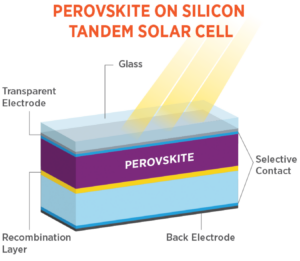
Image from DOE
Perovskite solar cells have generated considerable excitement, and for good reason. They are inexpensive to manufacture, potentially as efficient as silicon, and compatible with flexible substrates. But the chemistry that makes them work also can make them dangerous.
Start with the solvents. Fabricating perovskite films typically requires N,N-dimethylformamide, or DMF, a polar solvent exceptionally good at dissolving lead halide precursors. It’s also toxic: the European Chemicals Agency classifies DMF as a Substance of Very High Concern due to its reproductive toxicity and environmental hazards, and EU REACH restricts industrial and professional use of DMF at concentrations ≥0.3% w/w unless strict exposure-control and risk-management requirements are met. Readily absorbed through the skin or by inhalation, DMF exposure can induce liver damage. Researchers are exploring greener alternatives: DMSO can be considered a green solvent for perovskite device fabrication, an article on PubMed Central notes. Some teams have achieved efficiencies above 21% using pure DMSO, though this study still used toxic antisolvents like CB or DEE which need to be replaced. Water-based processing is also under development, but these substitutes usually exact an efficiency or process complexity penalty.
Then there’s the lead itself. Most high-performing perovskite absorbers contain lead compounds, and while the quantity per panel is modest, the form matters. PbI₂ is commonly used as a precursor and is also regenerated when the perovskite degrades. PbI₂ has limited but sufficient solubility in water to leach into groundwater once a perovskite PV module breaks. Consequently, this form of lead is easily bioavailable to plants and other organisms and so can enter our food chain, as PubMed Central noted. Studies suggest lead from degraded perovskites is disproportionately bioavailable compared to other industrial lead sources, with organic cations in the perovskite structure enhancing plant uptake. Pb²⁺ appears to be significantly more bioavailable and could enter the food chain more easily PubMed Central than lead from other industrial sources.
The image of millions of “green” solar panels seeding lead contamination across rooftops and landfills has prompted research into encapsulation strategies and lead-free alternatives. Neither solution is fully satisfying: encapsulation adds cost and complexity, while lead-free perovskites, typically based on tin, bismuth or antimony, sacrifice efficiency or stability. Sn²⁺ in tin-based perovskites is unstable and easily oxidized, which deteriorates the semiconductor properties and morphology of the perovskite film, and reduces the efficiency and stability of these materials. Non-toxic candidates such as germanium, bismuth and antimony have been proposed as substitutes for lead, but their efficiencies and stability lag well behind lead-based cells. For now, end-of-life regulations will need to treat damaged perovskite modules as hazardous waste, unless recycling processes catch up.
3. The carbon cost of ‘wonder materials’
 Graphene and carbon nanotubes occupy a strange position in materials science: they’re made of carbon, the element we associate with organic chemistry and life, yet producing them is extraordinarily carbon-intensive.
The dominant manufacturing method is chemical vapor deposition (CVD), in which hydrocarbon gases decompose at 700–1,000°C to deposit carbon structures onto a substrate. The process is elegant in theory but wasteful in practice. CVD consumes 0.2 to 10 kWh per gram of CNT, with much of that energy lost to heating feedstock that never converts to a usable product.
The emissions math is sobering. CVD emits greenhouse gases with a CO₂-equivalent ranging from 480 to 34,000 g per gram of CNT—the wide spread reflects differences in yield, purification steps, energy source, and scaling assumptions MDPI, at the high end, that’s tens of kilograms of carbon dioxide for one gram of material. For comparison, producing a ton of primary aluminum generates about 15,947 kg CO₂-eq, roughly 16 grams per gram of metal. CVD production of CNT and other carbon nanoparticles are on the order of 2 to 100 times more energy-intensive than aluminum, even with idealized production models, as an article in MDPI noted.
The “wonder materials,” in other words, arrive with a substantial carbon debt. Researchers are exploring alternatives, C2CNT, an electrochemical methodology that transforms CO₂ emissions into valuable nanomaterials through molten carbonate electrolysis, offering a carbon-negative alternative, but these are still early-stage and not yet deployed at meaningful industrial volumes, according to a recent review. For now, every application of graphene or nanotubes must weigh performance gains against an upstream footprint that undercuts their green potential.
Designing materials for end-of-life
Traditionally, materials science optimized for performance at all costs, with little thought to what happens when the material is discarded. That’s changing. A growing number of labs are now asking a different question: Can we design materials to be unmade as easily as they are made?
The goal is a circular materials economy: one where recyclability, biodegradability or repairability is built into a material’s molecular architecture from the start. But designing with “death” in mind often creates uncomfortable trade-offs. Durability fights degradability. Longevity complicates recyclability. The labs profiled below are navigating these tensions in real time.
The water-based recyclers
Linköping University (Sweden), Cornell University (USA), University of Toledo and Westlake University
The lead problem in perovskite solar cells has a flip side: if the material dissolves easily, perhaps that’s a feature rather than a bug.
Researchers at Linköping University, working with colleagues at Cornell University, the University of Toledo, and Westlake University, have developed a method to recover over 99% of the device materials from a perovskite solar cell using water as the primary solvent. Published in Nature in February 2025, the technique replaces dimethylformamide, a substance that is toxic, environmentally hazardous, and potentially carcinogenic, with a technology where water can be used as a solvent in dismantling the degraded perovskites. A solution of sodium acetate, sodium iodide and hypophosphorous acid in water can safely dissolve the perovskite at 80°C without degrading it, allowing high-purity recovery of conductive glass, electrodes, and perovskite powders. Devices made from recycled components are as efficient and stable as the originals even after the materials have been recycled up to five times.
The catch is obvious: a perovskite designed to dissolve in water is, by nature, more vulnerable to moisture during its service life on a rooftop. The team acknowledges that these “recyclable by design” cells require protective encapsulation. When the water-soluble solar cell is operational, it will be protected by a cover. It’s a classic design compromise: make the device easy to unmake, and you have to work harder to keep it intact until then.
The researchers argue the trade-off is worth it. The new recycling method reduces resource depletion by 96.6% and human toxicity impact by 68.8% compared to landfilling. Additionally, the levelized cost of electricity decreases by 18.8% for utility-scale systems with three-cycle recycling over a 15-year lifetime. The next step for the researchers is to develop the method for larger scale use in an industrial process.
The transient electronics pioneers
Stanford University
Zhenan Bao’s lab at Stanford is pursuing a more radical vision: electronics that perform their function, then biodegrade into nothing.
The target applications are wearable sensors and medical implants, devices that need to work for days, weeks, or months, then disappear so that no e-waste remains. In a landmark 2017 study published in PNAS, Bao’s team developed a fully degradable polymer semiconductor: a flexible film consisting of reversible imine bonds and building blocks that can be easily decomposed under mild acidic conditions. Those bonds remain stable during normal operation but break down when exposed to a mild acid. The team built transistors using iron electrodes instead of gold. When the device’s job is done, a weak acid solution triggers depolymerization: the chemical bond is sensitive to weak acid, even weaker than pure vinegar. Devices fully disintegrated after 30 days, with the imine bonds degrading under acidic conditions to yield aldehyde and amine precursors, benign organic molecules, while the iron oxidizes.
The entire electronic device, in other words, physically disappears.
The engineering challenge is timing. The device must remain stable for as long as it’s needed, yet degrade on cue when triggered. Bao’s team solved this by choosing chemistry that is stable under neutral and basic conditions but cleaves under acidic pH, a built-in molecular timer. Widely used synthetic biodegradable polymers like polylactide and polycaprolactone contain ester bonds that impart hydrolytic degradation under physiological conditions; the imine-linked design avoids that failure mode by requiring acidic pH to trigger breakdown.
Performance is another compromise. These organic, bio-friendly electronics can’t yet match the speed of silicon CMOS. The DPP-based semiconducting polymer allows for hole mobilities as high as 0.34 cm²/V·s under optimized conditions—orders of magnitude lower than crystalline silicon, and lower still when using biodegradable iron electrodes. For sensors or temporary implants, that’s usually acceptable. But transient electronics won’t be replacing your laptop anytime soon. The value proposition is narrower: high-enough performance for specific applications, with zero end-of-life waste. Designing a degradable device can be a bit of a paradoxical exercise, it must work as reliably as a permanent device and yet be gone as soon as possible after it’s no longer needed. Clever chemistry is learning to resolve that paradox.
The self-healing dilemma
TU Delft (Netherlands) and University of Wisconsin–Milwaukee (USA)
Consider wind turbine blades. Typically made of fiber-reinforced epoxy composites, they’re expensive to manufacture and notoriously difficult to recycle. It’s difficult to recycle the blades because they were designed to be durable and withstand harsh weather for 20-plus years, they weren’t made to be pulled apart. Researchers have developed self-healing versions: composites embedded with microcapsules or vascular networks that release a healing agent when cracks form, inspired by biological systems such as human skin which are naturally able to heal themselves. A blade that repairs its own micro-damage could stay in service for decades longer, avoiding the cost and waste of manufacturing replacements.
The environmental logic seems straightforward: fewer blades made, fewer blades landfilled. But the inclusion of those microcapsules and healing agents alters end-of-life properties. Direct recycling of the individual components in a wind turbine blade is challenging because of the strong interfacial adhesion between the nonrecyclable thermoset polymer and the fiber; adding extra polymers and catalysts can make recycling even harder. In one study on vascular self-healing for wind turbine blades, researchers found the system was effective at healing, the material recovered about 90 percent of the flexural strength it had lost from fractures, though the vascular network reduced the composite’s baseline mechanical properties.
This creates a genuine design dilemma. Is it better to have a turbine blade that lasts 50 years but must be landfilled, or one that lasts 20 years but is fully recyclable? The answer isn’t obvious. The current, commonly accepted scenario of wind turbine blade life is 20 to 25 years of service, followed by incineration and landfill, recycling or reuse, however, wind turbines with blades from epoxy/glass fiber composites can function without problems until they turn 50 years old. Labs in Europe and the U.S. are modeling these scenarios through life-cycle analysis to find the environmental break-even point.
Some researchers are attempting to have it both ways: vitrimers, featuring dynamic cross-linked networks, offer a promising solution, carbon fiber reinforced vitrimer composites can heal cracks during service but also be remolded at end-of-life through dynamic transesterification reactions. The materials potentially usable as self-repairing composites extending service life also provide the option of easier and more efficient recycling, however, they are still in development stage, with relatively low technology readiness levels. In the meantime, engineers must choose. The hope is that with smarter molecular design, the trade-off between longevity and recyclability will eventually collapse, but we’re not there yet.