Research & Development World

  • R&D World Home
  • Topics
    • Aerospace
    • Automotive
    • Biotech
    • Careers
    • Chemistry
    • Environment
    • Energy
    • Life Science
    • Material Science
    • R&D Management
    • Physics
  • Technology
    • 3D Printing
    • A.I./Robotics
    • Software
    • Battery Technology
    • Controlled Environments
      • Cleanrooms
      • Graphene
      • Lasers
      • Regulations/Standards
      • Sensors
    • Imaging
    • Nanotechnology
    • Scientific Computing
      • Big Data
      • HPC/Supercomputing
      • Informatics
      • Security
    • Semiconductors
  • R&D Market Pulse
  • R&D 100
    • 2025 R&D 100 Award Winners
    • 2025 Professional Award Winners
    • 2025 Special Recognition Winners
    • R&D 100 Awards Event
    • R&D 100 Submissions
    • Winner Archive
  • Resources
    • Research Reports
    • Digital Issues
    • Educational Assets
    • Subscribe
    • Video
    • Webinars
    • Content submission guidelines for R&D World
  • Global Funding Forecast
  • Top Labs
  • Advertise
  • SUBSCRIBE

More Animal Species Under Threat of Extinction, New Method Shows

By Radboud University Nijmegen | January 17, 2019

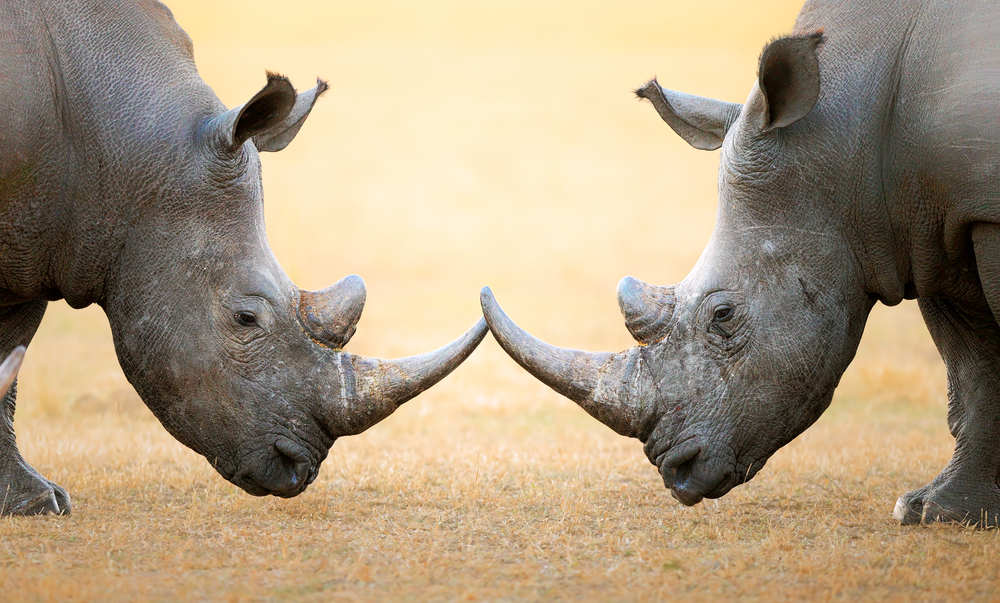
Currently approximately 600 species might be inaccurately assessed as non-threatened on the Red List of Threatened Species. More than a hundred others that couldn’t be assessed before, also appear to be threatened. A new more efficient, systematic and comprehensive approach to assess the extinction risk of animals has shown this. The method, designed by Radboud University ecologist Luca Santini and colleagues, is described in Conservation Biology on January 17th.

Using their new method, the researchers’ predictions of extinction risks are quite consistent with the current published Red List assessments, and even a bit more optimistic overall. However, they found that 20% of 600 species that were impossible to assess before by Red List experts, are likely under threat of extinction, such as the brown-banded rail and Williamson’s mouse-deer. Also, 600 species that were assessed previously as being non-threatened, are actually likely to be threatened, such as the red-breasted pygmy parrot and the Ethiopian striped mouse. “This indicates that urgent re-assessment is needed of the current statuses of animal species on the Red List,” Santini says.

The Red List

Once every few years, specialized researchers voluntarily assess the conservation status of animal species in the world, which is then recorded in the International Union for Conservation of Nature (IUCN) Red List of Threatened Species. Species are classified into five extinction risk categories ranging from Least Concern to Critically Endangered, based on data such as species distribution, population size and recent trends.

“While this process is extremely important for conservation, experts often have a limited amount of data to apply the criteria to the more than 90,000 species that are currently covered by the Red List,” Santini says. “Often these data are of poor quality because they are outdated or inaccurate because certain species that live in very remote areas have not been properly studied. This might lead to species to be misclassified or not assessed at all.”

Greater efficiency needed

It’s time for a more efficient, systematic and comprehensive approach, according to Santini and his colleagues. They designed a new method that provides Red List experts with additional independent information, which should help them to better assess species.

The method uses information from land cover maps, that show how the distribution of species in the world has changed over time. The researchers’ method couples this information with statistical models to estimate a number of additional parameters, such as species’ abilities to move through fragmented landscapes, to classify species into a Red List extinction risk category.

Early warning system

The new approach is meant to complement the traditional methods of Red List assessments. “As the Red List grows, keeping it updated becomes a daunting task. Algorithms that use near-real time remote sensing products to scan across vast species lists, and flag those that may be nearing extinction, can improve dramatically the timeliness and effectiveness of the Red List”, says Carlo Rondinini, Director of the Global Mammal Assessment Programme for the Red List.

Santini: “Our vision is that our new method will soon be automated so that data is re-updated every year with new land cover information. Thus, our method really can speed up the process and provide an early warning system by pointing specifically to species that should be re-assessed quickly.”

Related Articles Read More >

Noetik’s TARIO-2: A ‘world model’ that reads a tumor from a single slide
Six months in, Lilly says its supercomputer is starting to change the work with ‘near-infinite’ AI tokens
Boltz built its drug-discovery API ‘for agents as much as for people’
NVIDIA Announces BioNeMo Agent Toolkit with traction from nearly 50 partners, including Lilly, Thermo Fisher and Dassault
rd newsletter
EXPAND YOUR KNOWLEDGE AND STAY CONNECTED
Get the latest info on technologies, trends, and strategies in Research & Development.

R&D World Digital Issues

Fall 2025 issue

Browse the most current issue of R&D World and back issues in an easy to use high quality format. Clip, share and download with the leading R&D magazine today.

R&D 100 Awards
Research & Development World
  • Subscribe to R&D World Magazine
  • Sign up for R&D World’s newsletter
  • Contact Us
  • About Us
  • Drug Discovery & Development
  • Pharmaceutical Processing
  • Global Funding Forecast

Copyright © 2026 WTWH Media LLC. All Rights Reserved. The material on this site may not be reproduced, distributed, transmitted, cached or otherwise used, except with the prior written permission of WTWH Media
Privacy Policy | Advertising | About Us

Search R&D World

  • R&D World Home
  • Topics
    • Aerospace
    • Automotive
    • Biotech
    • Careers
    • Chemistry
    • Environment
    • Energy
    • Life Science
    • Material Science
    • R&D Management
    • Physics
  • Technology
    • 3D Printing
    • A.I./Robotics
    • Software
    • Battery Technology
    • Controlled Environments
      • Cleanrooms
      • Graphene
      • Lasers
      • Regulations/Standards
      • Sensors
    • Imaging
    • Nanotechnology
    • Scientific Computing
      • Big Data
      • HPC/Supercomputing
      • Informatics
      • Security
    • Semiconductors
  • R&D Market Pulse
  • R&D 100
    • 2025 R&D 100 Award Winners
    • 2025 Professional Award Winners
    • 2025 Special Recognition Winners
    • R&D 100 Awards Event
    • R&D 100 Submissions
    • Winner Archive
  • Resources
    • Research Reports
    • Digital Issues
    • Educational Assets
    • Subscribe
    • Video
    • Webinars
    • Content submission guidelines for R&D World
  • Global Funding Forecast
  • Top Labs
  • Advertise
  • SUBSCRIBE