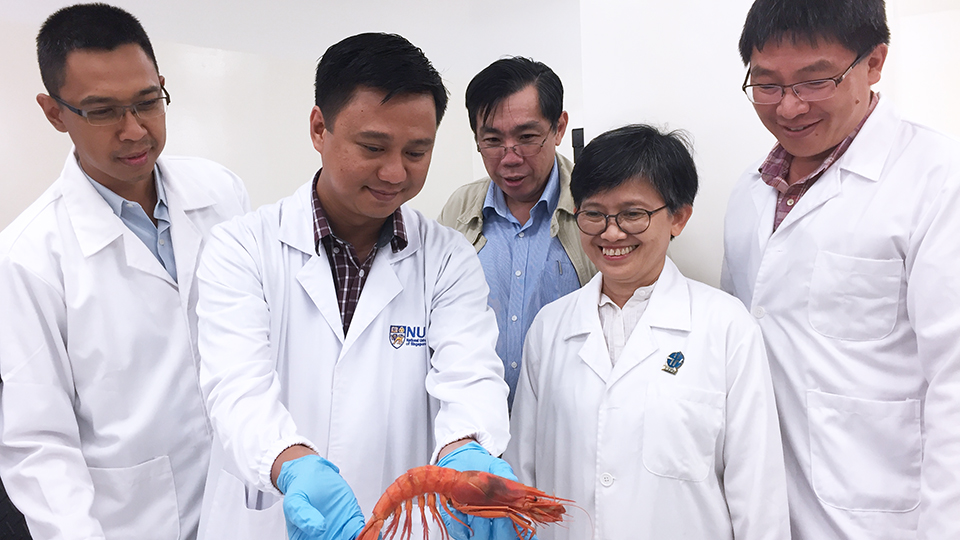
NUS Professor Peter Ng (back row, centre) and LIPI Professor Dwi Listyo Rahayu (second from right) with some expedition team members showing off the giant red shrimp (Aristaeus sp.) collected during the trip.
Despite a stormy start thanks to Cyclone Marcus, scientists who participated in the South Java Deep Sea Biodiversity Expedition 2018 (SJADES 2018) had collected more than 12,000 creatures during their 14-day voyage to survey the unexplored deep seas off the southern coast of West Java, Indonesia.
The expedition team, consisting 31 researchers and support staff, were led by Professor Peter Ng, Head of the Lee Kong Chian Natural History Museum of the National University of Singapore (NUS), and Professor Dwi Listyo Rahayu, Senior Research Scientist at the Research Center for Oceanography (RCO) of the Indonesian Institute of Sciences (LIPI). The NUS research team comprises scientists from the Lee Kong Chian Natural History Museum and the Tropical Marine Science Institute.
Some 800 species from over 200 families of sponges, jellyfish, molluscs, starfish, urchins, worms, crabs, prawns and fish were uncovered during the expedition. Over a dozen new species of hermit crabs, prawns, lobsters and crabs were discovered, and over 40 species of various kinds are new records for Indonesia.
Among the deep-sea creatures new to science is a crab that has fuzzy spines and blood-red eyes; a lobster with long arms and zebra-patterned shell; and a hermit crab with green eyes and orange banded pincers. Please refer to the Annex for more details about these creatures, as well as other rare and interesting sea creatures collected by scientists during the trip.
63 stations sampled within a fortnight
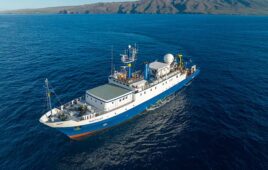
The research team departed Muara Baru, Jakarta in Indonesia on 23 March 2018 on board Indonesian research vessel Baruna Jaya VIII. They sailed anti-clockwise towards Cilacap in southern Java and back, covering a total distance of 2,200 kilometres.
“14 days of shared challenges at sea has enabled us to forge strong ties with our Indonesian collaborators, and such links are important to the long-term scientific ties between our two countries,” said Prof Ng, chief scientist for the Singapore team. “On the research front, our teams have learnt a lot about how to conduct deep-sea science, handle the various equipment needed for such work, and had the opportunity to sample and examine a multitude of fantastic deep sea animals. We expect to identify more new species among the pickings of the expedition, and we certainly look forward to studying the specimens and data with our Indonesian friends.”
Prof Rahayu, chief scientist for the Indonesia team, said, “The Indonesian scientists benefitted both personally and professionally through this expedition, which was partly a capacity-building exercise for our young scientists. Through interacting with international scientists, they were exposed to new scientific techniques and methodologies in an environment that presents a different set of challenges from their own scientific specialities. Hopefully, such knowledge transfer and collaboration would build stronger and more resilient ties among between our two nations.”
About the expedition
The South Java Deep-Sea Biodiversity Expedition 2018 is the first concerted deep-sea biological exploration conducted by Singapore and Indonesia, to study deep-sea marine life in the largely unexplored part of the waters off the southern coast of West Java.
This unprecedented project is a reflection of the bold and collaborative spirit embodied in RISING50 – a celebration of 50 years of diplomatic relations between Singapore and Indonesia. This joint initiative reaffirms the depth and diversity of the long-standing collaboration between the academic and scientific communities of Singapore and Indonesia.
The samples collected will be studied by scientists from both countries. This is anticipated to take up to two years, and the results will be shared and discussed with the world at a special workshop that will be held in Indonesia in 2020. The outputs will then be collated and published in the museum’s science-citation journal, The Raffles Bulletin of Zoology.