Research & Development World

  • R&D World Home
  • Topics
    • Aerospace
    • Automotive
    • Biotech
    • Careers
    • Chemistry
    • Environment
    • Energy
    • Life Science
    • Material Science
    • R&D Management
    • Physics
  • Technology
    • 3D Printing
    • A.I./Robotics
    • Software
    • Battery Technology
    • Controlled Environments
      • Cleanrooms
      • Graphene
      • Lasers
      • Regulations/Standards
      • Sensors
    • Imaging
    • Nanotechnology
    • Scientific Computing
      • Big Data
      • HPC/Supercomputing
      • Informatics
      • Security
    • Semiconductors
  • R&D Market Pulse
  • R&D 100
    • 2026 R&D 100 Award Winners
    • 2026 Professional Award Winners
    • 2026 Special Recognition Winners
    • R&D 100 Awards Event
    • R&D 100 Submissions
    • Winner Archive
  • Resources
    • Research Reports
    • Digital Issues
    • Educational Assets
    • Subscribe
    • Video
    • Webinars
    • PharmSci360
    • Content submission guidelines for R&D World
  • Global Funding Forecast
  • Top Labs
  • Advertise
  • SUBSCRIBE

Most Accurate Picture of Zika Yet Creates Potential for Therapeutics

By Purdue University | June 26, 2018

Researchers have created the most accurate picture of Zika to date, finding probable drug-binding pockets on the surface of the virus and paving the way for vaccine design.

Purdue researchers were the first to discover the structure of Zika virus in 2016. Using cryo-electron microscopy (cryo-EM), they created an image of the virus at a resolution of 3.8 Ångstrom, a unit used to express the size of atoms and molecules. Now, they’ve scaled that number down to 3.1, bringing them even closer to seeing atomic details of the virus. The findings were published in the journal Structure (Cell Press).

“This is the most accurate picture we have of the virus so far,” said Michael Rossmann, the Hanley Distinguished Professor of Biological Sciences at Purdue. “These results will give us ways to efficiently design antiviral compounds and provide a basis for structure-based vaccine design.”

The research team used new virus preparation methods and updated data processing techniques to get this improved resolution. The result of cryo-EM is an electron potential map, which can be interpreted by building an atomic model. The best fit between the model and the map is achieved using statistical adjustments known as “refinement.”

“Our team extended and optimized the routine crystallographic refinement methods,” Rossmann said.

Zika virus belongs to the family of flaviviruses that are transmitted by mosquitos and ticks. Rossmann’s team compared the new Zika structure to other flaviviruses such as Dengue, West Nile and Japanese Encephalitis virus, which are structurally similar but cause different disease symptoms. Zika virus causes babies to be born with abnormally small heads and sometimes smaller brains, a condition known as microcephaly, and may result in Guillain-Barre syndrome in adults. Dengue Fever, on the other hand, causes flu-like symptoms and a skin rash.

“We compared the surface properties of these viruses and observed differences in the landscape of the surface exposed residues,” said Madhu Sevvana, a postdoctoral researcher at Purdue and lead author of the paper. “We found certain structural differences on the surface, which could be a starting point for further mutational analyses.”
Related Articles Read More >

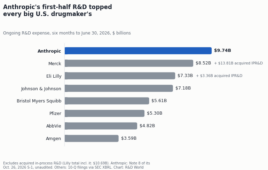
Bar chart of first-half 2026 R&D: Anthropic $9.74 billion, above the ongoing R&D of Merck, Eli Lilly, Johnson & Johnson, Bristol Myers Squibb, Pfizer, AbbVie and Amgen
Anthropic’s R&D budget now rivals Eli Lilly’s
100 million data points per blood sample: How IMU will profile immunity across 80,000 UK Biobank donors
Jabil’s 2026 digital health survey: Confidence in AI’s potential rises as confidence in internal readiness falls
Two RFD4-Proteina-designed enzymes that break down the pesticide paraoxon, with their structural accuracy and catalytic efficiency.
NVIDIA and UW’s protein design model produces 158 binders from 188 designs
rd newsletter
EXPAND YOUR KNOWLEDGE AND STAY CONNECTED
Get the latest info on technologies, trends, and strategies in Research & Development.

R&D World Digital Issues

Fall 2025 issue

Browse the most current issue of R&D World and back issues in an easy to use high quality format. Clip, share and download with the leading R&D magazine today.

R&D 100 Awards
Research & Development World
  • Subscribe to R&D World Magazine
  • Sign up for R&D World’s newsletter
  • Contact Us
  • About Us
  • Drug Discovery & Development
  • Pharmaceutical Processing
  • Global Funding Forecast

Copyright © 2026 Arrowfly LLC. All Rights Reserved. The material on this site may not be reproduced, distributed, transmitted, cached or otherwise used, except with the prior written permission of Arrowfly
Privacy Policy | Advertising | About Us

Search R&D World

  • R&D World Home
  • Topics
    • Aerospace
    • Automotive
    • Biotech
    • Careers
    • Chemistry
    • Environment
    • Energy
    • Life Science
    • Material Science
    • R&D Management
    • Physics
  • Technology
    • 3D Printing
    • A.I./Robotics
    • Software
    • Battery Technology
    • Controlled Environments
      • Cleanrooms
      • Graphene
      • Lasers
      • Regulations/Standards
      • Sensors
    • Imaging
    • Nanotechnology
    • Scientific Computing
      • Big Data
      • HPC/Supercomputing
      • Informatics
      • Security
    • Semiconductors
  • R&D Market Pulse
  • R&D 100
    • 2026 R&D 100 Award Winners
    • 2026 Professional Award Winners
    • 2026 Special Recognition Winners
    • R&D 100 Awards Event
    • R&D 100 Submissions
    • Winner Archive
  • Resources
    • Research Reports
    • Digital Issues
    • Educational Assets
    • Subscribe
    • Video
    • Webinars
    • PharmSci360
    • Content submission guidelines for R&D World
  • Global Funding Forecast
  • Top Labs
  • Advertise
  • SUBSCRIBE