Over the years, there have been many efforts to use antioxidants to prevent or help treat various diseases and aging. While reactive oxygen species (ROS), can damage and kill cells – these molecules have also been implicated in normal biochemical processes. Now, researchers have developed tools to study these ephemeral molecules in small quarters of the cell, and using these techniques, have shown that the cell manages the conflicting effects of ROS by sequestering the molecule to tiny compartments or nanodomains where it acts locally, without damaging surrounding organelles or DNA. The findings, published July 6th in the Cell Press journal Molecular Cell, provide new insight into how the cell uses this toxic but essential chemical.
“Reactive oxygen species are an essential part of the biochemistry of life,” says senior author Gyorgy Hajnoczky, M.D., Ph.D., Professor at the MitoCare Center of the Department of Pathology, Anatomy and Cell Biology at the Sidney Kimmel Medical College of Thomas Jefferson University. “Many proteins in the cell are sensitive to ROS, and will change their function when exposed to this chemical.”
For many years, biologists had assumed that biochemical reactions occurred cellwide in the cytoplasm. Although that view has started to change in recent years, the field still lacked the ability to track exactly when and where molecules like ROS functioned, making it difficult to tease apart their roles in normal physiology and disease processes alike. “We’re just beginning to appreciate that much of cellular function happens at short distances, between nearly touching organelles,” says Dr. Hajnoczky.
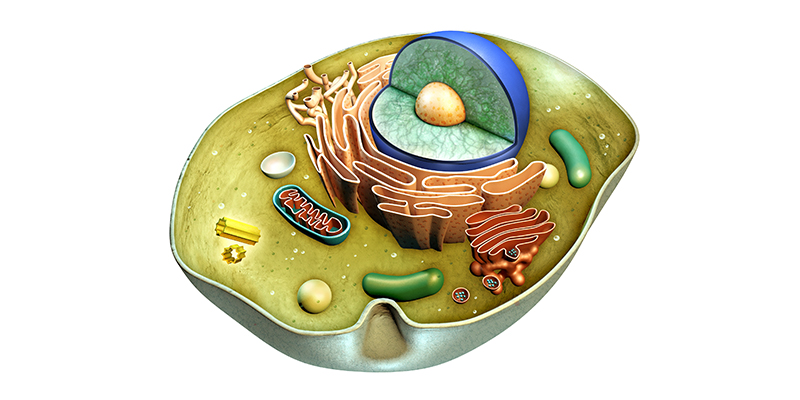
Using components of previously published technology, Dr. Hajnoczky and colleagues created a tool to track ROS at the interface of two organelles: the endoplasmic reticulum (ER), which acts as the biosynthetic conveyor belt of the cell, and the mitochondria, which makes the cell’s energy. Although these organelles have distinct functions, they are often in close communication with one another in order to coordinate their outputs in support of the cell’s changing needs.
The new tool delivered the ROS sensor to the parts of the mitochondria and ER organelles that were as close to one another as neuronal synapses and could therefore locally communicate with each other, what Dr. Hajnoczky refers to as “quasi-synaptic” spaces. Then, the researchers looked at the mitochondria’s “on” switch: the release of calcium from ER into the mitochondria, which in turn stimulates energy production.
They saw that the level of ROS in this quasi-synaptic space fluctuated without any cellwide changes. When they investigated further, Dr. Hajnoczky and colleagues showed that ROS came from the mitochondria and stimulated release of calcium from the adjacent ER, but only in short bursts. Calcium regulates mitochondrial energy production, but too much can damage the organelle and even make the mitochondria rupture, also killing the cell. “The ROS creates a local signaling loop that allows just enough calcium to enter the mitochondria and turn on energy production without causing damage. We showed that ROS are important for the amplitude and frequency of the bursts,” says Dr. Hajnoczky.
Although others had suggested that ROS could be useful in the cell, “this is one of the first demonstrations of physiological function of ROS as a localized signal at the contact of organelles. It had not been measured before,” says Dr. Hajnoczky.
Uncontrolled calcium signaling and ROS in the mitochondria is behind a number of common diseases, such as stroke or heart attack, and is thought to play a role in diseases of aging such as neurodegenerative disease. As a result, the most important contribution of this paper, says Hajnoczky, may be the tool the researchers established. It will help other researchers investigate the disease process of their choosing more fully, and study what happens at the close interactions of ER and mitochondria and virtually any organelle in the cell.
SOURCE: Thomas Jefferson University