Research & Development World

  • R&D World Home
  • Topics
    • Aerospace
    • Automotive
    • Biotech
    • Careers
    • Chemistry
    • Environment
    • Energy
    • Life Science
    • Material Science
    • R&D Management
    • Physics
  • Technology
    • 3D Printing
    • A.I./Robotics
    • Software
    • Battery Technology
    • Controlled Environments
      • Cleanrooms
      • Graphene
      • Lasers
      • Regulations/Standards
      • Sensors
    • Imaging
    • Nanotechnology
    • Scientific Computing
      • Big Data
      • HPC/Supercomputing
      • Informatics
      • Security
    • Semiconductors
  • R&D Market Pulse
  • R&D 100
    • 2026 R&D 100 Award Winners
    • 2026 Professional Award Winners
    • 2026 Special Recognition Winners
    • R&D 100 Awards Event
    • R&D 100 Submissions
    • Winner Archive
  • Resources
    • Research Reports
    • Digital Issues
    • Educational Assets
    • Subscribe
    • Video
    • Webinars
    • PharmSci360
    • Content submission guidelines for R&D World
  • Global Funding Forecast
  • Top Labs
  • Advertise
  • SUBSCRIBE

New research shows direct link between obesity and Alzheimer’s 

By Julia Rock-Torcivia | October 3, 2025

Alzheimer's

[Adobe Stock]

Obesity is a risk factor for many diseases, from diabetes to heart disease to Alzheimer’s disease (AD). While researchers have long suspected a link between insulin resistance and Alzheimer’s, giving rise to the research term type 3 diabetes (not a clinical diagnosis), the epidemiologic signal appears to be strongest for midlife obesity and insulin resistance. A new study from Houston Methodist reports mechanistic evidence for a plausible fat-to-brain pathway. The study, published in Alzheimer’s & Dementia: The Journal of the Alzheimer’s Association, found that adipose-derived extracellular vesicles, cell-to-cell messengers, can accelerate amyloid-ꞵ aggregation in experimental models. Amyloid-β plaques are a hallmark of AD.

The researchers found that the lipid cargo of the extracellular vesicles is different for obese individuals, and that the presence and abundance of certain lipids changed how quickly amyloid-ꞵ built up in laboratory models. The team used mouse models and human body fat samples to study the vesicles and how to disrupt their communication.

How obesity has been linked to AD

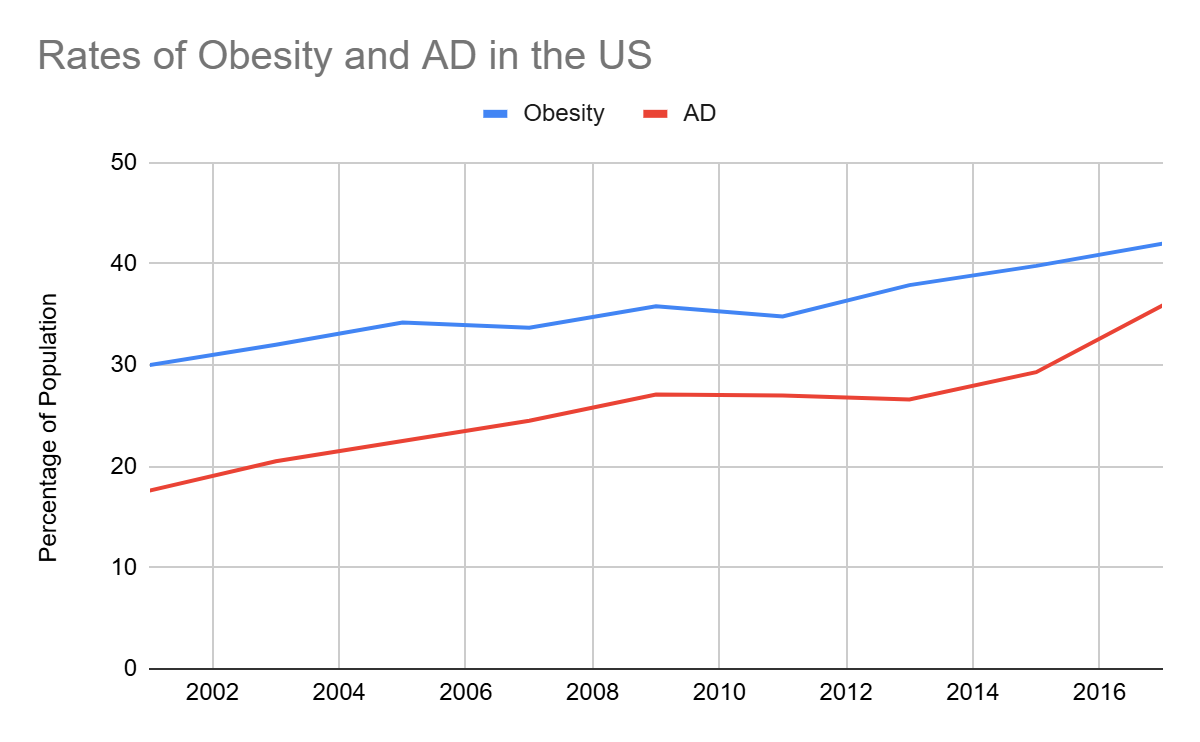
According to the Alzheimer’s Society, obesity between the ages of 35-65 can increase dementia risk later in life by approximately 30%. Human brains shrink as they age, and research has shown that higher BMI is associated with smaller brain volumes and lower cortical thickness. Additionally, obesity can decrease resilience to the disease and cause inflammation, which is linked to dementia. In the U.S., obesity affects approximately 40% of the U.S. population, and AD affects more than 7 million people.

Previous studies have shown that cohort studies link dyslipidemia with dementia risk; evidence on risk reduction via lipid-lowering remains mixed. Other mechanisms associated with the disease include lipotoxicity, insulin resistance, adipokine signaling, inflammation and immune cell fate shifts; all of which are more common and severe in individuals with obesity.

Lipid metabolism influences multiple processes in AD, including neuronal damage. Studies have shown changes in the levels of lipid classes in early-stage AD brains.

The team stated that future work should focus on how drug therapy could stop or slow the build-up of AD-associated proteins in at-risk individuals.

Related Articles Read More >

Doctor using digital tablet and laptop with AI dashboard holographic checklist overlay, analyzing KPI, workflow process, and compliance data visualization in modern healthcare digital environment.
Google AMIE study adds evidence of medical AI’s promise with patients, under doctors’ supervision
Big data technology Data science analysing artificial intelligence generative AI deep learning machine learning algorithm Neural flow network analytics innovation abstract futuristic. 3d rendering.
AI is wreaking havoc on math and coding. Where could it have the biggest impact next?
Optogenetics just won the Nobel Prize, its first therapy is already under FDA review
Hansa Biopharma taps Cradle’s AI to design next-generation autoimmune therapeutics
rd newsletter
EXPAND YOUR KNOWLEDGE AND STAY CONNECTED
Get the latest info on technologies, trends, and strategies in Research & Development.

R&D World Digital Issues

Fall 2025 issue

Browse the most current issue of R&D World and back issues in an easy to use high quality format. Clip, share and download with the leading R&D magazine today.

R&D 100 Awards
Research & Development World
  • Subscribe to R&D World Magazine
  • Sign up for R&D World’s newsletter
  • Contact Us
  • About Us
  • Drug Discovery & Development
  • Pharmaceutical Processing
  • Global Funding Forecast

Copyright © 2026 Arrowfly LLC. All Rights Reserved. The material on this site may not be reproduced, distributed, transmitted, cached or otherwise used, except with the prior written permission of Arrowfly
Privacy Policy | Advertising | About Us

Search R&D World

  • R&D World Home
  • Topics
    • Aerospace
    • Automotive
    • Biotech
    • Careers
    • Chemistry
    • Environment
    • Energy
    • Life Science
    • Material Science
    • R&D Management
    • Physics
  • Technology
    • 3D Printing
    • A.I./Robotics
    • Software
    • Battery Technology
    • Controlled Environments
      • Cleanrooms
      • Graphene
      • Lasers
      • Regulations/Standards
      • Sensors
    • Imaging
    • Nanotechnology
    • Scientific Computing
      • Big Data
      • HPC/Supercomputing
      • Informatics
      • Security
    • Semiconductors
  • R&D Market Pulse
  • R&D 100
    • 2026 R&D 100 Award Winners
    • 2026 Professional Award Winners
    • 2026 Special Recognition Winners
    • R&D 100 Awards Event
    • R&D 100 Submissions
    • Winner Archive
  • Resources
    • Research Reports
    • Digital Issues
    • Educational Assets
    • Subscribe
    • Video
    • Webinars
    • PharmSci360
    • Content submission guidelines for R&D World
  • Global Funding Forecast
  • Top Labs
  • Advertise
  • SUBSCRIBE