Research & Development World

  • R&D World Home
  • Topics
    • Aerospace
    • Automotive
    • Biotech
    • Careers
    • Chemistry
    • Environment
    • Energy
    • Life Science
    • Material Science
    • R&D Management
    • Physics
  • Technology
    • 3D Printing
    • A.I./Robotics
    • Software
    • Battery Technology
    • Controlled Environments
      • Cleanrooms
      • Graphene
      • Lasers
      • Regulations/Standards
      • Sensors
    • Imaging
    • Nanotechnology
    • Scientific Computing
      • Big Data
      • HPC/Supercomputing
      • Informatics
      • Security
    • Semiconductors
  • R&D Market Pulse
  • R&D 100
    • 2026 R&D 100 Award Winners
    • 2026 Professional Award Winners
    • 2026 Special Recognition Winners
    • R&D 100 Awards Event
    • R&D 100 Submissions
    • Winner Archive
  • Resources
    • Research Reports
    • Digital Issues
    • Educational Assets
    • Subscribe
    • Video
    • Webinars
    • PharmSci360
    • Content submission guidelines for R&D World
  • Global Funding Forecast
  • Top Labs
  • Advertise
  • SUBSCRIBE

New Tool for Prognosis and Choice of Therapy for Rheumatoid Arthritis

By Uppsala University | March 23, 2017

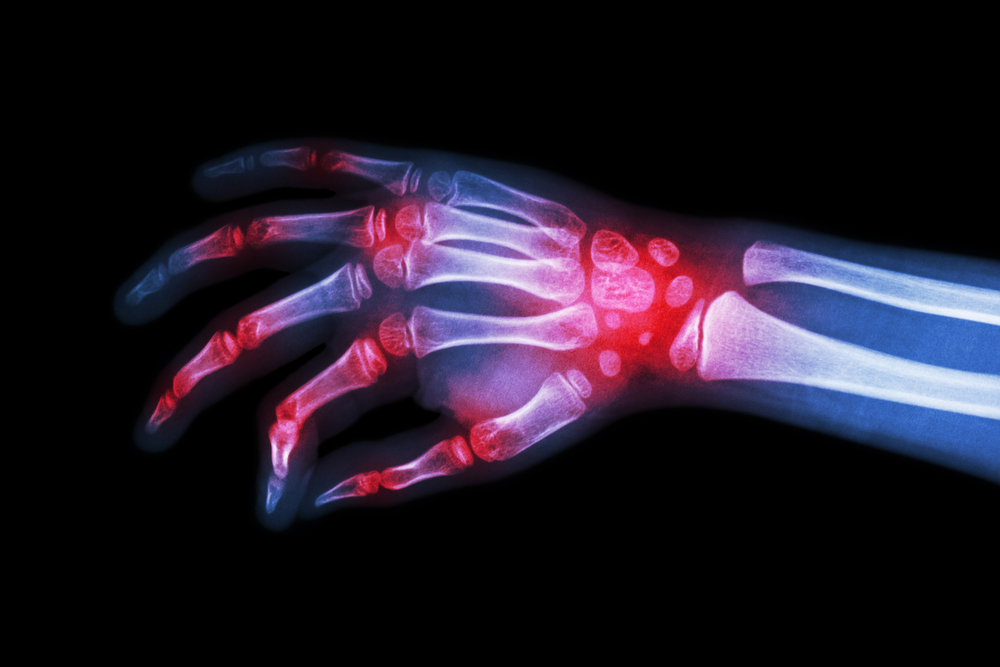
In rheumatoid arthritis, antibodies are formed that affect the inflammation in the joints. In an article published today in the journal Annals of the Rheumatic Diseases, researchers at Uppsala University show that antibodies against the cartilage protein collagen II are associated with a good prognosis.

“Analysing these antibodies, in combination with other relevant antibodies, could be used for predicting prognosis and choosing therapy for rheumatoid arthritis patients,” says Professor Johan Rönnelid who has led the study.

Rheumatoid arthritis (RA) is an inflammatory disease where the joints become stiff and swollen, and is associated with future joint destruction. This is caused by immune cells, which normally attack foreign organisms, instead react against the tissues in the joints, resulting in inflammation.

The symptoms in patients with RA are very variable but due to the pain and the effects on the joints the disease often becomes obstructing. The therapies that patients receive are given to dampen the inflammation and relieve the pain and to diminish future joint destruction.

In some RA patients antibodies are formed that target collagen II, an important protein in joint cartilage. These antibodies drive the inflammation early in the disease and the highest amounts of collagen antibodies have been detected at the time of diagnosis, after which the levels decrease during the first year.

In the present paper researchers at the Department of Immunology, Genetics and Pathology, Uppsala University, in collaboration with colleagues at Karolinska Institutet, have followed a large group of RA patients during five years to see if there is a correlation between the collagen antibodies and disease development.

“We found that patients with collagen antibodies showed increased signs of inflammation during the first six months after diagnosis, after this there was no difference compared to patients without any collagen antibodies. We also discovered that the presence of collagen antibodies at the time of diagnosis was associated with a better prognosis, says Vivek Anand Manivel, PhD student at the Department of Immunology, Genetics and Pathology and first author of the article.

For patients with RA it is common to examine the presence of antibodies against proteins called citrullinated peptides. In the studied patient group it was found that the presence of such antibodies showed an opposite association to inflammation as compared to collagen antibodies. The presence of antibodies against citrullinated peptides was associated with increased inflammation late in the follow-up time and patients with these antibodies had a more severe disease course during the follow-up.

“In all, our findings suggest that a combined analysis of antibodies against collagen and antibodies against citrullinated peptides could be a new tool for predicting the disease course and perhaps also for choosing therapy in newly diagnosed RA patients,” says professor Johan Rönnelid.
Related Articles Read More >

100 million data points per blood sample: How IMU will profile immunity across 80,000 UK Biobank donors
Jabil’s 2026 digital health survey: Confidence in AI’s potential rises as confidence in internal readiness falls
Two RFD4-Proteina-designed enzymes that break down the pesticide paraoxon, with their structural accuracy and catalytic efficiency.
NVIDIA and UW’s protein design model produces 158 binders from 188 designs
Schematic of a whole-brain Perturb-seq atlas split into 1,946 perturbation profiles, each analyzed by its own AI agent.
OpenAI deploys nearly 2,000 GPT-Rosalind agents to generate biological research leads in 32 minutes
rd newsletter
EXPAND YOUR KNOWLEDGE AND STAY CONNECTED
Get the latest info on technologies, trends, and strategies in Research & Development.

R&D World Digital Issues

Fall 2025 issue

Browse the most current issue of R&D World and back issues in an easy to use high quality format. Clip, share and download with the leading R&D magazine today.

R&D 100 Awards
Research & Development World
  • Subscribe to R&D World Magazine
  • Sign up for R&D World’s newsletter
  • Contact Us
  • About Us
  • Drug Discovery & Development
  • Pharmaceutical Processing
  • Global Funding Forecast

Copyright © 2026 Arrowfly LLC. All Rights Reserved. The material on this site may not be reproduced, distributed, transmitted, cached or otherwise used, except with the prior written permission of Arrowfly
Privacy Policy | Advertising | About Us

Search R&D World

  • R&D World Home
  • Topics
    • Aerospace
    • Automotive
    • Biotech
    • Careers
    • Chemistry
    • Environment
    • Energy
    • Life Science
    • Material Science
    • R&D Management
    • Physics
  • Technology
    • 3D Printing
    • A.I./Robotics
    • Software
    • Battery Technology
    • Controlled Environments
      • Cleanrooms
      • Graphene
      • Lasers
      • Regulations/Standards
      • Sensors
    • Imaging
    • Nanotechnology
    • Scientific Computing
      • Big Data
      • HPC/Supercomputing
      • Informatics
      • Security
    • Semiconductors
  • R&D Market Pulse
  • R&D 100
    • 2026 R&D 100 Award Winners
    • 2026 Professional Award Winners
    • 2026 Special Recognition Winners
    • R&D 100 Awards Event
    • R&D 100 Submissions
    • Winner Archive
  • Resources
    • Research Reports
    • Digital Issues
    • Educational Assets
    • Subscribe
    • Video
    • Webinars
    • PharmSci360
    • Content submission guidelines for R&D World
  • Global Funding Forecast
  • Top Labs
  • Advertise
  • SUBSCRIBE