Research & Development World

  • R&D World Home
  • Topics
    • Aerospace
    • Automotive
    • Biotech
    • Careers
    • Chemistry
    • Environment
    • Energy
    • Life Science
    • Material Science
    • R&D Management
    • Physics
  • Technology
    • 3D Printing
    • A.I./Robotics
    • Software
    • Battery Technology
    • Controlled Environments
      • Cleanrooms
      • Graphene
      • Lasers
      • Regulations/Standards
      • Sensors
    • Imaging
    • Nanotechnology
    • Scientific Computing
      • Big Data
      • HPC/Supercomputing
      • Informatics
      • Security
    • Semiconductors
  • R&D Market Pulse
  • R&D 100
    • 2026 R&D 100 Award Winners
    • 2026 Professional Award Winners
    • 2026 Special Recognition Winners
    • R&D 100 Awards Event
    • R&D 100 Submissions
    • Winner Archive
  • Resources
    • Research Reports
    • Digital Issues
    • Educational Assets
    • Subscribe
    • Video
    • Webinars
    • PharmSci360
    • Content submission guidelines for R&D World
  • Global Funding Forecast
  • Top Labs
  • Advertise
  • SUBSCRIBE

Flight is Greener than Driving

By R&D Editors | April 27, 2015

An airplane flying over a grassy field. Image: Univ. of MichiganFlying in a plane is not only safer than driving a car, it’s also better for the environment, says a University of Michigan researcher. In a follow-up study from last year, Michael Sivak of the U-M Transportation Research Institute found that it takes twice as much energy to drive than to fly.

He examined recent trends in energy intensity — the amount of energy needed to transport a person a given distance — in light-duty vehicles (cars, SUVs, pickups and vans) versus domestic airline flights. His analysis measured BTU per person mile from 1970 to 2012.

Sivak found that the energy intensity of driving is 2.07 times that of flying. In 2012, BTU per person mile was 4,211 for driving compared to 2,033 for flying. Consequently, the entire fleet of light-duty vehicles would have to improve from the current on-road fuel economy of 21.6 mpg to 44.7 mpg for driving to be as energy intensive as flying.

“Although the fuel economy of new vehicles is continuously improving, and these improvements are likely to accelerate given the recent update to the corporate average fuel economy standards, changes in fuel economy of new vehicles take a long time to substantially influence the fuel economy of the entire fleet,” said Sivak, a research professor at UMTRI and director of Sustainable Worldwide Transportation, a research consortium that addresses major road transportation issues worldwide.

For example, he says, the 16.5 million light vehicles sold in 2014 accounted for only about 7 percent of the entire fleet of light-duty vehicles on the road.

“It is important to recognize that the energy intensity of flying will also continue to improve,” Sivak said. “Consequently, because the future energy intensity of flying will be better than it currently is, the calculated improvements underestimate the improvements that need to be achieved in order for driving to be as energy as flying.”

Last year, Sivak issued a report that compared energy intensities of flying and driving from 1970 to 2010. The current study not only extends the analysis through 2012, but fuel calculations for flying exclude fuel needed to transport paid freight and mail on passenger carriers and on all-cargo carriers.

 

Related Articles Read More >

INL’s $60 million nuclear AI project will spend the first year testing where AI agents can help and where they might hurt 
The Space Systems Division (05)-developed Parallelogram Synchronized Truss Assembly (PaSTA), seen Aug. 12, 2025, is a mechanism that will be integrated into the Life-Extension In-orbit Servicer (LEXI) and Astroscale Prototype Servicer for Refueling (APS-R) spacecrafts.
One SwRI R&D 100 winner turns buckled fiberglass into a spacecraft truss. The other models freight rail with 900 hours of BNSF field data
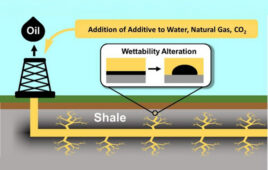
Inside the Lab: NETL’s Oil and Gas Center of Excellence focuses on technologies to enhance production   
Inside S&C Electric’s and Argonne National Lab’s CRADA partnership
rd newsletter
EXPAND YOUR KNOWLEDGE AND STAY CONNECTED
Get the latest info on technologies, trends, and strategies in Research & Development.

R&D World Digital Issues

Fall 2025 issue

Browse the most current issue of R&D World and back issues in an easy to use high quality format. Clip, share and download with the leading R&D magazine today.

R&D 100 Awards
Research & Development World
  • Subscribe to R&D World Magazine
  • Sign up for R&D World’s newsletter
  • Contact Us
  • About Us
  • Drug Discovery & Development
  • Pharmaceutical Processing
  • Global Funding Forecast

Copyright © 2026 Arrowfly LLC. All Rights Reserved. The material on this site may not be reproduced, distributed, transmitted, cached or otherwise used, except with the prior written permission of Arrowfly
Privacy Policy | Advertising | About Us

Search R&D World

  • R&D World Home
  • Topics
    • Aerospace
    • Automotive
    • Biotech
    • Careers
    • Chemistry
    • Environment
    • Energy
    • Life Science
    • Material Science
    • R&D Management
    • Physics
  • Technology
    • 3D Printing
    • A.I./Robotics
    • Software
    • Battery Technology
    • Controlled Environments
      • Cleanrooms
      • Graphene
      • Lasers
      • Regulations/Standards
      • Sensors
    • Imaging
    • Nanotechnology
    • Scientific Computing
      • Big Data
      • HPC/Supercomputing
      • Informatics
      • Security
    • Semiconductors
  • R&D Market Pulse
  • R&D 100
    • 2026 R&D 100 Award Winners
    • 2026 Professional Award Winners
    • 2026 Special Recognition Winners
    • R&D 100 Awards Event
    • R&D 100 Submissions
    • Winner Archive
  • Resources
    • Research Reports
    • Digital Issues
    • Educational Assets
    • Subscribe
    • Video
    • Webinars
    • PharmSci360
    • Content submission guidelines for R&D World
  • Global Funding Forecast
  • Top Labs
  • Advertise
  • SUBSCRIBE