Research & Development World

  • R&D World Home
  • Topics
    • Aerospace
    • Automotive
    • Biotech
    • Careers
    • Chemistry
    • Environment
    • Energy
    • Life Science
    • Material Science
    • R&D Management
    • Physics
  • Technology
    • 3D Printing
    • A.I./Robotics
    • Software
    • Battery Technology
    • Controlled Environments
      • Cleanrooms
      • Graphene
      • Lasers
      • Regulations/Standards
      • Sensors
    • Imaging
    • Nanotechnology
    • Scientific Computing
      • Big Data
      • HPC/Supercomputing
      • Informatics
      • Security
    • Semiconductors
  • R&D Market Pulse
  • R&D 100
    • 2026 R&D 100 Award Winners
    • 2026 Professional Award Winners
    • 2026 Special Recognition Winners
    • R&D 100 Awards Event
    • R&D 100 Submissions
    • Winner Archive
  • Resources
    • Research Reports
    • Digital Issues
    • Educational Assets
    • Subscribe
    • Video
    • Webinars
    • PharmSci360
    • Content submission guidelines for R&D World
  • Global Funding Forecast
  • Top Labs
  • Advertise
  • SUBSCRIBE

Climate Change May Prevent Volcanoes from Cooling the Planet

By University of British Columbia | November 17, 2016

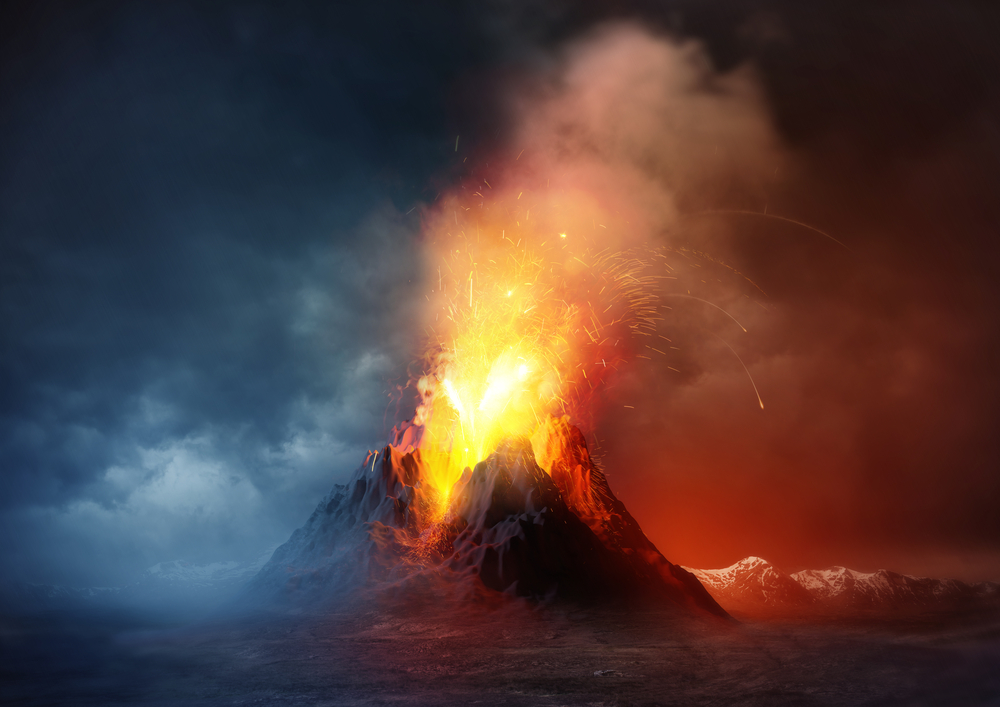
New UBC research shows that climate change may impede the cooling effect of volcanic eruptions.

When an eruption is powerful enough, volcanoes spew sulfur gasses high into the atmosphere, reaching a layer called the stratosphere, about 10 to 15 kilometres above the Earth’s surface. Here, gasses react with water to form aerosol particles that linger in the stratosphere for one or two years, reflecting sunlight and heat from the sun, and cooling the planet. On average, there are anywhere from three to five eruptions that reach the stratosphere every year.

Previous research has shown that as the planet warms, the lower layers of the atmosphere will expand, making it much harder for the gasses to reach the stratosphere. At lower levels, in the troposphere, the gasses quickly get turned into aerosols and clouds and precipitate back down to earth as rain or snow.

“Volcanic eruptions tend to counteract global warming but as the planet heats up and our atmosphere changes, we’ve found that fewer eruptions will be able to reflect the sun’s radiation,” said Thomas Aubry, a PhD student studying climate and volcanoes. “It will be harder for the volcanic gasses to reach high enough into atmosphere to help cool the planet.”

Aubry notes that while the planet continues to warm, scientists have observed a slight decline in the rate of global warming over the last 10 to 15 years. Previous studies have shown that this is partially caused by the number of large eruptions over the last decade that have sent sulfur gasses high up into the stratosphere.

For this study, Aubry, who is a PhD student in professor Mark Jellinek’s lab in the department of earth, ocean and atmospheric sciences, used models of volcanic eruptions and global climate to calculate the impact on gasses released from volcanic eruptions.

According to climate model projections and global warming, Aubry and his co-authors found the amount of volcanic sulfur gasses in the stratosphere will decrease anywhere from two to twelve per cent in the next 100 years. Longer term, they predict anywhere from 12 to 25 per cent less sulfur gas in the stratosphere by the 22nd and 23rd centuries. They say the range is large because it is difficult to predict future eruptions and future greenhouse gas emissions.

To determine the precise impact on the Earth’s surface temperature in the future will require further study. It also raises interesting questions about Earth’s history.

“Understanding this positive feedback loop has provocative implications for understanding climate variability in Earth’s past,” said Jellinek. “In particular, this mechanism may have contributed to Earth’s entry into a long period of global glaciation around 700 million years ago, a theory known as the Snowball Earth hypothesis.”

Related Articles Read More >

Two methane maps of the same EMIT scene: NASA's standard L2B enhancement, grainy with two small outlined plumes, above MAPL-EMIT output showing elongated plumes against a clean dark background.
Google AI finds more methane plumes in NASA satellite data
A data center campus with exhaust stacks beside a canal
1 in 4 data centers sits in a water-stressed area. Few states track how much water they use
Research vessel Nautilus is mapping the bottom of the Mariana Trench with new multibeam sonar 
Inside the Lab: NETL’s Oil and Gas Center of Excellence focuses on technologies to enhance production   
rd newsletter
EXPAND YOUR KNOWLEDGE AND STAY CONNECTED
Get the latest info on technologies, trends, and strategies in Research & Development.

R&D World Digital Issues

Fall 2026 issue

Browse the most current issue of R&D World and back issues in an easy to use high quality format. Clip, share and download with the leading R&D magazine today.

R&D 100 Awards
Research & Development World
  • Subscribe to R&D World Magazine
  • Sign up for R&D World’s newsletter
  • Contact Us
  • About Us
  • Drug Discovery & Development
  • Pharmaceutical Processing
  • Global Funding Forecast

Copyright © 2026 Arrowfly LLC. All Rights Reserved. The material on this site may not be reproduced, distributed, transmitted, cached or otherwise used, except with the prior written permission of Arrowfly
Privacy Policy | Advertising | About Us

Search R&D World

  • R&D World Home
  • Topics
    • Aerospace
    • Automotive
    • Biotech
    • Careers
    • Chemistry
    • Environment
    • Energy
    • Life Science
    • Material Science
    • R&D Management
    • Physics
  • Technology
    • 3D Printing
    • A.I./Robotics
    • Software
    • Battery Technology
    • Controlled Environments
      • Cleanrooms
      • Graphene
      • Lasers
      • Regulations/Standards
      • Sensors
    • Imaging
    • Nanotechnology
    • Scientific Computing
      • Big Data
      • HPC/Supercomputing
      • Informatics
      • Security
    • Semiconductors
  • R&D Market Pulse
  • R&D 100
    • 2026 R&D 100 Award Winners
    • 2026 Professional Award Winners
    • 2026 Special Recognition Winners
    • R&D 100 Awards Event
    • R&D 100 Submissions
    • Winner Archive
  • Resources
    • Research Reports
    • Digital Issues
    • Educational Assets
    • Subscribe
    • Video
    • Webinars
    • PharmSci360
    • Content submission guidelines for R&D World
  • Global Funding Forecast
  • Top Labs
  • Advertise
  • SUBSCRIBE