Research & Development World

  • R&D World Home
  • Topics
    • Aerospace
    • Automotive
    • Biotech
    • Careers
    • Chemistry
    • Environment
    • Energy
    • Life Science
    • Material Science
    • R&D Management
    • Physics
  • Technology
    • 3D Printing
    • A.I./Robotics
    • Software
    • Battery Technology
    • Controlled Environments
      • Cleanrooms
      • Graphene
      • Lasers
      • Regulations/Standards
      • Sensors
    • Imaging
    • Nanotechnology
    • Scientific Computing
      • Big Data
      • HPC/Supercomputing
      • Informatics
      • Security
    • Semiconductors
  • R&D Market Pulse
  • R&D 100
    • 2026 R&D 100 Award Winners
    • 2026 Professional Award Winners
    • 2026 Special Recognition Winners
    • R&D 100 Awards Event
    • R&D 100 Submissions
    • Winner Archive
  • Resources
    • Research Reports
    • Digital Issues
    • Educational Assets
    • Subscribe
    • Video
    • Webinars
    • PharmSci360
    • Content submission guidelines for R&D World
  • Global Funding Forecast
  • Top Labs
  • Advertise
  • SUBSCRIBE

Technique Doubles Conversion of CO2 to Plastic Component

By R&D Editors | May 22, 2018

Fossil fuels have long been the precursor to plastic, but new research from the University of Nebraska-Lincoln and European collaborators could help send that era up in smoke – carbon dioxide, to be exact.

Produced almost entirely from burning fossil fuels, carbon dioxide concentrations in the atmosphere have risen from 280 parts per million in the pre-industrial era to about 410 PPM today. That trend, combined with the finite supply of fossil fuels, has pushed researchers to explore methods for producing plastic from CO2 rather than petroleum or natural gas – recycling CO2 just as plastic is now.

Nebraska’s Vitaly Alexandrov and colleagues have now detailed a catalyst-based technique that can double the amount of carbon dioxide converted to ethylene, an essential component of the world’s most common plastic, polyethylene.

“The conversion of CO2 is very important to help offset the emissions that lead to global warming and other detrimental processes in the environment,” said Alexandrov, assistant professor of chemical and biomolecular engineering.

Copper has emerged as the prime candidate for catalyzing chemical reactions that convert carbon dioxide to plastic-forming polymer molecules, which it does when voltage is applied to it. But some copper-based setups have failed to convert more than about 15 percent of CO2into ethylene, a yield too small to meet the needs of industry.

So researchers at Swansea University in Wales decided to try coating copper with different polymers in the hope of increasing that efficiency. After overlaying it with a polymer called polyacrylamide, they found that their copper foam’s conversion rate rose from 13 to 26 percent.

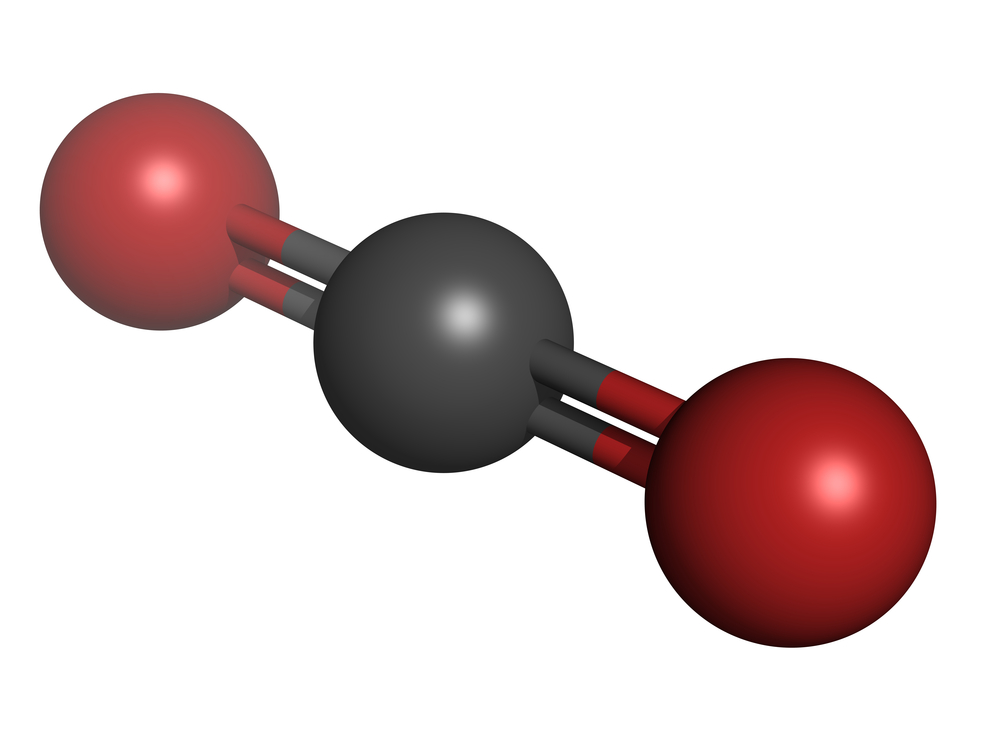
Alexandrov and postdoctoral researcher Konstantin Klyukin then ran quantum mechanics-based simulations through Nebraska’s Holland Computing Center to help explain why polyacrylamide managed to outperform its polymeric cousins. They discovered that the polyacrylamide breaks up CO2 and reassembles it into a pair of bonded C-O compounds, then stabilizes that new molecule as it drives further chemical reactions – those ultimately producing ethylene.

“CO2 is a very stubborn molecule because it has double bonds that are very difficult to break,” Alexandrov said. “That’s the most challenging part of trying to convert it to something else. You don’t want to spend too much energy converting it; otherwise, it’s a trade-off that becomes inefficient.”

Even as researchers look to further improve that efficiency, Alexandrov said, they have an eye toward a larger goal: turning CO2 directly into the polyethylene that makes up plastic bags, containers and films.

“One of the things that experimentalists want is to go from synthesizing simple molecules, like ethylene, to very complicated molecules in one batch reaction,” Alexandrov said. “You put in CO2 catalysts, and you end up with polymer structures that you can sell in a store. But those molecules have very complicated structures. This is a first step toward understanding how we can (create them).”

Related Articles Read More >

INL’s $60 million nuclear AI project will spend the first year testing where AI agents can help and where they might hurt 
The Space Systems Division (05)-developed Parallelogram Synchronized Truss Assembly (PaSTA), seen Aug. 12, 2025, is a mechanism that will be integrated into the Life-Extension In-orbit Servicer (LEXI) and Astroscale Prototype Servicer for Refueling (APS-R) spacecrafts.
One SwRI R&D 100 winner turns buckled fiberglass into a spacecraft truss. The other models freight rail with 900 hours of BNSF field data
Inside the Lab: NETL’s Oil and Gas Center of Excellence focuses on technologies to enhance production   
Inside S&C Electric’s and Argonne National Lab’s CRADA partnership
rd newsletter
EXPAND YOUR KNOWLEDGE AND STAY CONNECTED
Get the latest info on technologies, trends, and strategies in Research & Development.

R&D World Digital Issues

Fall 2025 issue

Browse the most current issue of R&D World and back issues in an easy to use high quality format. Clip, share and download with the leading R&D magazine today.

R&D 100 Awards
Research & Development World
  • Subscribe to R&D World Magazine
  • Sign up for R&D World’s newsletter
  • Contact Us
  • About Us
  • Drug Discovery & Development
  • Pharmaceutical Processing
  • Global Funding Forecast

Copyright © 2026 Arrowfly LLC. All Rights Reserved. The material on this site may not be reproduced, distributed, transmitted, cached or otherwise used, except with the prior written permission of Arrowfly
Privacy Policy | Advertising | About Us

Search R&D World

  • R&D World Home
  • Topics
    • Aerospace
    • Automotive
    • Biotech
    • Careers
    • Chemistry
    • Environment
    • Energy
    • Life Science
    • Material Science
    • R&D Management
    • Physics
  • Technology
    • 3D Printing
    • A.I./Robotics
    • Software
    • Battery Technology
    • Controlled Environments
      • Cleanrooms
      • Graphene
      • Lasers
      • Regulations/Standards
      • Sensors
    • Imaging
    • Nanotechnology
    • Scientific Computing
      • Big Data
      • HPC/Supercomputing
      • Informatics
      • Security
    • Semiconductors
  • R&D Market Pulse
  • R&D 100
    • 2026 R&D 100 Award Winners
    • 2026 Professional Award Winners
    • 2026 Special Recognition Winners
    • R&D 100 Awards Event
    • R&D 100 Submissions
    • Winner Archive
  • Resources
    • Research Reports
    • Digital Issues
    • Educational Assets
    • Subscribe
    • Video
    • Webinars
    • PharmSci360
    • Content submission guidelines for R&D World
  • Global Funding Forecast
  • Top Labs
  • Advertise
  • SUBSCRIBE