Trump signed the NIH’s budget into law on Feb. 3. Today marks the 30-day legal deadline for the Office of Management and Budget (OMB) to release the funding. Without this, the NIH cannot spend any of the newly appropriated research funding.
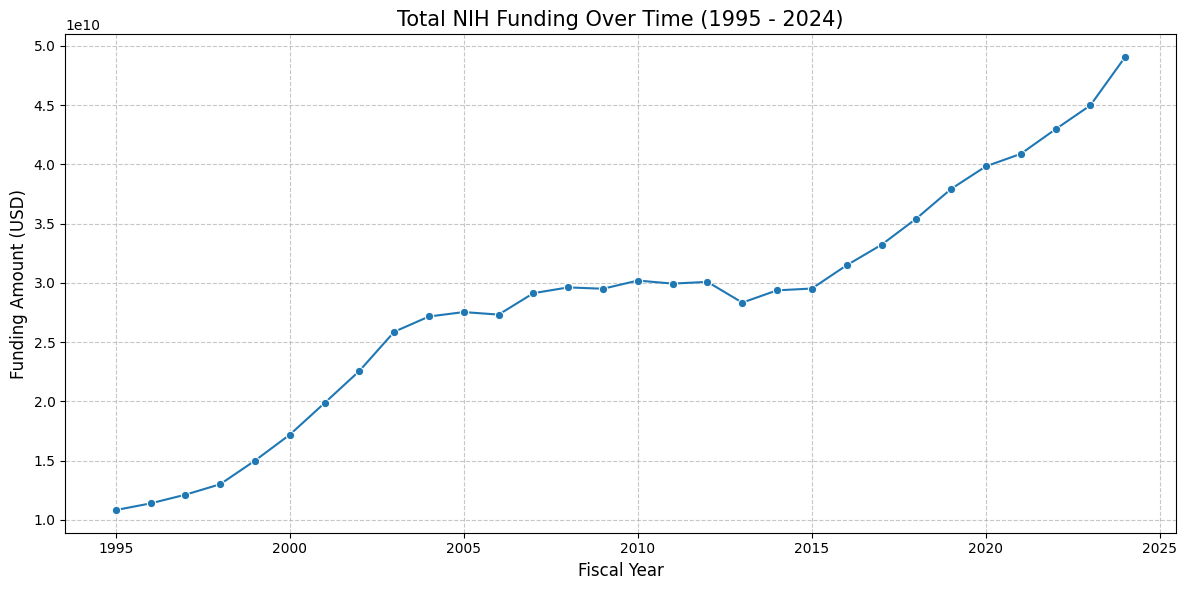
Data from the Library of Congress. https://www.congress.gov/crs-product/R43341#_Toc217998729
Last year, OMB revised a document called Circular A-11, nicknamed the Budget Bible, to restrict the automatic 30-day spending portions agencies receive to cover only essential expenses like employee salaries. The OMB must approve the funding in apportionments, plans to spend resources provided by one of the annual appropriations acts that specify and limit the obligations that may be incurred and the expenditures made. Without an apportionment, the budget cannot be spent, even if it is signed.
How NIH lost its budget
The NIH entered fiscal year 2026 without a budget. After the government shutdown ended on Nov. 12, the agency began operating on a continuing resolution that restricted spending to levels matching the previous year and paused grant activity. The Trump administration proposed cutting nearly 40% of NIH’s budget last May, which Congress opposed.
Congressional appropriations committees set the NIH’s budget at $47.2 billion, a $216 million increase from the previous year. Trump signed this budget into law last month, and the research community breathed a sigh of relief. However, the funds still have not been seen by the NIH, and grant awards have slowed in response.
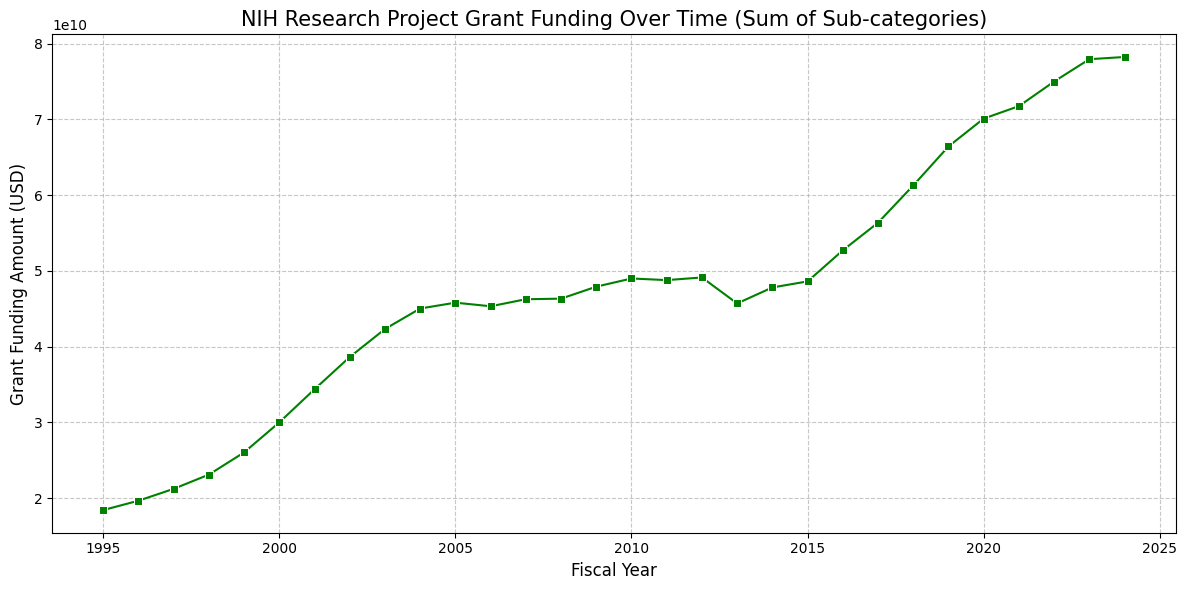
Data from the Library of Congress. https://www.congress.gov/crs-product/R43341#_Toc217998729
Grant awards plummet
By Feb. 27, the NIH still had not received the necessary apportionments. Meanwhile, the U.S. National Science Foundation (NSF) was approved to spend its funding the week before, and NASA’s funding was approved with a restriction limiting spending on 10 programs.
As a result of its stalled funding, the NIH has so far awarded about 30% as many new grants and competing renewals during fiscal year 2026 compared to this time in each of the last six years. Without the OMB’s approval, the NIH can only issue new research awards using funds left over from what was approved by Congress last November, which was meant to be a stopgap until the budget for this year was passed.
The fiscal year 2026 ends on Sept. 30, meaning that any funding that hasn’t been spent by that date will revert back to the U.S. Treasury.
How this could affect research funding
With the number of grant awards dropping and no apportionment in sight, funding is sure to be uncertain for the foreseeable future. If an apportionment does arrive, the NIH will need to obligate a large amount of funding before the Sept. 30 deadline, so timelines are likely to be compressed.
Part of the decline in grant awards stems from an NIH policy change. The agency has shifted towards forward funding, providing lump sums covering full projects rather than awarding funding in annual installments. The administration plans to use 50% of the appropriated funds this way. According to Jeremy Berg, former director of the National Institute of General Medical Sciences (NIGMS), this could cut the total number of grants from around 10,000 to around 6,200.
The NIH has posted only 84 Notices of Funding Opportunities (NOFOs) since Trump took office, down from 787 in the previous year. There are 323 more listed as “forecasted”, but not yet open. For researchers waiting on those calls, large academic research programs may not have their funding renewed until next year, if at all.
It is unlikely that the NIH will be able to catch up in spending before the end of the fiscal year, according to Walter Koroshetz, who was recently removed as NIH’s neuroscience institute chief. Researchers with pending applications should be prepared for a compressed review and award timeline later this year and should monitor the NIH’s guide notices closely for any institute-specific funding strategy updates as apportionments are eventually released.