Research & Development World

  • R&D World Home
  • Topics
    • Aerospace
    • Automotive
    • Biotech
    • Careers
    • Chemistry
    • Environment
    • Energy
    • Life Science
    • Material Science
    • R&D Management
    • Physics
  • Technology
    • 3D Printing
    • A.I./Robotics
    • Software
    • Battery Technology
    • Controlled Environments
      • Cleanrooms
      • Graphene
      • Lasers
      • Regulations/Standards
      • Sensors
    • Imaging
    • Nanotechnology
    • Scientific Computing
      • Big Data
      • HPC/Supercomputing
      • Informatics
      • Security
    • Semiconductors
  • R&D Market Pulse
  • R&D 100
    • 2025 R&D 100 Award Winners
    • 2025 Professional Award Winners
    • 2025 Special Recognition Winners
    • R&D 100 Awards Event
    • R&D 100 Submissions
    • Winner Archive
  • Resources
    • Research Reports
    • Digital Issues
    • Educational Assets
    • Subscribe
    • Video
    • Webinars
    • Content submission guidelines for R&D World
  • Global Funding Forecast
  • Top Labs
  • Advertise
  • SUBSCRIBE

NIH layoffs threaten US’s edge in science and health innovation

By Heather Hall | March 28, 2025

With federal layoffs across various government agencies making the weekly news, one announcement deserves far more attention than it is receiving: staffing cuts at the National Institutes of Health (NIH). Amid a wave of reductions affecting civil servants in science, health, and environmental agencies, the NIH layoffs could quietly deliver a significant blow to the U.S. research ecosystem. This is not just a personnel issue — it is a turning point with real consequences for biomedical innovation, public health, and America’s global scientific standing leadership.

The NIH isn’t just a federal agency. It’s the engine of U.S. biomedical discovery, supporting thousands of researchers across universities, hospitals, and biotech firms. From cancer therapies to pandemic preparedness, its work touches virtually every household in the country. And when NIH jobs are lost, the impact is felt far beyond Washington.

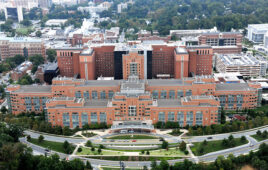
The National Institutes of Health (NIH) campus in Bethesda, MD

Scientific progress on pause

The NIH doesn’t pursue quarterly earnings; it supports the long, gradual work that leads to breakthroughs. Its backing of basic science underlies the eventual creation of life-saving drugs, medical devices, and diagnostics. Layoffs result in delayed projects, disrupted labs, and extended timelines — sometimes by years.

The hidden infrastructure of innovation

Much of the NIH’s power derives from its people: the grant reviewers, program officers, and staff scientists who ensure that taxpayer dollars support the most promising ideas. Their expertise is technical, specialized, and difficult to replace. Losing them isn’t like closing a spreadsheet; it’s akin to cutting off power to an entire research ecosystem.

A blow to the next generation

Perhaps the most disheartening consequence is the message this sends to early-career scientists. If the institutions they depend on for mentorship, funding, and stability are shrinking, how many will remain in science? We risk deepening the already troubling pipeline problem, just as other countries are increasing their investment in science.

Delays in public health readiness

Let’s not forget that the NIH was pivotal in the COVID-19 response, from vaccine development to treatment trials. Weakening the agency now means fewer tools — and slower action — when the next health crisis inevitably hits.

The bigger picture

This isn’t just about jobs — it’s about America’s position in the world. Countries like China, Germany, and South Korea are investing heavily in health and biotech R&D. Withdrawing support from the NIH doesn’t just shrink our research capacity — it cedes leadership in the industries that will define the future.

A call for action

Maintaining a strong, fully staffed NIH isn’t optional — it’s a national imperative. Policymakers, philanthropists, and private-sector leaders must recognize what’s at stake and act quickly to stabilize and strengthen the institution that has long been the envy of the scientific world.

Because when the NIH loses ground, we all do.
 

Related Articles Read More >

Trump administration abandons Supreme Court challenge to NIH indirect cost cap
U.S. and Korea solidify AI-energy pact: Genesis Mission and K-Moonshot join forces
Machine learning rewrites the rules for measuring scientific disruption
Billionaires, chip makers and one physicist: inside Trump’s PCAST picks
rd newsletter
EXPAND YOUR KNOWLEDGE AND STAY CONNECTED
Get the latest info on technologies, trends, and strategies in Research & Development.

R&D World Digital Issues

Fall 2025 issue

Browse the most current issue of R&D World and back issues in an easy to use high quality format. Clip, share and download with the leading R&D magazine today.

R&D 100 Awards
Research & Development World
  • Subscribe to R&D World Magazine
  • Sign up for R&D World’s newsletter
  • Contact Us
  • About Us
  • Drug Discovery & Development
  • Pharmaceutical Processing
  • Global Funding Forecast

Copyright © 2026 WTWH Media LLC. All Rights Reserved. The material on this site may not be reproduced, distributed, transmitted, cached or otherwise used, except with the prior written permission of WTWH Media
Privacy Policy | Advertising | About Us

Search R&D World

  • R&D World Home
  • Topics
    • Aerospace
    • Automotive
    • Biotech
    • Careers
    • Chemistry
    • Environment
    • Energy
    • Life Science
    • Material Science
    • R&D Management
    • Physics
  • Technology
    • 3D Printing
    • A.I./Robotics
    • Software
    • Battery Technology
    • Controlled Environments
      • Cleanrooms
      • Graphene
      • Lasers
      • Regulations/Standards
      • Sensors
    • Imaging
    • Nanotechnology
    • Scientific Computing
      • Big Data
      • HPC/Supercomputing
      • Informatics
      • Security
    • Semiconductors
  • R&D Market Pulse
  • R&D 100
    • 2025 R&D 100 Award Winners
    • 2025 Professional Award Winners
    • 2025 Special Recognition Winners
    • R&D 100 Awards Event
    • R&D 100 Submissions
    • Winner Archive
  • Resources
    • Research Reports
    • Digital Issues
    • Educational Assets
    • Subscribe
    • Video
    • Webinars
    • Content submission guidelines for R&D World
  • Global Funding Forecast
  • Top Labs
  • Advertise
  • SUBSCRIBE